A discreet home monitoring service is a security and maintenance oversight system that uses covert sensors or cameras to watch over a property without obvious detection or intrusion. The industry term for this category is “remote home monitoring,” and it covers two main approaches: camera-based and sensor-based systems. Sensor-based systems are the preferred choice for absentee and seasonal homeowners because they avoid the privacy risks of cloud-stored video footage. Vanguard Home Watch LLC, an accredited member of the National Home Watch Association (NHWA), works alongside these technologies to give Naples-area homeowners complete, layered protection when they are away.
What is a discreet home monitoring service, exactly?
Discreet home monitoring is defined as the use of low-profile or invisible detection technology to track conditions inside and around a home without alerting visitors or drawing attention to the system itself. The goal is not just security. It also covers maintenance oversight: detecting water leaks, HVAC failures, humidity spikes, and other conditions that can cause serious damage in an unoccupied home.
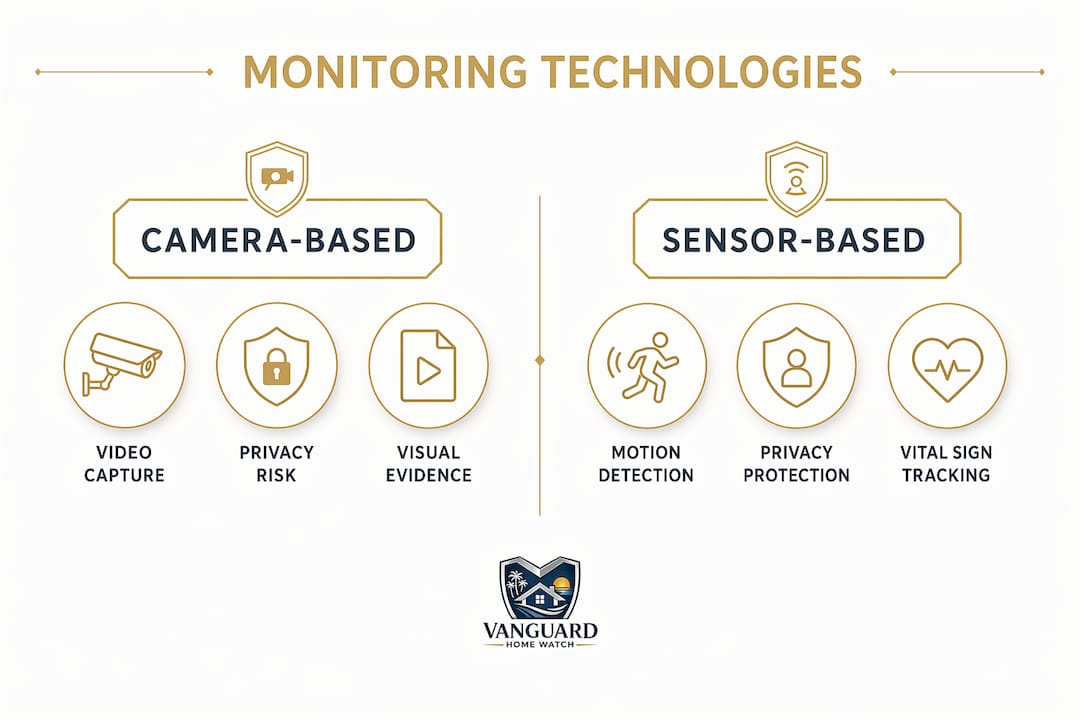
The two core system types serve different needs. Camera-based systems capture visual evidence and can confirm exactly what happened during an event. Sensor-based systems use motion detectors, door and window contacts, pressure sensors, and sound monitors to flag anomalies without recording images. For seasonal residences in communities like those served by Vanguard Home Watch LLC across Naples, North Naples, and Ave Maria, Florida, sensor-based monitoring offers the right balance of awareness and privacy.
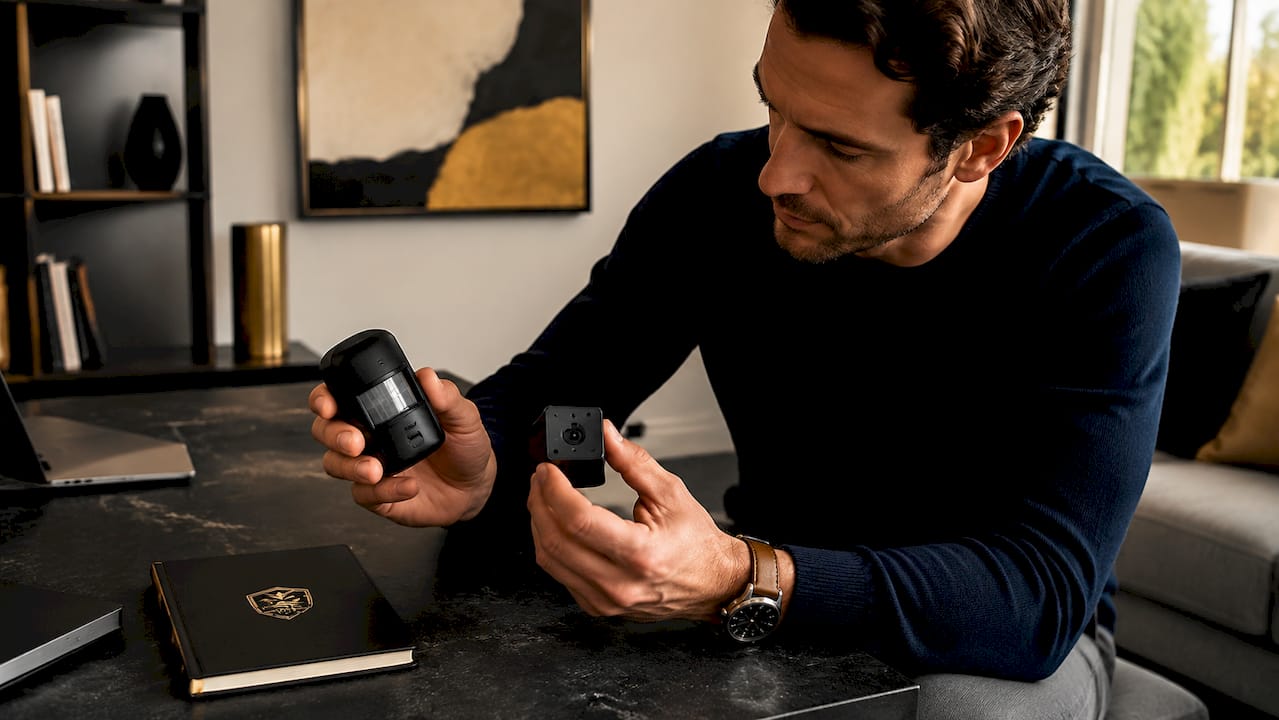
Pro Tip: If your home sits vacant for several months each year, prioritize sensor-based monitoring over cameras. You get real-time alerts without the liability of storing video footage of guests, house sitters, or service workers.
What technologies power discreet home monitoring systems?
Three technology categories define the current market for private home surveillance options.
| System type | Data captured | Privacy impact | Best use case |
|---|---|---|---|
| Camera-based | Video and images | High: stores visual footage | Active occupancy, visual verification |
| Sensor-based | Motion, sound, contact events | Low: no visual data | Vacant or seasonal homes |
| Millimeter-wave radar | Presence, movement, vital signs | Very low: no images or audio | Fall detection, occupancy sensing |
Camera systems are the most familiar home security solution, but they carry the highest privacy risk. Any footage stored in the cloud is a potential target for unauthorized access. Sensor-based systems record only event data: a door opened at 2 a.m., humidity crossed 65%, the HVAC stopped cycling. That data is far less sensitive and far more useful for maintenance alerts.
Millimeter-wave radar technology detects presence, movement, and even vital signs without recording images or audio. It can identify whether someone is in a room even when they are completely still. This makes it useful for fall detection in eldercare settings and for occupancy verification in vacant homes. The tradeoff is calibration. Radar sensors require precise setup to avoid false alarms triggered by pets or environmental movement, and that calibration must be tested under real home conditions before you trust the system for critical alerts.
Pro Tip: Test every sensor in your actual home environment for at least two weeks before relying on it. A sensor that works perfectly in a showroom may generate constant false alerts near a ceiling fan or a pet door.
How does discreet home monitoring protect privacy?
Privacy protection is the defining advantage of sensor-based monitoring over traditional camera surveillance. Traditional camera systems create a continuous visual record of everyone who enters the home, including family members, cleaners, and contractors. That record can be subpoenaed, hacked, or accidentally shared. Sensor systems avoid this entirely because they detect presence and patterns without capturing images or audio.
The shift from surveillance to oversight is the key concept here. Effective remote home monitoring balances security with residential dignity by focusing on anomaly detection rather than constant video feeds. This approach is especially important for non-primary residences where guests, property managers, or service workers regularly access the home. You want to know that something unusual happened, not to have a recording of every person who walked through the door.
Data security practices matter just as much as the technology itself. Local AI processing and end-to-end encryption reduce privacy risks by keeping sensitive data on local networks rather than the cloud. Homeowners should also apply these specific practices:
- Use strong, unique passwords for every device and app in the monitoring system.
- Enable two-factor authentication on all accounts with remote access.
- Choose systems that process data locally rather than uploading it to third-party servers.
- Update firmware on all devices regularly to close known security vulnerabilities.
- Audit who has access credentials and revoke them when a service relationship ends.
“The most effective monitoring approach for a non-primary residence is one that tells you something is wrong without telling the world everything that happens inside.” This principle drives the design of every well-built sensor-based system.
What are the real benefits and limitations for absentee homeowners?
The practical advantages of best discreet monitoring for absentee homeowners are significant. A sensor-based system gives you continuous remote oversight and real-time alerts for the conditions most likely to cause expensive damage: intrusion, water leaks, HVAC failure, and humidity spikes. You can receive a notification on your phone within minutes of a door contact triggering or a water sensor detecting moisture under a sink. Early detection of these issues routinely prevents thousands of dollars in repair costs.
That said, technology monitoring has real limitations that every homeowner should understand.
- False positives are common. Motion sensors triggered by insects, HVAC airflow, or shifting sunlight generate alerts that train homeowners to ignore notifications. That habit becomes dangerous when a real event occurs.
- Connectivity failures happen. A power outage, router failure, or cellular network disruption can take an entire system offline. Regular maintenance including battery checks, router restarts, and cellular backup verification is essential and is frequently overlooked by absentee owners.
- Sensors cannot interpret context. A humidity spike could mean a pipe burst, a window left open during rain, or a temporary weather event. A sensor reports the number. It cannot tell you which scenario applies.
- Technology does not replace judgment. Homeowners often mistake tech monitoring for Home Watch services, which involve physical human inspections that provide context and preventative care beyond what any sensor can deliver. Relying solely on sensors creates a false sense of security.
Pro Tip: Schedule a physical inspection of your monitoring equipment every time a professional visits your home. Dead batteries and offline sensors are the most common reason a system fails silently.
The combination of technology and human inspection is what produces reliable protection. Sensors catch events between visits. A trained inspector from Vanguard Home Watch LLC catches the things sensors miss: a slow roof leak visible only as a faint stain, a pest entry point behind an appliance, or an HVAC filter so clogged it is about to fail. You can read more about common issues in vacant homes to understand what sensors alone will not catch.
How do you choose the best discreet home monitoring service?
Selecting the right system starts with an honest assessment of your coverage needs. Most absentee homeowners do not need sensors in every room. Overuse of sensors causes alert fatigue, which means critical alerts get ignored because the system cries wolf too often. Strategic, high-value placement outperforms blanket coverage every time.
Use this framework to evaluate any monitoring service or system:
| Selection criterion | What to look for |
|---|---|
| Coverage priorities | Entry points, water sources, HVAC equipment, and main living areas |
| Data security | Local processing, end-to-end encryption, two-factor authentication |
| Alert quality | Adjustable sensitivity, event-based notifications, not continuous streaming |
| Maintenance requirements | Battery life, cellular backup, remote diagnostics |
| Professional integration | Compatibility with scheduled home watch inspections |
Self-monitoring means you receive alerts directly and decide how to respond. Professional monitoring means a central station receives alerts and dispatches services on your behalf. For seasonal homeowners who may be traveling or unreachable, professional monitoring adds a critical layer of response capability.
The most effective setup for a second home in Naples combines sensor-based technology with scheduled physical inspections. Sensors provide continuous coverage between visits. Inspections provide the human judgment that sensors cannot replicate. Vanguard Home Watch LLC coordinates directly with homeowners to align inspection schedules with the conditions their sensors are tracking, creating a complete picture of property health.
For seasonal home security in Florida, this coordination matters more than anywhere else. The combination of heat, humidity, and storm risk means that a sensor alert about humidity or a missed HVAC cycle demands a physical follow-up, not just a remote reset.
Key takeaways
Discreet home monitoring works best when sensor-based technology and professional human inspection operate together, because neither approach alone provides complete protection for an absentee or seasonal residence.
| Point | Details |
|---|---|
| Sensor-based systems protect privacy | They detect anomalies without storing video footage, reducing legal and security risks. |
| Radar technology adds depth | Millimeter-wave radar detects presence without images, but requires careful calibration to avoid false alarms. |
| Alert fatigue is a real risk | Strategic sensor placement at entry points and water sources outperforms blanket coverage. |
| Technology has hard limits | Sensors report data but cannot interpret context; human inspection fills that gap. |
| Combine tech with Home Watch | Vanguard Home Watch LLC inspections catch what sensors miss and confirm what they flag. |
What I’ve learned after years of watching technology fail vacant homes
I have walked into homes where every sensor was offline because no one had replaced the batteries in eight months. I have seen humidity alerts that sat unread on a homeowner’s phone while mold spread across a closet wall. Technology is genuinely useful. I use it and recommend it. But I have never seen a sensor open a door, look behind a refrigerator, or notice that a window screen was torn and insects were getting in.
The marketing around home monitoring technology tends to oversell autonomy. The pitch is that you can set it up and forget it. The reality is that sensors require maintenance, calibration, and a human being to act on what they report. Absentee homeowners who treat their monitoring system as a “set and forget” solution are the ones who call us after a problem has already become expensive.
What actually works is treating technology as the early warning layer and professional inspection as the verification and response layer. When a humidity sensor in a Naples home spikes during a summer storm, that alert means something different than the same spike in january. A trained inspector who knows the property, the local climate, and the home’s mechanical systems can make that call. A sensor cannot.
My honest recommendation: invest in a well-placed sensor system, keep it maintained, and schedule weekly or biweekly inspections with a professional home watch company. That combination gives you real peace of mind, not just a notification on your phone.
— Joseph
Vanguard Home Watch LLC: your partner in complete home protection
Technology monitors your home between visits. Vanguard Home Watch LLC makes sure someone with trained eyes and professional accountability shows up in person.
We provide weekly visual inspections of vacant and seasonal homes across Naples, North Naples, and Ave Maria, Florida. Every visit covers water leaks, HVAC performance, humidity levels, mold indicators, pest activity, storm damage, and security concerns. You receive a detailed digital report with photos after every inspection. Our team is fully insured, bonded, background checked, and accredited by the National Home Watch Association (NHWA). Learn exactly what a home watch inspector does and how that complements the sensor data your monitoring system collects. Contact Vanguard Home Watch LLC to schedule your first inspection.
FAQ
What is the difference between home watch and home monitoring?
Home monitoring uses sensors or cameras to detect and report events remotely. Home watch involves a trained professional physically inspecting the property to identify issues that technology cannot detect or interpret.
Are sensor-based systems truly private?
Sensor-based systems collect event data such as motion triggers or humidity readings, not images or audio. They carry significantly lower privacy risk than camera systems, especially when paired with local data processing and strong access controls.
How often should monitoring equipment be maintained?
Monitoring equipment requires regular maintenance including battery replacement, firmware updates, and connectivity checks. Absentee homeowners should schedule these checks at least every 90 days or coordinate them with professional home watch visits.
Can I rely on sensors alone to protect my vacant home?
Sensors provide valuable real-time alerts but cannot replace professional judgment. Physical inspections catch slow-developing issues, contextual problems, and maintenance needs that sensor data alone will not reveal.
What sensors are most useful for a seasonal home in Florida?
The highest-value sensors for a Florida seasonal home are water leak detectors near appliances and plumbing, door and window contacts on all entry points, temperature and humidity monitors, and a connected thermostat to verify HVAC operation remotely.

