A second home maintenance workflow in Florida is defined as a structured system of scheduled inspections, preventative upkeep, vendor coordination, and emergency protocols designed specifically for absentee owners. Florida’s climate makes this system non-negotiable. Humidity, mold, pests, and sudden system failures can turn a minor oversight into a five-figure repair bill within weeks of your departure. Weekly to biweekly inspections are the industry baseline for mitigating these risks in vacant homes. A well-built workflow keeps your property safe, your insurance valid, and your peace of mind intact while you are hundreds of miles away.
What does a second home maintenance workflow in Florida include?
The core of any Florida second home upkeep system rests on four pillars: inspection frequency, technology integration, vendor coordination, and documented emergency protocols. Each pillar addresses a specific vulnerability that absentee owners face. Skip one, and the others lose their effectiveness.
Inspection frequency and documentation
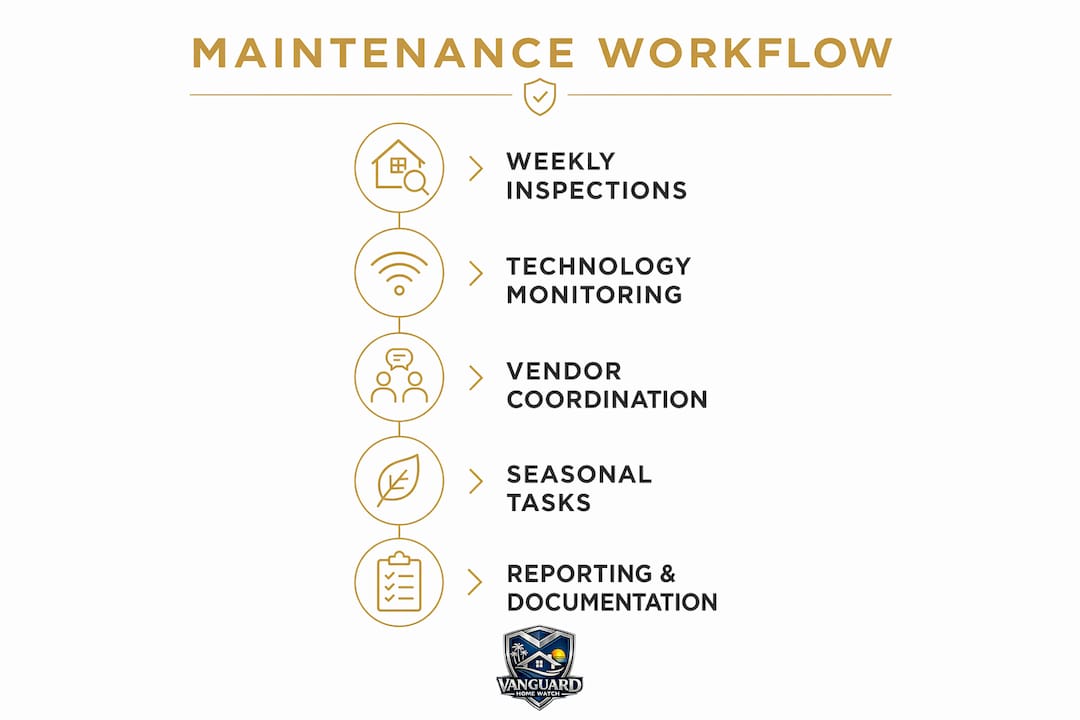
Weekly or biweekly inspections are the recognized industry standard for vacant Florida properties. Each visit should produce a written report with timestamped photos covering HVAC function, moisture levels, plumbing, pest activity, and security. Digital reports delivered after every visit give you a clear, dated record that satisfies most insurance documentation requirements.
Technology tools that support remote oversight
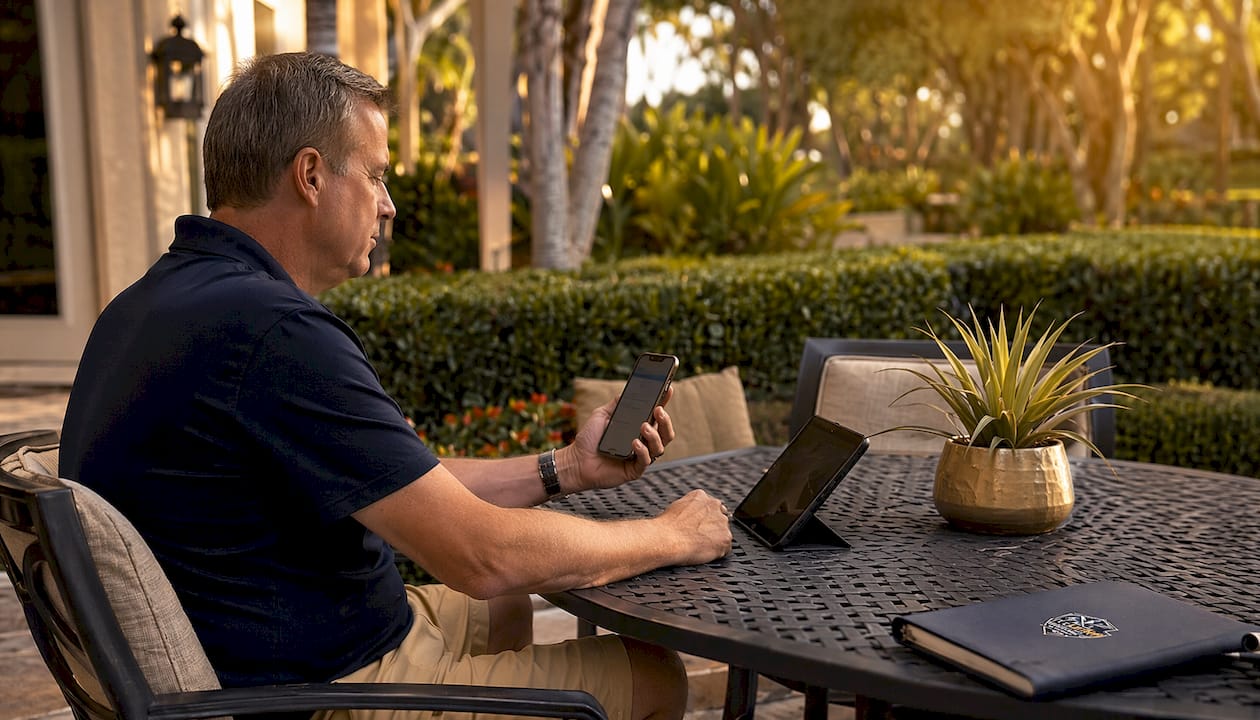
Smart home devices extend your visibility between physical inspections. Devices like the Ecobee smart thermostat let you monitor and control indoor temperature remotely, preventing the humidity spikes that feed mold growth. The Moen Flo water leak detector shuts off water automatically when it detects a pipe failure, which can prevent catastrophic water damage before your home watch provider even arrives. Smart locks give you the ability to grant and revoke access to vendors without distributing physical keys.
Vendor coordination and written authority
Every absentee owner needs a written authority list on file with their service providers. Pre-approved spending limits of $300–$500 allow your home watch provider to authorize emergency repairs immediately, without waiting hours or days for your approval. That speed is often the difference between a $200 fix and a $20,000 remediation. Vet every vendor for current insurance, bonding, and professional accreditation before adding them to your approved list.
Pro Tip: Ask every vendor for a certificate of insurance before their first visit. An uninsured contractor working in your vacant home can expose you to liability that your homeowner policy will not cover.
How do you schedule seasonal and routine maintenance for a Florida second home?
Scheduling is where most absentee owners fall short. They think about maintenance reactively, after something breaks. A proactive seasonal maintenance checklist for Florida homes prevents the most common and costly failures.
Tasks by frequency
Structure your maintenance calendar around four time horizons:
- Weekly: Visual inspection of all interior spaces, HVAC operation check, humidity reading, pest activity scan, security check of doors and windows
- Monthly: Test smoke and carbon monoxide detectors, check water heater operation, inspect lanai and exterior for storm debris or pest entry points, run all faucets and flush toilets to prevent drain seal evaporation
- Quarterly: Clean A/C condensate drain lines, inspect roof and gutters, check irrigation system, service pest control contract, test all GFCI outlets
- Annually: Full HVAC service by a licensed technician, water heater flush, exterior paint and caulk inspection, electrical panel check, full plumbing inspection
Critical seasonal tasks for Florida properties
The A/C condensate drain line is the single most common source of water damage in vacant Florida homes. Running the A/C and dehumidifying within 30 minutes of startup after a long closure prevents moisture buildup that damages ceilings and walls. Before you leave for the season, set your thermostat to 78–80°F to maintain airflow without running up utility costs.
Water heater management is equally critical and frequently overlooked. Turning off or setting your water heater to vacation mode before draining the system prevents element burnout during long absences. Leaving a water heater energized in an empty home with no water flowing is a common and expensive mistake.
For hurricane season, your storm preparation checklist should include clearing the lanai of all furniture and planters, securing shutters, and confirming your home watch provider has current emergency contact information.
| Maintenance Category | Frequency | Key Risk Prevented |
|---|---|---|
| HVAC condensate drain cleaning | Water damage from overflow | |
| Pest control service | Monthly/Quarterly | |
| Water heater inspection | Seasonal shutdown/startup | Element burnout, leaks |
| Roof and gutter inspection | Storm water intrusion | |
| Plumbing flush and check | Monthly | Drain seal evaporation, leaks |
Scheduling maintenance during low occupancy reduces costs and guarantees contractor availability. Trying to book an A/C technician in July in Naples is difficult and expensive. Book your annual service in april or october instead.
Pro Tip: Build your annual maintenance schedule in a shared digital calendar with your home watch provider. Both parties see upcoming tasks, and nothing falls through the cracks during seasonal transitions.
What are the most common remote management challenges for Florida second homes?
Home maintenance for absentee owners fails in predictable ways. Knowing the failure points in advance lets you build countermeasures into your workflow before a problem occurs.
The most frequent failures in vacant Florida homes are:
- Clogged A/C condensate drain lines. This is the leading cause of interior water damage in vacant properties. A quarterly flush with a wet/dry vacuum and diluted bleach solution costs under $50 and prevents thousands in ceiling and drywall repairs.
- Water heater element burnout. Leaving a water heater energized with no water in the system destroys the heating element. Always switch to vacation mode or shut it off completely before departure.
- Mold and mildew in closets and bathrooms. Stagnant air in closed spaces breeds mold within days in Florida’s humidity. Keeping interior doors open and running the A/C consistently prevents this.
- Pest entry through drain seals. When toilets and drains sit unused for weeks, the water seal in the trap evaporates. Roaches and other pests enter through the opening. Monthly flushing of all fixtures eliminates this entry point.
- Insurance compliance failures. Failure to maintain documented, scheduled inspections can void your homeowner policy in Florida. Most vacancy clauses require proof of regular checks.
A written communication protocol with monthly reports and immediate notifications for repairs exceeding $500 is the standard for responsible remote property management. Digital photo inspections delivered after every visit give absentee owners the documentation trail their insurance carrier expects.
Poor vendor communication is another frequent failure. Absentee owners often leave vague instructions and no spending authority, which forces vendors to delay repairs while waiting for approval. That delay turns a $400 plumbing fix into a $4,000 water damage claim. A clear escalation protocol, with defined spending thresholds and a 24-hour response commitment from your home watch provider, eliminates this gap.
Accurate insurance coverage for vacancy depends on documented, scheduled checks aligned with your policy terms. Review your policy’s vacancy clause every year and confirm your inspection schedule meets or exceeds its requirements.
How do you integrate professional home watch services into your maintenance workflow?
A home watch service and a property management company serve different functions. A home watch service focuses on visual inspections and immediate reporting, not tenant management or rental income. That distinction matters because the inspection mindset is fundamentally different. A home watch provider is trained to notice what is wrong, document it with photos, and escalate it immediately.
When selecting a home watch provider, verify the following before signing any agreement:
- Current general liability insurance and bonding
- Accreditation with the National Home Watch Association (NHWA)
- Background checks on all personnel who enter your home
- A clear written report delivered after every visit, with photos
- A defined emergency escalation protocol and spending authority process
- References from current clients in your specific area
Professional home watch services act as your on-site eyes and hands when physical visits are impossible. They catch the slow leak under the kitchen sink before it warps the cabinet floor. They notice the HVAC has stopped running before mold colonizes the walls. That early detection is the core value of the service.
Coordinate your home watch provider directly into your written authority list. Give them pre-approved spending authority of $300–$500 for emergency repairs, a list of your vetted vendors, and a clear communication schedule. Quarterly digital photo reports increase transparency and give you a documented record for insurance purposes. When you combine a reliable home watch provider with smart home technology, you create a layered protection system that covers both real-time alerts and scheduled physical verification.
Engaging a NHWA-accredited home watch company also strengthens your position with your insurance carrier. Many Florida insurers look favorably on documented professional inspections when evaluating vacancy-related claims.
Key Takeaways
A structured Florida second home maintenance workflow, built on weekly inspections, seasonal scheduling, and documented emergency protocols, is the most reliable way to protect a vacant property from costly damage.
| Point | Details |
|---|---|
| Inspect weekly or biweekly | Industry-standard inspection frequency reduces mold, pest, and system failure risks in vacant Florida homes. |
| Use a written authority list | Pre-approved spending limits of $300–$500 let your home watch provider act immediately on emergency repairs. |
| Schedule maintenance off-peak | Book A/C service and contractor work in april or october to avoid summer scarcity and higher costs. |
| Document everything for insurance | Dated photo reports after every inspection satisfy most Florida vacancy policy requirements. |
| Combine technology with professionals | Smart devices like Ecobee and Moen Flo complement but do not replace physical inspections by a trained provider. |
What I have learned from watching Florida second homes up close
After years of inspecting vacant homes in Naples and the surrounding area, the pattern I see most often is this: absentee owners invest in the property but not in the system that protects it. They buy a beautiful home, install a smart thermostat, and assume that covers it. It does not.
The homes that stay in the best condition share one trait. Their owners built a real workflow before they left. They set up a written authority list. They scheduled their A/C service before hurricane season. They chose a home watch provider based on credentials, not just price. They did not wait for something to break.
The owners who call me with the worst situations are the ones who relied on a neighbor to “check in occasionally.” A neighbor is not trained to spot a slow condensate leak or recognize early mold growth behind a bathroom door. Good intentions are not a maintenance system.
Budgeting for upkeep matters too. Reserving roughly 1% of your property’s market value annually for maintenance costs gives you a realistic fund for both routine work and unexpected repairs. Most absentee owners underestimate this number until they face a major repair with no reserves.
My honest recommendation: treat your Florida second home like a business asset. Build the workflow, document the protocols, and hire professionals with verifiable credentials. The cost of prevention is always lower than the cost of recovery.
— Joseph
How Vanguard Home Watch LLC supports your Florida property workflow
Absentee owners who want a dependable, documented system for their Florida second home rely on Vanguard Home Watch LLC for weekly and biweekly visual inspections across Naples, North Naples, and Ave Maria.
Every visit produces a detailed digital report with photos, delivered directly to you after each inspection. Joseph and Elizabeth Vangelakos personally oversee every client relationship, and all services are backed by full insurance, bonding, and National Home Watch Association accreditation. Review the inspection frequency options to find the schedule that fits your property and absence period. For a no-obligation consultation, contact Vanguard Home Watch LLC directly through napleshomewatchservices.com.
FAQ
What is the recommended inspection frequency for a vacant Florida home?
Weekly to biweekly inspections are the industry standard for vacant Florida second homes. This frequency catches humidity spikes, pest activity, and system failures before they escalate into major damage.
What is the difference between home watch and property management?
A home watch service provides visual inspections and immediate reporting on property conditions, while property management handles tenant relations and rental operations. The two roles are distinct and serve different owner needs.
How do I protect my Florida home insurance coverage while I am away?
Documented, scheduled inspections aligned with your policy’s vacancy clause are required to maintain coverage. Failure to comply can void your homeowner policy, so confirm your inspection schedule meets your carrier’s specific terms.
What spending authority should I give my home watch provider?
A written authority list with pre-approved limits of $300–$500 is the standard threshold. This allows your provider to authorize emergency repairs immediately without waiting for your approval, which prevents minor issues from becoming major damage.
How do I prepare my Florida second home before leaving for the season?
Set your thermostat to 78–80°F, switch your water heater to vacation mode, flush all drains and toilets, clear the lanai, and confirm your home watch provider has current emergency contacts. A complete seasonal shutdown checklist covers every step in the correct order.

