Remote contractor management is the practice of supervising hired tradespeople and vendors from a distance using technology, documentation protocols, and trusted local representatives. For Naples homeowners who split their time between Florida and another state, this is not a convenience. It is a necessity. A layered approach combining smart sensors and human inspections gives you reliable oversight of your property without being on-site. The tools exist today to manage contractors remotely on your Naples home with the same confidence you would have standing in the driveway. You just need to know how to deploy them.
What does it take to manage contractors remotely on a Naples home?
The short answer: smart access technology, a vetted local home-watch partner, and a clear contractor verification process. These three layers work together. Technology gives you visibility. A local service gives you accountability. Verification gives you legal protection. Miss any one of them and you are exposed to delays, damage, or fraud.
Naples presents specific challenges that homeowners in other markets do not face. The subtropical climate means humidity, mold, and water intrusion can develop within days of a plumbing repair gone wrong. Hurricane season adds urgency to any exterior work. And because many Naples homeowners are seasonal residents, contractors know the owner is not watching. That knowledge changes behavior. The systems you put in place need to account for it.
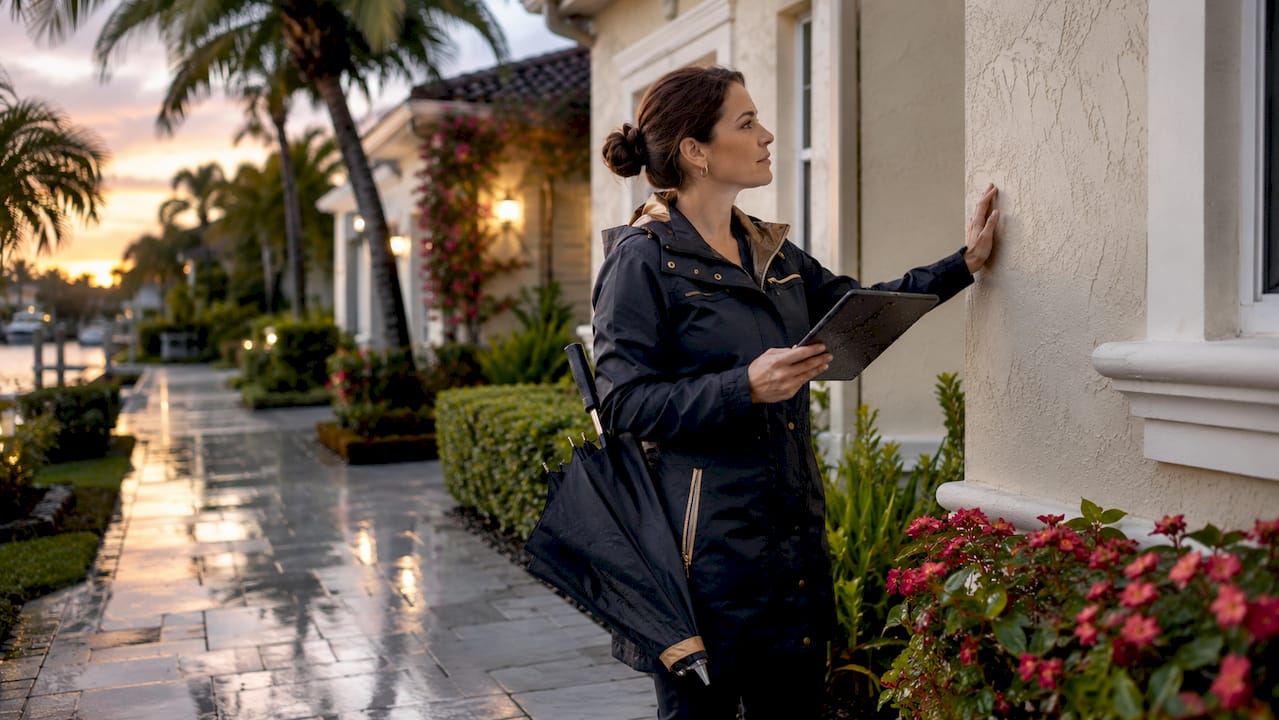
The industry term for this practice is remote property oversight, though many homeowners simply call it virtual contractor supervision. Both phrases describe the same goal: maintaining control of work quality, site access, and project progress without physical presence.
Essential tools for virtual contractor oversight at your Naples property
Smart home technology has made remote supervision genuinely practical. The right combination of devices gives you real-time visibility into who enters your home, what conditions exist inside, and whether anything has gone wrong.
Here are the core tools every Naples homeowner should consider:
- Smart locks with Wi-Fi gateways. A keypad lock without a gateway cannot provide remote app control or entry history. You need the gateway to unlock doors remotely, issue time-limited codes to contractors, and pull access logs after the visit. Schlage Encode Plus, Yale Assure Lock 2, and August Wi-Fi Smart Lock all offer gateway-enabled remote access.
- Water leak and humidity sensors. Florida’s climate makes these non-negotiable. Devices from Moen Flo, Govee, and Aqara detect moisture at the source and send immediate alerts to your phone. A plumber who leaves a fitting loose will not go unnoticed for weeks.
- Security cameras. Indoor and outdoor cameras from Ring, Arlo, or Nest give you live and recorded footage of contractor activity. Position them at entry points and work areas before any project begins.
- Integrated mobile apps. Platforms like Google Home and Apple Home consolidate alerts from locks, sensors, and cameras into a single dashboard. One app showing all activity is far more manageable than three separate notifications streams.
| Device Type | Recommended Options | Key Feature | Approximate Cost |
|---|---|---|---|
| Smart lock | Schlage Encode Plus, Yale Assure Lock 2 | Time-limited codes, access logs | $150 to $300 |
| Leak sensor | Moen Flo, Govee, Aqara | Real-time moisture alerts | $30 to $250 |
| Security camera | Ring, Arlo, Nest | Live view, motion recording | $100 to $400 |
| Smart hub | Google Home, Apple Home | Unified alert dashboard | $50 to $130 |
Pro Tip: Before any contractor arrives, test your smart lock gateway by issuing a temporary code from your phone and confirming the access log records the entry. If the log does not update, your gateway is not properly connected and you have no audit trail.
How to coordinate with local home-watch services for contractor management
Technology monitors. People act. That distinction matters enormously when a contractor does not show up, a repair creates a new problem, or a storm hits mid-project. A professional home-watch service fills the gap between your phone screen and the physical reality of your Naples home.
Home-watch services in Naples coordinate vendor visits, supervise contractor work, and deliver photo updates and notifications for urgent issues. They serve as your eyes and ears on the ground, which is exactly what remote oversight requires. The best providers do not dispatch a rotating staff. They send the same trusted person every time, which means they notice when something looks different from the last visit.
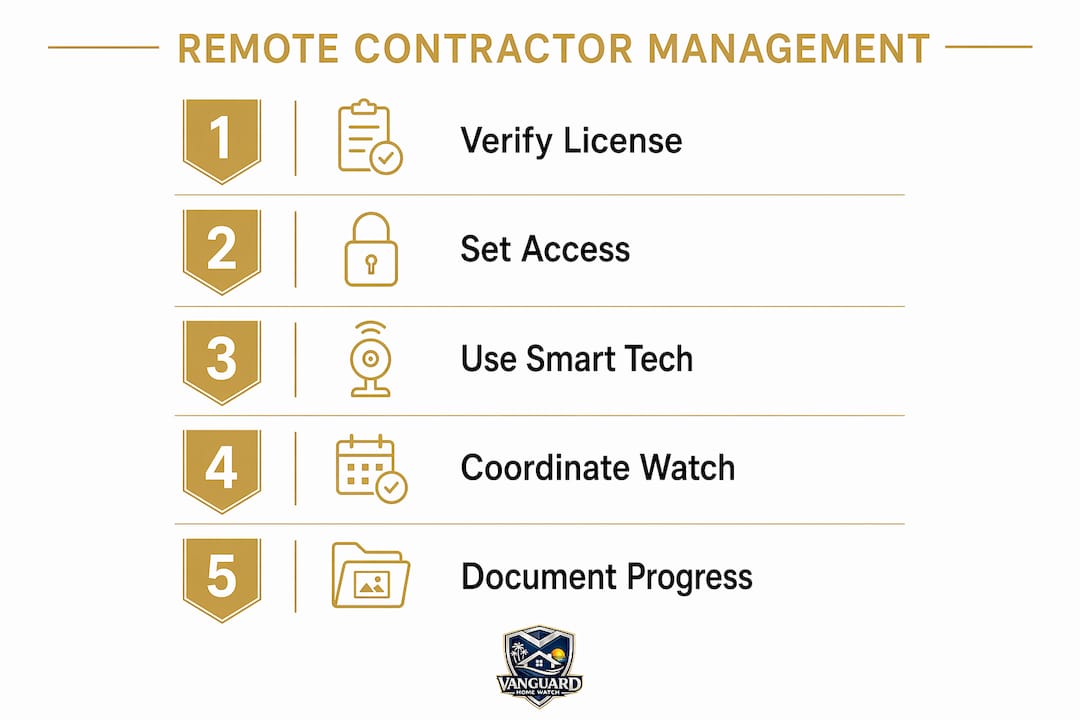
Here is how a typical remote contractor coordination process works through a home-watch provider:
- Pre-visit setup. You notify your home-watch provider of the contractor’s scheduled arrival, scope of work, and expected duration. The provider confirms access arrangements and any special instructions.
- Access coordination. Your provider either meets the contractor on-site or confirms entry via smart lock logs. They verify the contractor’s identity against the name you provided.
- During-work check. For multi-day projects, your provider conducts a mid-project walkthrough and sends you photos of progress. Any concerns are flagged immediately, not at the end of the job.
- Completion inspection. After the contractor leaves, your provider does a final walkthrough, documents the completed work with photos, and confirms the property is secured.
- Report delivery. You receive a written report with timestamped photos. This creates an audit trail that protects you if disputes arise later.
Operational response for Naples home-watch includes exterior inspections within 24 to 48 hours and immediate phone alerts for urgent issues like leaks or security breaches. That response window matters when a contractor’s work causes a secondary problem you were not expecting.
Pro Tip: When selecting a home-watch provider, confirm they are accredited by the National Home Watch Association (NHWA) and carry their own liability insurance. An uninsured provider visiting your home during a contractor project creates its own liability exposure.
How to verify a Florida contractor license before hiring remotely
Hiring an unlicensed contractor in Florida is not just a quality risk. Unlicensed contracting is a first-degree misdemeanor that can result in jail time and fines. As a homeowner who hired the contractor, you may also face liability if unpermitted work causes injury or property damage. Verifying credentials before signing anything is the single most effective risk-reduction step you can take.
The Florida Department of Business and Professional Regulation (DBPR) maintains a public license lookup at MyFloridaLicense.com. The DBPR license lookup returns exact license status, license class, bonding information, and any disciplinary history. Use it for every contractor, regardless of how they were referred.
Follow these steps before hiring any contractor for your Naples home:
- Search by license number. Ask the contractor for their license number before the call ends. Do not accept a business card alone. Search the number directly on MyFloridaLicense.com.
- Confirm the license class matches the work. A roofing contractor’s license does not authorize electrical work. License class must match the project scope or the work is effectively unlicensed.
- Check active status. An expired license is not a valid license. The DBPR search will show whether the license is currently active.
- Verify the business entity. Confirm the contractor’s business name on the license matches the name on the contract you are signing. Mismatches are a red flag.
- Document everything. Screenshot the DBPR search result with the date visible and save it with your project records.
“Active license status alone is not sufficient. Homeowners must confirm that the license class matches the project’s scope to ensure the contractor is legally authorized to perform the specific work being hired.”
If a contractor resists providing their license number or the DBPR search returns no results, stop the hiring process. No project timeline justifies the legal and financial exposure of unlicensed work on your Naples property.
Best practices for access control and communication with remote contractors
Granting a contractor access to your home while you are out of state requires more than handing over a code. Smart lock access credentials should be time-limited, revocable, and logged to prevent security risks. A code that works indefinitely is a security liability the moment the project ends.
Use these practices to maintain control throughout any contractor engagement:
- Issue unique codes per contractor. Never share one code across multiple vendors. Unique codes mean you know exactly who entered and when.
- Set time windows. Program codes to activate only during scheduled work hours. A code valid from 8 a.m. to 5 p.m. on specific dates eliminates after-hours access risk.
- Revoke immediately upon completion. Delete the contractor’s code the day the job ends. Do not wait.
- Request photo updates at defined milestones. Specify in your contract that the contractor must send photos at project start, mid-point, and completion. This creates a record and keeps the contractor accountable.
- Establish an emergency protocol. Define in writing how the contractor should respond if they discover a leak, structural concern, or storm damage during their work. They should contact your home-watch provider and you simultaneously.
Mitigation and documentation after urgent water intrusion or storm damage reduces overall repair costs and supports smoother insurance claims. Your contractor and home-watch provider should both know this protocol before work begins, not after an emergency occurs.
Pro Tip: For multi-day projects, ask your home-watch provider to conduct an unannounced mid-project visit. Contractors who know inspections may happen at any time consistently deliver better work quality.
Key takeaways
Effective remote contractor management for a Naples home requires verified credentials, smart access technology, and a trusted local home-watch partner working together.
| Point | Details |
|---|---|
| Layer your oversight | Combine smart sensors, cameras, and a local home-watch provider for full coverage. |
| Verify every license | Use MyFloridaLicense.com to confirm license class, active status, and business entity before signing any contract. |
| Use time-limited access codes | Issue unique, revocable smart lock codes per contractor and delete them immediately after project completion. |
| Require photo documentation | Specify milestone photos in the contract to create an audit trail and maintain accountability. |
| Know your emergency protocol | Define water and storm damage response steps in writing before work begins to reduce repair costs and insurance disputes. |
What I have learned from watching homeowners manage contractors from afar
I have seen the full range of outcomes when Naples homeowners try to manage contractors remotely. The ones who do it well share one habit: they treat local human oversight as non-negotiable, not optional. Technology is genuinely useful. Smart locks and leak sensors have prevented real damage. But I have never seen a camera catch a contractor cutting corners on a tile installation or notice that a subcontractor swapped a specified material for a cheaper one. That takes a person who knows what to look for.
The mistake I see most often is homeowners relying entirely on the contractor’s own updates. A contractor who is behind schedule or has made an error has every incentive to send reassuring texts and delay the bad news. An independent local representative has no such incentive. Their job is to tell you what they actually see.
The other pattern worth noting is what happens when homeowners skip license verification because a contractor came highly recommended. Referrals are valuable, but a license can lapse, a disciplinary action can occur, and a business can change hands. The DBPR search takes three minutes. It has saved homeowners from situations that would have cost them tens of thousands of dollars in unpermitted work remediation.
My honest advice: build your remote management system before you need it. Identify your home-watch provider, set up your smart lock gateway, and run a test access cycle before any contractor is scheduled. When a project comes up, you execute a process you already know works rather than scrambling to set one up under deadline pressure.
— Joseph
How Vanguard Home Watch LLC supports your remote contractor oversight
Vanguard Home Watch LLC provides the local, trusted presence that makes remote contractor management work for Naples homeowners. We personally coordinate contractor access, conduct mid-project and post-completion inspections, and deliver detailed photo reports after every visit. As accredited members of the National Home Watch Association (NHWA), fully insured and bonded, we give you an independent set of eyes that answers to you alone.
Whether you are managing a renovation from out of state or simply need reliable oversight during a repair, our Naples home watch inspections give you documented accountability at every stage. We also help homeowners who do not yet have trusted local contractors by recommending vetted providers from our network. To learn more about how we work or to discuss a plan for your property, contact us directly or visit our service overview to find the right inspection frequency for your home.
FAQ
How do I manage contractors remotely on my Naples home?
Combine smart lock access codes, water and humidity sensors, security cameras, and a local home-watch service that can conduct physical inspections and send photo reports. This layered approach gives you both real-time alerts and documented accountability.
What is the best way to verify a Florida contractor’s license?
Search the contractor’s license number on MyFloridaLicense.com through the Florida DBPR. Confirm the license is active, the license class matches your project’s scope, and the business entity name matches the contract you are signing.
Can a home-watch service supervise contractors on my behalf?
Yes. Home-watch providers in Naples personally perform inspections, coordinate vendor access, and deliver photo documentation, making them a direct substitute for on-site homeowner presence during contractor projects.
How should I set up smart lock access for a contractor?
Issue a unique, time-limited access code that activates only during scheduled work hours. Confirm your smart lock has a Wi-Fi gateway so the access log is visible remotely, and revoke the code immediately when the project ends.
What happens if a contractor causes damage while I am away?
Your home-watch provider should conduct an immediate inspection, document the damage with photos, and notify you within hours. Mitigation and documentation steps taken quickly reduce repair costs and support insurance claims, so having a local representative on call is critical.
