Preparing your Naples home before leaving is the single most effective way to prevent costly damage, security breaches, and insurance complications during a seasonal absence. Naples homeowners face a specific set of risks: high humidity, salt air corrosion, hurricane season, and the insurance unoccupancy provisions that can void coverage after 30 days without documented inspections. The industry term for this process is “seasonal home preparation,” and it covers everything from HVAC maintenance to security system registration. Done correctly, it protects your property, your policy, and your peace of mind.
What are the essential maintenance tasks to prepare your Naples home before leaving?
HVAC care is the most critical maintenance task for any Naples homeowner heading out for the season. Naples humidity can trigger mold growth within 2–3 weeks if your air conditioning system is not set and maintained correctly. The 78°F thermostat setting is the accepted Naples snowbird standard. It keeps the AC running enough to pull moisture from the air without running up your electric bill.
Follow these steps in order before you leave:
- Replace the air filter. A clogged filter forces the system to work harder and reduces its ability to dehumidify the home.
- Clean the condensate drain line. Pour distilled vinegar down the line to clear algae buildup. Bleach damages PVC drain lines over time, causing hidden leaks behind walls that you will not discover until you return.
- Set the thermostat fan to AUTO. Running the fan continuously blows moisture back into the home during off cycles. AUTO mode allows proper moisture removal during each cooling cycle.
- Clear the outdoor condenser unit. Remove debris, trim back vegetation, and visually inspect the unit for signs of corrosion or damage.
- Schedule a professional HVAC inspection. A licensed technician can identify refrigerant issues, failing capacitors, or drainage problems that a visual check will miss.
Pro Tip: Set a calendar reminder to have your HVAC professionally serviced two weeks before your departure date. This gives you time to schedule repairs before you leave, not after a problem surfaces while you are away.
Moisture control extends beyond the AC system. Check bathroom exhaust fans, inspect under-sink areas for slow drips, and verify that your water heater is set to vacation mode. These small steps prevent the kind of gradual damage that compounds over a six-month absence.
How to secure your Naples home effectively before a seasonal absence
Physical security and electronic monitoring work together. Neither alone is enough for a home that will sit vacant for months.
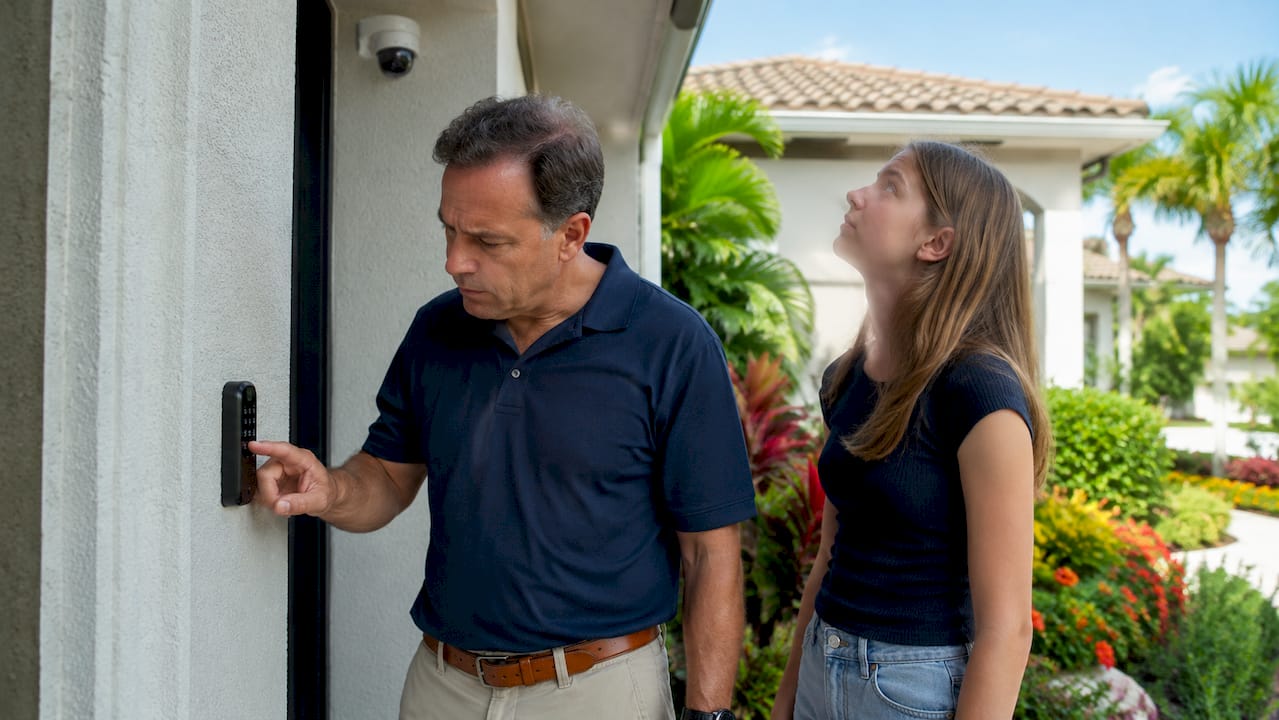
Start with the locks. Sliding glass doors are a primary burglary target in Naples because factory latches are weak and the doors are often hidden from street view by pool enclosures or landscaping. Upgrade to double bolt locks that anchor directly into the door frame. This prevents both lifting and forced entry, which are the two most common methods used on sliders.
Key security steps for Naples homeowners:
- Register your alarm system. Security systems must be registered with Collier County or the Naples Police Department within 30 days of installation. Failure to register can result in fines up to $500 and, more critically, no police response to your alarm. Annual permit fees run $25–$50. That is a small price for guaranteed response.
- Choose weather-rated cameras. Naples salt air and tropical storms destroy standard cameras quickly. IP66 or IP67 rated equipment with cellular backup is the minimum standard. Battery backup should sustain at least 24 hours during a power outage or hurricane.
- Inspect door and window seals. Degraded seals are both a security gap and an AC efficiency problem. Replacing worn weatherstripping takes 20 minutes and closes two vulnerabilities at once.
- Use interior light timers. Randomized lighting patterns are more convincing than a single lamp on a fixed schedule.
Pro Tip: Walk your property from the street and from the back yard before you leave. Look at it the way a burglar would. Identify which entry points are hidden from neighbors and prioritize those for upgraded hardware.
Layered security is the standard approach for seasonal home security in Naples. Physical locks handle the first line. Smart cameras and alarms handle the second. Professional monitoring handles the third.
What role do professional home watch services play for seasonal Naples homeowners?
A neighbor checking in occasionally is not a substitute for professional home watch. Casual check-ins miss subtle but serious problems: a slow humidity rise, a condensate line backing up, a pest intrusion in a cabinet, or a roof soffit damaged by wind. These issues are invisible to an untrained eye and become expensive when left undetected for weeks.
Professional home watch companies provide a fundamentally different level of oversight:
- GPS-verified inspection logs. Every visit is time-stamped and location-confirmed. Photo documentation transforms vague reassurance into verified security. You can see exactly what was checked and when.
- Trained, background-checked inspectors. Professionals know what to look for: HVAC condensate overflow, signs of pest activity, water stains on ceilings, and security anomalies.
- Integration with smart home devices. A professional service can respond to alerts from your smart thermostat, water sensor, or security camera and take action immediately.
- Emergency coordination. When a problem is found, a professional home watch company contacts your preferred vendors, coordinates access, and documents the response. A neighbor cannot do this reliably.
“Evidence-based reporting transforms vague assurance into verified security.” This is the core difference between a professional inspection and a casual visit.
Vanguard Home Watch LLC serves Naples, North Naples, and Ave Maria with weekly visual inspections that cover HVAC, plumbing, humidity, pest activity, storm damage, and security. Every visit produces a detailed digital report with photos. Clients receive that report the same day. The benefits of professional home watch go beyond convenience. They directly reduce the risk of a small problem becoming a $20,000 repair.
What utilities and final checks should you complete right before leaving your Naples home?
The 48 hours before departure are the most important window in your checklist for Naples homeowners. This is when you close out the details that protect your property for the full duration of your absence.
Complete these steps before you lock the front door:
- Manage your water supply. Shut off the main water valve if your home will be fully vacant, or install a leak detection device if you prefer to keep water active. Review your insurance unoccupancy clauses first. Some policies require water shutoff or documented inspections to maintain coverage.
- Suspend or redirect mail and packages. The U.S. Postal Service offers a mail hold service for up to 30 days. For longer absences, redirect mail to your primary address or use a mail forwarding service.
- Clear the kitchen and bathrooms. Remove all perishables. Clean the refrigerator and leave it running at a higher temperature setting, or unplug it and leave the door propped open. Wipe down bathroom surfaces to prevent mold from starting before you are even on the road.
- Confirm thermostat settings. Verify the 78°F setting and the AUTO fan mode one final time. Check that the AC is actually running before you leave the property.
- Pay bills in advance. Set up automatic payments for utilities, HOA fees, and insurance premiums. A lapsed payment can trigger a policy cancellation while you are away.
- Notify your HOA or property management. Leave an emergency contact number and confirm any community rules about vacant properties.
- Secure all entry points. Walk every door and window. Check the garage door, any pet doors, and the attic access hatch if it is in an exterior wall.
Paying bills and notifying your HOA takes less than an hour. Skipping these steps can create problems that take months to resolve from out of state.
Key takeaways
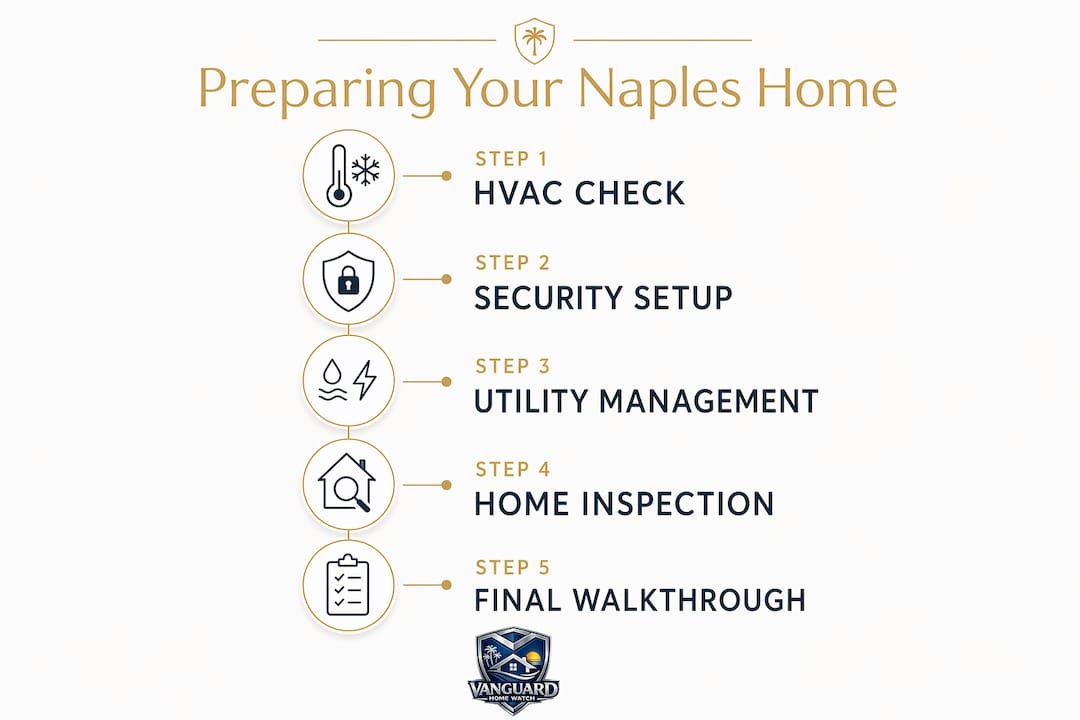
Properly preparing your Naples home before leaving requires HVAC maintenance, layered security, utility management, and professional home watch to prevent damage and maintain insurance coverage.
| Point | Details |
|---|---|
| Set thermostat to 78°F | This setting prevents mold growth while keeping energy costs reasonable during your absence. |
| Register your alarm system | File with Collier County or Naples PD within 30 days to avoid fines and guarantee police response. |
| Upgrade sliding door locks | Double bolt hardware anchored into the frame stops the two most common forced-entry methods. |
| Use distilled vinegar on drain lines | Bleach damages PVC condensate lines and causes hidden leaks. Vinegar clears algae safely. |
| Hire professional home watch | GPS-verified, photo-documented inspections catch what casual check-ins consistently miss. |
What I’ve learned after years of watching Naples homes
After years of working with seasonal homeowners in Naples, the single most underestimated risk is humidity. Most homeowners think about locks and alarms. Very few think about what happens inside their walls when the AC is set too high or the fan runs continuously. I have seen mold establish itself in under three weeks in a home where the thermostat was set to 82°F instead of 78°F. The homeowner returned to a remediation bill that dwarfed the cost of a full season of professional monitoring.
The second thing I have learned is that documentation matters more than people expect. When a homeowner files an insurance claim for water damage, the first question the adjuster asks is: who was checking the property? A neighbor’s verbal account carries no weight. A GPS-verified inspection log with timestamped photos is a different conversation entirely.
Security threats in Naples have also evolved. Sliding glass doors remain the most common entry point, but I am seeing more cases where criminals research vacant properties before acting. Randomized lighting, registered alarms, and a visible professional presence all reduce that risk. Informal arrangements with neighbors, however well-intentioned, do not create that visible deterrent.
My honest recommendation: treat your seasonal home preparation as a system, not a checklist. Every element connects. Your HVAC setting affects your humidity, which affects your mold risk, which affects your insurance claim. Your alarm registration affects police response, which affects your actual security outcome. When you treat these steps as isolated tasks, you miss the connections that matter most.
— Joseph
Vanguard Home Watch LLC: professional care for your Naples home while you are away
Seasonal homeowners in Naples deserve more than a locked door and a hope. Vanguard Home Watch LLC provides weekly visual inspections by fully insured, bonded, and background-checked professionals accredited by the National Home Watch Association (NHWA).
Every inspection covers HVAC performance, plumbing, humidity levels, pest activity, storm damage, and security. Clients receive a detailed digital report with photos after every visit. Founded by retired law enforcement lieutenant Joseph Vangelakos and real estate professional Elizabeth Vangelakos, Vanguard Home Watch LLC brings direct accountability to every property we serve. Review our service frequency options to find the right inspection schedule for your property, or contact us directly to discuss your seasonal home preparation needs.
FAQ
What temperature should I set my thermostat to when leaving Naples?
Set your thermostat to 78°F before leaving. This setting keeps the AC running enough to control humidity and prevent mold growth, which can begin within 2–3 weeks at higher settings.
Do I need to register my home security system in Naples?
Yes. Security systems must be registered with Collier County or the Naples Police Department within 30 days of installation. Unregistered systems risk fines up to $500 and may not receive a police response.
Why are sliding glass doors a security risk in Naples homes?
Sliding glass doors are frequently targeted because factory latches are weak and the doors are often hidden from street view. Double bolt locks anchored into the door frame are the most effective upgrade.
Is a neighbor check-in enough when I leave my Naples home for the season?
Neighbor check-ins miss subtle problems like rising humidity, slow leaks, and pest activity. Professional home watch services provide GPS-verified logs and photo documentation that casual visits cannot replicate.
What does my insurance require when my Naples home is vacant?
Many policies include unoccupancy provisions that require documented regular inspections or water shutoff after 30 days. Review your policy before leaving and confirm what your insurer requires to keep coverage active.

