Professional home watch documentation is the verified, post-visit record of a property inspection conducted by a trained and insured professional, designed to keep absentee homeowners informed and their investments protected. If you own a seasonal home in Naples or anywhere in Southwest Florida, you already know the anxiety of leaving a property unattended for months. What is professional home watch documentation, exactly? It is a systematic report, not a casual email from a neighbor, but a structured digital record with timestamped photos, a completed checklist, and professional notes delivered after every visit. The National Home Watch Association (NHWA) recognizes this documentation as the foundation of credible property oversight. Vanguard Home Watch LLC builds every client relationship on this standard.
What does professional home watch documentation include?
Professional home watch documentation is a systematic post-visit report with timestamped photos, a completed checklist, and professional notes confirming a visual inspection took place. Reports typically cover 25–40 checklist items including interior and exterior systems, and are delivered within 24–48 hours of the visit. That delivery window matters because a delayed report is a delayed response to any issue found.
The checklist itself spans both the inside and outside of the property. Interior items include HVAC operation, water heater condition, visible plumbing, signs of moisture or mold, pest activity, and general security. Exterior items cover the roof, gutters, driveway, landscaping, pool equipment, and storm shutters. Each item receives a status notation, and any flagged concern gets a photo attached directly to that line item.
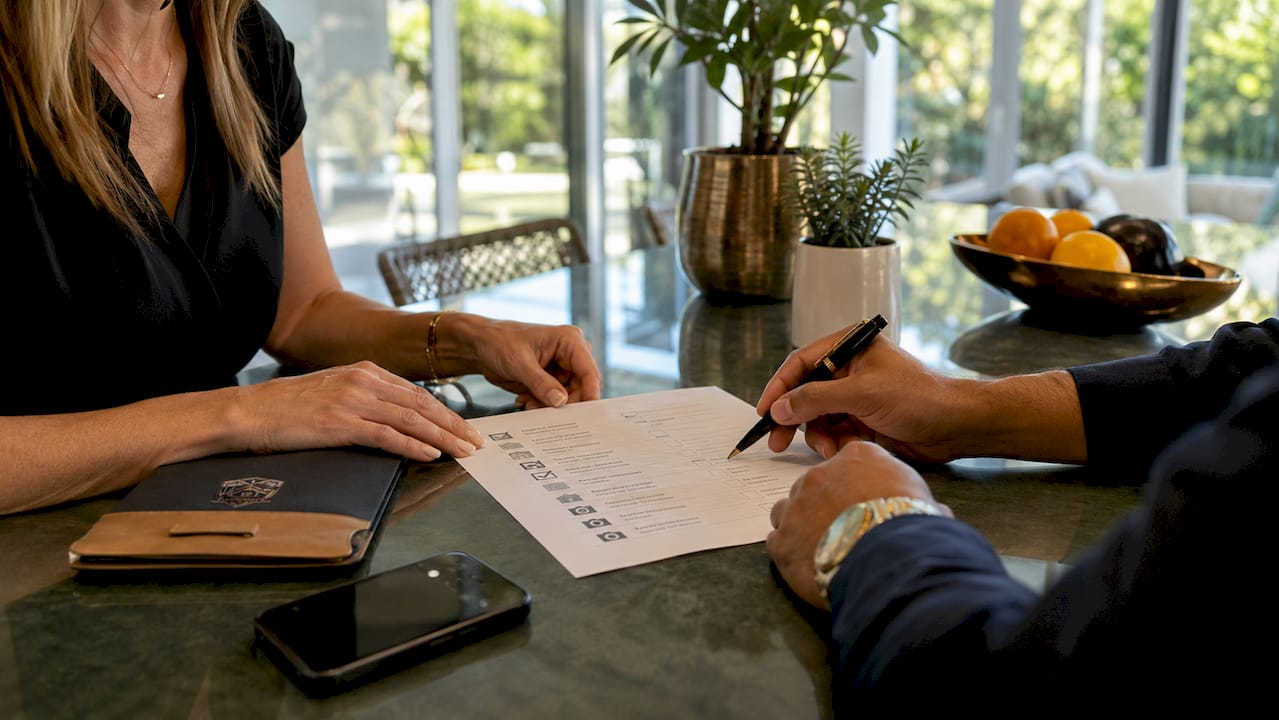
Photos are not decorative. They are evidence. Each image is linked to a specific checklist item, timestamped, and geotagged so there is no question about when or where it was taken. GPS-verified check-ins and timestamped photographs create an ironclad record for dispute avoidance and insurance purposes. That level of traceability protects both the homeowner and the service provider.
Written notes add the layer that photos alone cannot provide. A photo shows a water stain on a ceiling. A professional note explains whether it appears fresh or old, whether the HVAC drain line above it was clear, and what the recommended next step is. Documentation fills the context gap that automated sensors and alarms cannot, providing narrative explanations and actionable recommendations. That narrative is what separates a professional report from a simple checklist.
- Checklist coverage: 25–40 items spanning interior systems, exterior conditions, and security
- Photo documentation: timestamped, geotagged images linked to specific checklist items
- GPS verification: confirms the inspector’s presence at the property at a specific time
- Professional notes: written context explaining flagged items and recommended next steps
- Report format: branded, clean PDF delivered digitally within 24–48 hours of the visit
- Digital delivery: accessible on any device, easy to forward to contractors or insurers
Pro Tip: Ask your home watch provider to send you a sample report before you sign a contract. A well-structured report tells you immediately whether the service operates at a professional level or is running on paper forms and text messages.
How does documentation support insurance claims and risk management?
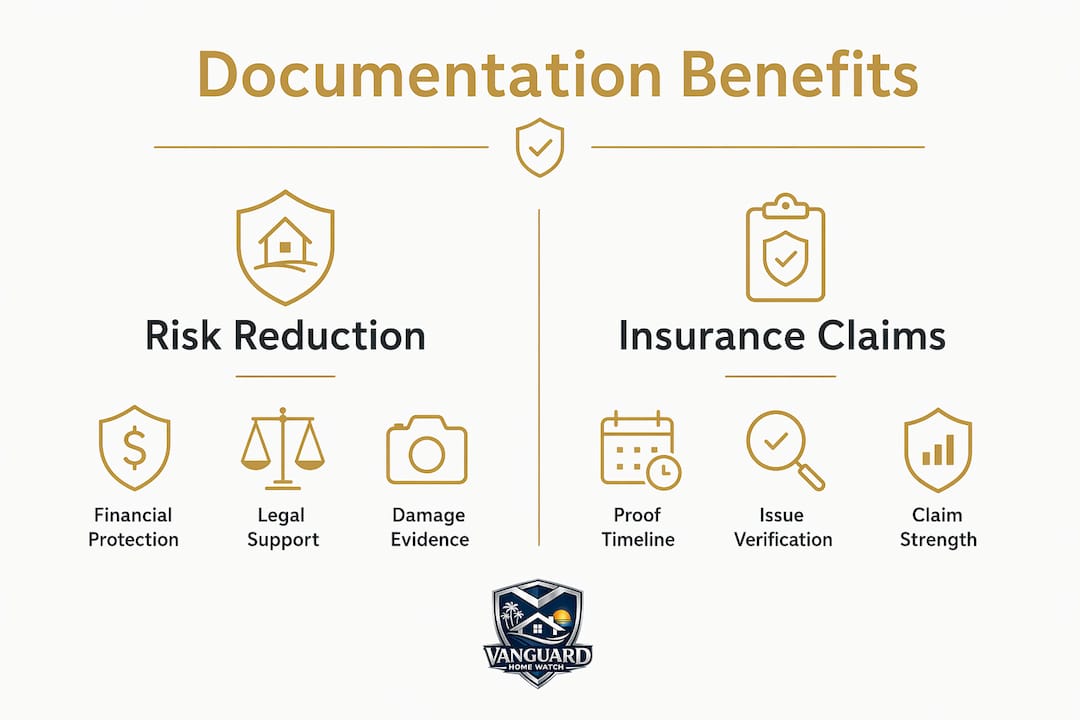
A chronological digital archive of home watch reports is primary evidence when an insurance claim depends on proving when a problem was first discovered. A caught leak can save thousands compared to damage discovered months later. That is not an abstract benefit. A slow roof leak found in week two costs far less to repair than the same leak found after six months of mold growth and structural damage.
Insurance adjusters look for proof of when an issue began and whether the homeowner took reasonable steps to address it. A dated, GPS-verified report showing the inspector noted a small moisture stain on a specific date, followed by a contractor visit the following week, tells a clear story. That story protects your claim. Without it, the insurer has no timeline and no obligation to accept your version of events.
Documentation also protects the home watch provider. GPS-verified reporting systems create proof of presence and timing that shields both the client and the service provider legally. If a homeowner later claims an inspector missed a visible problem, the timestamped report and photos are the definitive record.
Key risk management benefits of professional home watch documentation:
- Early issue detection: problems caught in early stages cost significantly less to repair
- Claim timeline proof: dated reports establish exactly when an issue was first identified
- Secondary damage prevention: prompt notification after each visit reduces the window for damage to worsen
- Liability protection: GPS and photo records protect both homeowner and inspector in disputes
- Maintenance coordination: documented findings give contractors a clear briefing before they arrive
Documentation does not eliminate risk. It reduces the financial and legal consequences when risk becomes reality.
How does professional documentation differ from informal neighbor checks?
A neighbor checking on your home is a kind gesture. It is not a professional service. Neighbor checks carry emotional bias, no formal training, no insurance, and no written record. If your neighbor notices something looks off but is not sure what it means, you get a vague text message. If they miss something entirely, there is no accountability and no recourse.
Professional home watch services are accredited, insured, and employ trained inspectors, ensuring higher reliability than informal checks. NHWA accreditation requires background checks, insurance, and adherence to documented inspection standards. That structure creates accountability that a neighbor simply cannot provide.
The transparency gap is equally significant. A professional report gives you a written record of every item inspected, every photo taken, and every concern noted. A neighbor gives you their impression. Consistent, professional reports reduce owner anxiety and build long-term trust for absentee owners. Knowing that a trained inspector walked your property and found nothing wrong is qualitatively different from hoping your neighbor would have noticed if something was wrong.
Technology widens the gap further. Professional home watch providers use digital checklist apps, GPS check-in systems, and in some cases smart-home integration to verify conditions that a casual visitor would never think to check. These tools create traceable records that informal checks cannot replicate.
- Accreditation and training: NHWA-accredited inspectors follow documented standards; neighbors do not
- Insurance coverage: professional providers carry liability insurance protecting the homeowner
- Written accountability: every visit produces a formal record; neighbor checks produce none
- Technology tools: GPS verification, digital checklists, and photo documentation are standard in professional services
- Consistent frequency: scheduled visits follow a set calendar; neighbor availability is unpredictable
Best practices for using your home watch reports effectively
Establishing a weekly or bi-weekly inspection schedule is the first decision that shapes everything else. Weekly inspections give you the tightest window for catching problems before they escalate. Florida’s humidity and storm season make that frequency especially relevant for Naples homeowners. Bi-weekly visits may suit lower-risk properties, but any gap longer than two weeks increases exposure significantly.
- Archive reports chronologically. Store every report in a dedicated folder, organized by date. When an insurance claim or contractor question arises, you need to find a specific report in seconds, not minutes.
- Review every report, including clean ones. A report showing no issues is not a report to skip. It confirms your property is in good condition and adds another date to your documented timeline.
- Use reports to brief contractors. When a plumber or HVAC technician needs to visit, send them the relevant section of the most recent report. They arrive informed and work more efficiently.
- Flag recurring observations. If three consecutive reports note that a particular door is difficult to latch, that pattern signals a maintenance need before it becomes a security concern.
- Communicate your expectations upfront. Tell your home watch provider which areas of your property need extra attention, whether that is a pool, a dock, a generator, or a wine cellar. Specific guidance produces more relevant reports.
Customized checklists tailored to each home’s unique systems yield more accurate reports than generic templates. A professional initial walkthrough should establish a baseline checklist that reflects your property’s specific features. A home with a saltwater pool, a boat lift, and a whole-house generator needs a different checklist than a standard two-bedroom condo.
Pro Tip: Request that your provider include a brief written summary at the top of each report. Even two or three sentences stating the overall condition of the property give you an instant read before you review the full checklist.
Key Takeaways
Professional home watch documentation is the single most reliable tool an absentee homeowner has for protecting property, supporting insurance claims, and maintaining peace of mind from a distance.
| Point | Details |
|---|---|
| Documentation is a formal record | Reports include timestamped photos, GPS verification, and 25–40 checklist items delivered within 24–48 hours. |
| Insurance claims depend on it | A dated digital archive proves when an issue was discovered, protecting your claim and limiting secondary damage costs. |
| Professionals outperform informal checks | NHWA-accredited inspectors bring training, insurance, and written accountability that neighbor checks cannot provide. |
| Clean reports have real value | A “no issues” report confirms property condition and adds a verified date to your documented timeline. |
| Customization improves accuracy | Checklists tailored to your home’s specific systems produce more relevant findings than generic templates. |
What I’ve learned after years of watching vacant homes
Most homeowners I talk to initially think of a home watch report as a checklist. They picture someone walking through the house, ticking boxes, and sending a form. That mental model undersells what good documentation actually does.
The reports that matter most are rarely the ones with problems. They are the consistent, clean reports that build a documented history of your property’s condition over time. When something does go wrong, that history is what gives your insurance adjuster, your contractor, and your attorney something concrete to work with. A single report means little. Twelve months of weekly reports tell a story that is very hard to dispute.
I have also seen homeowners underestimate the value of professional notes. A photo of a water stain is ambiguous. A note explaining that the stain appeared dry, showed no active moisture, and was consistent with a previous minor roof repair gives you context you can act on. That context is what home monitoring documentation should deliver every single time.
Technology has made this easier and more reliable. GPS verification and digital checklists have removed the guesswork from proving a visit happened and what was observed. But technology does not replace judgment. The professional notes, the pattern recognition across multiple visits, and the decision to call a homeowner at 7 a.m. because something looks wrong — those come from experience, not software.
My honest advice: read every report you receive, even the quiet ones. They are not administrative noise. They are proof that someone who knows what to look for walked your property and found it in good shape. That is worth more than most homeowners realize until the day they need it.
— Joseph
Vanguard Home Watch LLC: documented oversight for Naples homeowners
Vanguard Home Watch LLC delivers branded, GPS-verified digital reports after every inspection of your Naples, North Naples, or Ave Maria property. Each report includes timestamped photos, a completed checklist, and professional notes written by a trained, NHWA-accredited inspector.
Absentee homeowners receive their reports within 24–48 hours of each visit, with full photo documentation accessible on any device. Whether you need to forward findings to a contractor, support an insurance inquiry, or simply confirm your home is in good condition, the report gives you everything you need. Vanguard Home Watch LLC is fully insured, bonded, and background checked. Explore our service frequency options to find the inspection schedule that fits your property and your risk tolerance.
FAQ
What is professional home watch documentation?
Professional home watch documentation is a formal post-visit report that includes timestamped photos, a completed checklist of 25–40 items, and written professional notes confirming a visual inspection of a vacant or seasonal property.
How often should a home watch report be delivered?
Reports should be delivered within 24–48 hours of each inspection visit. Weekly inspections are the standard recommendation for Florida properties due to humidity, storm risk, and the speed at which minor issues can escalate.
Can a home watch report help with an insurance claim?
A chronological archive of reports establishes a verified timeline of your property’s condition, which insurance adjusters use to determine when an issue first appeared and whether reasonable steps were taken to address it.
What makes a professional report different from a neighbor’s update?
A professional report includes GPS verification, timestamped photos, and written notes produced by an accredited, insured inspector. A neighbor’s update carries no formal record, no training standard, and no legal accountability.
What does a sample home watch report typically look like?
A sample home watch report is a branded PDF with a property summary, a checklist organized by interior and exterior systems, photos linked to specific items, and a professional notes section explaining any flagged conditions and recommended next steps.
