Southwest Florida property watch is defined as the scheduled, professional inspection and oversight of vacant or seasonal homes to prevent damage, maintain insurance compliance, and protect owner investments during extended absences. Known formally in the industry as home watch service, this practice is especially critical in Southwest Florida, where high humidity, hurricane season, and active pest environments create risks that compound quickly inside an unmonitored home. Services typically run on weekly, bi-weekly, or monthly schedules and integrate technology tools like Ring cameras, smart locks, and iFlo A/C drain treatment systems alongside physical walkthroughs. For seasonal residents in Naples, North Naples, and Ave Maria, understanding what property watch covers and why it matters is the first step toward protecting a significant real estate investment.
What does Southwest Florida property watch actually cover?
Property watch, or home watch service, is a structured program of recurring physical inspections performed by a licensed, insured professional while the homeowner is away. Each visit targets the conditions most likely to cause serious damage in a vacant Florida home: water intrusion, HVAC failure, mold growth, pest activity, storm damage, and security vulnerabilities. The inspector documents every visit with timestamped photos and a written report delivered digitally to the owner after each walkthrough.
The scope goes beyond a casual visual check. A trained inspector examines interior humidity levels, checks that A/C systems are running correctly, looks for signs of standing water or active leaks under sinks and near appliances, tests door and window locks, and scans for pest evidence. In Southwest Florida’s subtropical climate, a single missed HVAC failure can allow humidity to spike above 60% within days, creating conditions where mold becomes visible within 24 to 48 hours.
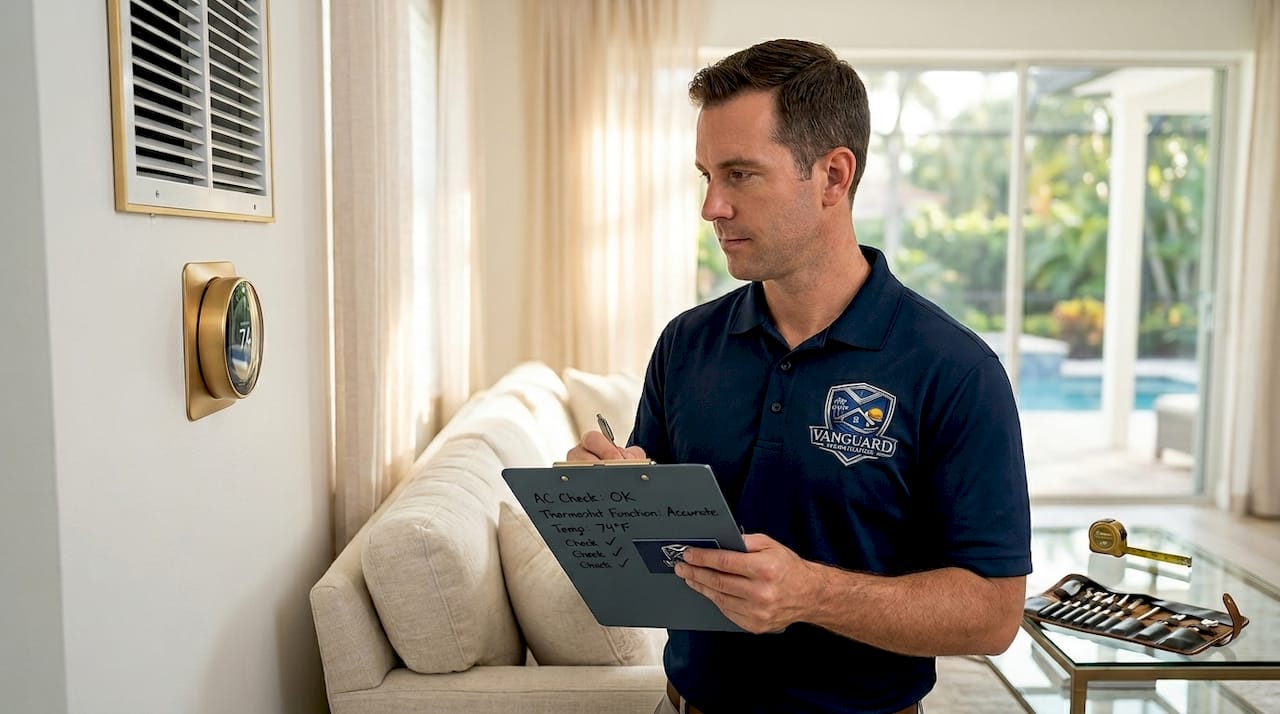
Technology integration has become standard in quality home watch programs. Tools like smart water shutoff valves, leak detectors, and real-time monitoring sensors provide alerts between scheduled visits, closing the gap that purely manual inspection leaves open. The combination of human judgment and automated alerts is what separates a professional home watch program from a neighbor checking the mail.
How does property watch reduce risk for vacant homes?
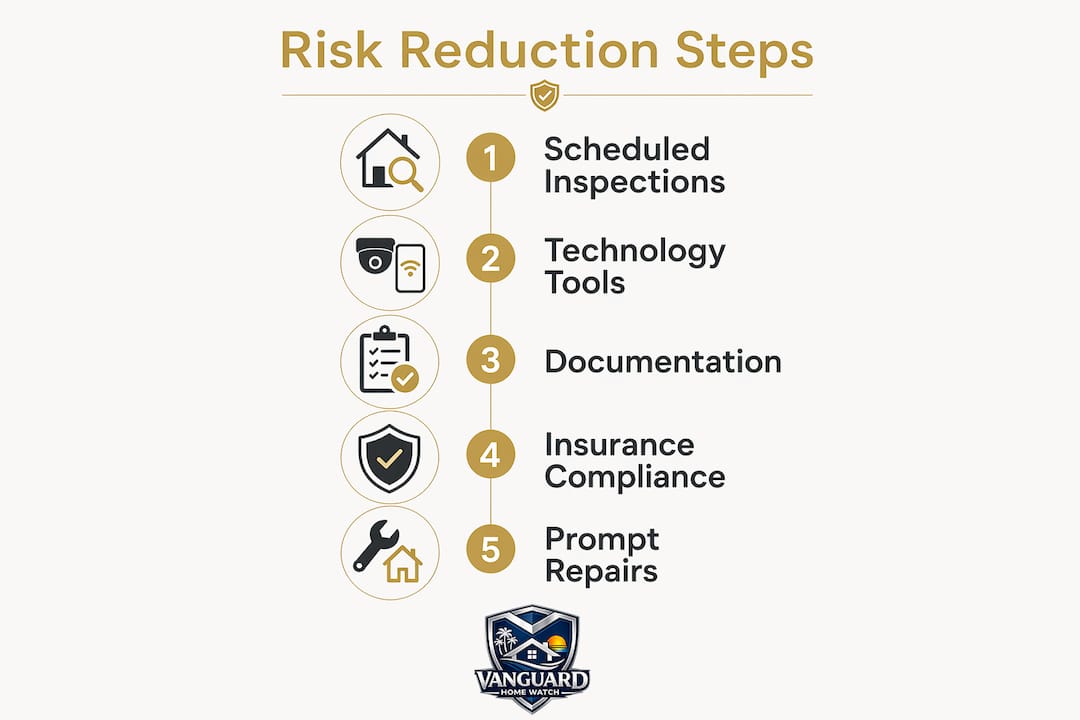
Insurance companies treat vacant homes as higher risk because delayed detection of minor issues allows them to escalate into major claims. A slow leak under a kitchen sink becomes a mold remediation project. A clogged A/C drain line becomes a ceiling collapse. A broken window goes unnoticed for weeks. Each of these scenarios is preventable with regular, documented inspections.
The insurance implications are direct and serious. Vacancy clauses limit coverage after 30 to 60 consecutive days of unoccupancy, depending on the carrier, affecting claims for water damage, theft, and vandalism. This means a homeowner who leaves Naples in April and returns in November may have significantly reduced coverage for the entire summer unless they can demonstrate active oversight of the property. Regular inspection records from a professional home watch provider serve as documented proof that the home was not simply abandoned.
The most common risks in Southwest Florida vacant homes include:
- Water leaks and pipe failures caused by pressure fluctuations or aging supply lines
- HVAC failures that allow humidity to spike and mold to develop within days
- Pest intrusions by rodents, ants, and cockroaches that exploit entry points undetected
- Storm damage from wind, rain, and debris that goes unaddressed between visits
- Vandalism and theft that occur when a home shows obvious signs of vacancy
Local regulatory compliance adds another layer of responsibility. Fort Myers Beach, for example, issues warning letters to property owners who have not registered short-term rentals, with follow-up enforcement reviews beginning shortly after. A property watch provider who understands local ordinances can flag compliance gaps before they become fines. For owners renting their properties seasonally, this oversight is not optional. It is a financial safeguard.
Pro Tip: Review your homeowners insurance policy before leaving for the season. Ask your agent specifically about vacancy provisions and what documentation they require to maintain full coverage. A professional home watch provider’s inspection reports may be exactly what your policy demands.
What service tiers and technology tools are available?
Home watch services in Southwest Florida generally fall into three frequency tiers, each suited to different risk tolerances and insurance requirements.
| Service Tier | Inspection Frequency | Best For |
|---|---|---|
| Essential | Monthly | Lower-risk properties, short absences |
| Standard | Bi-weekly | Seasonal owners away 3 to 6 months |
| Concierge / Weekly | Weekly | High-value homes, hurricane season, insurance compliance |
The difference between tiers is not just frequency. Weekly inspections allow providers to catch developing issues before they cause serious damage, while monthly visits may miss a fast-moving problem entirely. For homes in Naples or North Naples with high-end finishes, custom cabinetry, or smart home systems, weekly oversight is the standard that protects the investment.
Technology has transformed what property watch can deliver between visits. Smart home monitoring tools including leak detectors, smart water shutoff valves, and bio enzymatic A/C drain treatment systems like iFlo work continuously, not just during scheduled inspections. A leak detector placed under a refrigerator or washing machine sends an instant alert to both the homeowner and the service provider, enabling a same-day response. Without that sensor, the same leak might go undetected until the next scheduled visit.
Some providers offer bundled packages that combine physical inspections with 24/7 exterior camera monitoring and emergency coordination, giving absentee owners a layered protection system. The value of this approach is that human inspections catch conditions that cameras and sensors cannot assess, such as unusual odors, soft flooring, or subtle signs of pest activity, while sensors cover the gaps between visits.
Pro Tip: Do not rely on technology alone. Smart sensors and cameras are powerful tools, but they do not replace a trained inspector who can identify early mold growth, assess structural concerns, or recognize when an HVAC system is running but not cooling effectively.
How does home watch differ from house sitting or contractor care?
The distinction matters for both insurance and practical protection. Home watch differs from house sitting in one fundamental way: it is a documented, professional inspection service, not a general presence. A house sitter occupies the home, which deters some risks, but typically provides no formal inspection record, no photo documentation, and no structured reporting system. Insurance carriers do not treat a house sitter’s presence as equivalent to a professional inspection program.
Contractor-led property care focuses on active maintenance tasks: lawn service, pool cleaning, pressure washing. These are necessary services, but they are not inspections. A pool technician who visits weekly to balance chemicals is not checking whether the A/C drain line is clogged or whether a window seal has failed. The scope is task-specific, not condition-monitoring.
Professional home watch inspectors perform tasks that neither house sitters nor contractors typically cover:
- Systematic interior and exterior walkthroughs with documented checklists
- Humidity and temperature readings logged at each visit
- Photo and video reports delivered to the owner after every inspection
- Coordination with contractors when repairs are needed, with owner approval
- Verification that security systems, smoke detectors, and CO detectors are functioning
- Compliance checks for local rental registration requirements where applicable
The liability distinction is also significant. A licensed, bonded, and insured home watch provider carries professional liability coverage. If an issue is missed and damage results, there is a clear accountability structure. A house sitter or informal neighbor check offers no such protection. For a home worth $500,000 or more in Southwest Florida real estate, that accountability gap is not a minor detail.
What should you look for when choosing a property watch service?
Selecting a home watch provider requires the same due diligence you would apply to any professional service managing a major asset. Start with credentials. The provider should be fully insured, bonded, and background checked. Membership in the National Home Watch Association (NHWA) signals that the provider meets a recognized professional standard and adheres to a code of ethics specific to the industry.
Evaluate service frequency against your insurance policy’s vacancy provisions. If your carrier requires documented inspections every 30 days to maintain coverage, a monthly plan meets the minimum. If your policy or personal risk tolerance calls for more frequent oversight, bi-weekly or weekly inspections are the appropriate choice. Structured access protocols using smart locks and documented visit timelines are not just convenient. They are the evidence trail that satisfies insurance and oversight requirements.
Ask specifically about reporting. After each visit, you should receive a written report with timestamped photos covering every area of the home. Vague verbal updates are not sufficient. The report is your record of care, and it is what you present to an insurance adjuster if a claim arises. Also ask whether the provider monitors for local regulatory compliance, particularly if you rent your property seasonally and are subject to ordinances like those enforced in Fort Myers Beach.
Cost varies by service tier and property size, but the value calculation is straightforward. A single water damage claim in a Florida home can easily reach $10,000 to $50,000 or more. The annual cost of weekly home watch inspections is a fraction of that exposure. For seasonal home protection, the return on investment is not theoretical. It is documented in the claims that never had to be filed.
Pro Tip: Ask your provider how many clients they currently serve. A provider managing too many properties cannot give each home the attention it deserves. Owner-operated services with intentionally limited client loads consistently deliver more thorough inspections.
Key takeaways
Professional home watch service is the most reliable method for protecting a vacant Southwest Florida property from damage, insurance coverage gaps, and regulatory non-compliance.
| Point | Details |
|---|---|
| Insurance vacancy risk | Most policies limit coverage after 30 to 60 days of vacancy, making documented inspections a financial necessity. |
| Weekly inspections offer the best protection | Higher-frequency visits catch developing issues before they escalate into costly repairs. |
| Technology amplifies human inspection | Smart sensors and shutoff valves cover gaps between visits but do not replace trained inspector judgment. |
| Home watch is not house sitting | Professional home watch provides documented reports and liability coverage that informal oversight cannot match. |
| Credentials matter | Choose a provider that is insured, bonded, NHWA-accredited, and background checked for full accountability. |
What I’ve learned after years of watching Southwest Florida homes
After years of inspecting homes across Naples, North Naples, and Ave Maria, the pattern I see most often is this: homeowners underestimate how fast a small problem becomes a large one in a vacant Florida home. A slow drip under a bathroom vanity that would be noticed immediately in an occupied home can run undetected for six weeks in a seasonal property. By the time the owner returns, the subfloor is compromised and the cabinet base is saturated with mold.
The other thing I have observed is that technology alone creates a false sense of security. I have walked into homes with active leak sensors and smart cameras where the A/C drain line was backing up, the humidity was climbing, and the sensors had not triggered because the water had not yet reached the detector. A trained eye catches what a sensor cannot. The combination of both is what actually works.
I also want to address something that does not get discussed enough: access management. Consistent, documented access is what makes a home watch program defensible to an insurance carrier. If your provider cannot produce a timestamped inspection record for every visit, that record gap can be used to deny a claim. Smart locks with access logs solve this problem cleanly and give you a verifiable timeline of every entry.
My recommendation for any homeowner new to property watch is to start with a weekly plan during your first season away. You will learn exactly what your home does when you are not there, which risks are real for your specific property, and what level of oversight actually gives you peace of mind. Most owners who start weekly never downgrade.
— Joseph
Protect your Naples home with Vanguard Home Watch LLC
Vanguard Home Watch LLC serves Naples, North Naples, and Ave Maria with fully insured, bonded, and NHWA-accredited home watch inspections tailored to each property. Founded by retired law enforcement lieutenant Joseph Vangelakos and real estate professional Elizabeth Vangelakos, every inspection is conducted personally by the owners, not a rotating staff. Service plans range from Essential monthly inspections to Concierge weekly visits with photo reports, smart home technology integration, and real-time alert coordination. If you are a seasonal resident or absentee owner looking for trusted, documented oversight of your Southwest Florida home, request a consultation with Vanguard Home Watch LLC today and get a plan built around your property’s specific needs.
For a detailed look at available inspection packages, visit the Vanguard Home Watch LLC services page.
FAQ
What is a home watch service in Southwest Florida?
A home watch service is a professional, scheduled inspection program for vacant or seasonal homes. A licensed inspector visits the property on a set frequency, documents conditions with photos, and reports findings to the owner after each visit.
How often should a vacant Florida home be inspected?
Weekly inspections provide the strongest protection and best satisfy most insurance vacancy provisions. Monthly inspections meet the minimum threshold for some policies, but bi-weekly or weekly visits are recommended for homes left vacant during hurricane season.
Does homeowners insurance cover vacant homes in Florida?
Most Florida homeowners policies include vacancy clauses that reduce or eliminate coverage for water damage, theft, and vandalism after 30 to 60 consecutive days of vacancy. Regular, documented inspections by a professional home watch provider help maintain coverage compliance.
What is the difference between home watch and house sitting?
Home watch is a documented inspection service with photo reports and professional liability coverage. House sitting provides general occupancy without formal inspection records, which most insurance carriers do not recognize as equivalent oversight.
Do I need a home watch service if I have smart home devices?
Smart devices like leak sensors and cameras provide real-time alerts but cannot assess conditions that require physical inspection, such as mold odors, soft flooring, or early pest activity. Combining smart monitoring with professional inspections delivers the most complete protection for a vacant Southwest Florida home.

