Most buyers and sellers think home watch is just a neighbor checking the mail. It isn’t. The role of home watch in real estate transactions goes much deeper. It’s a professional, documented inspection service that actively protects your property’s condition, your liability exposure, and the confidence of every party in the deal. Whether you’re listing a vacant home in Naples or closing on a seasonal property, understanding what home watch actually does could save you from costly surprises before, during, and after the transaction.
Table of Contents
- Key Takeaways
- The role of home watch in real estate transactions
- Why credentials and insurance matter
- How home watch protects buyers and sellers
- Home watch vs. home inspections vs. property management
- Tips for hiring the right provider
- My perspective on what home watch really costs you when you skip it
- Protect your property with Vanguard Home Watch LLC
- FAQ
Key Takeaways
| Point | Details |
|---|---|
| Home watch prevents costly damage | Scheduled visual inspections catch leaks, HVAC failures, and pest issues before they escalate. |
| Credentials matter enormously | Always verify insurance, bonding, and NHWA accreditation before hiring any home watch provider. |
| Documentation builds transaction trust | Timestamped photo reports give buyers and sellers verified condition records that reduce disputes. |
| Home watch is not a home inspection | These are distinct services with different purposes; knowing when to use each protects your investment. |
| Vetting your provider is non-negotiable | Ask about coverage, reporting tools, and references before signing any home watch agreement. |
The role of home watch in real estate transactions
Home watch is a scheduled, recurring visual inspection of a vacant or seasonally unoccupied property. A trained professional visits on a set schedule, typically weekly, and checks for obvious issues: water intrusion, HVAC malfunctions, humidity spikes, mold indicators, pest activity, storm damage, and security vulnerabilities. After each visit, the homeowner receives a detailed digital report with photos.
That service becomes especially valuable in a real estate context. When a home sits vacant during a listing period, a post-sale closing delay, or a buyer’s pre-occupancy window, it is exposed to risks that no one is watching for. A slow water leak beneath a sink, an AC unit that fails on a humid Florida afternoon, or a screen left unsecured after a showing can quietly turn into a major repair. Early detection during extreme weather directly reduces damage severity and repair costs. That’s the core home watch benefit that most sellers and buyers overlook until something goes wrong.
The following specifics matter most during a transaction:
- Water intrusion and leaks: Plumbing failures in vacant homes go undetected for days or weeks without routine checks.
- HVAC failures: In Florida’s heat and humidity, a failed AC unit can cause mold growth within 24 to 48 hours.
- Pest activity: Rodents and insects move quickly into undisturbed spaces. Early detection prevents structural damage.
- Security concerns: Unlocked entry points, suspicious activity, and storm damage to windows or doors are flagged immediately.
- Documentation: GPS-verified, photo-documented reports create a transparent record of the property’s condition throughout the transaction period.
Pro Tip: Request sample inspection reports from any home watch provider before hiring them. A provider who can’t show you a professional, photo-rich digital report isn’t offering professional-grade service.
Why credentials and insurance matter
The home watch industry is unregulated. Anyone can print a business card and call themselves a home watch professional. That creates a real risk for buyers and sellers who assume the person they hired is properly insured and accountable.
The home watch industry lacks uniform regulation, which means verifying insurance and proper procedures is not optional. It’s the only protection you have. The National Home Watch Association (NHWA) sets a clear minimum standard: members must carry at least $1 million in general liability coverage per occurrence and $2 million aggregate, plus a dishonesty bond. Many providers carry none of this.
Hiring an uninsured home watch provider doesn’t just leave your property unprotected. It leaves you with no legal recourse if something is stolen, damaged, or missed during an inspection.
Here’s what to verify before signing any agreement:
- General liability insurance: Covers property damage caused during an inspection visit.
- Professional liability (E&O) insurance: Covers claims that the provider missed something they should have caught.
- Dishonesty bond: Protects against theft or dishonest acts by the provider or their employees.
- Background checks: All personnel entering your home should be screened.
- NHWA accreditation: Confirms the provider meets industry standards for training, insurance, and ethics.
Uninsured providers often charge less. But when something goes wrong during a transaction, that lower price becomes a very expensive mistake. In a real estate deal, where every detail of the property’s condition has financial and legal implications, cutting corners on oversight is a risk no seller or buyer should accept.
How home watch protects buyers and sellers
The practical impact of home watch on a real estate transaction runs in both directions. Sellers benefit. Buyers benefit. And the transaction itself moves more smoothly when documented oversight is in place.
For sellers, a vacant listing is a liability. Every day the home sits unoccupied without monitoring is a day a problem could develop unseen. Sellers who maintain consistent, documented inspections throughout the listing period can demonstrate the property’s maintained condition and reduce the risk of a buyer discovering damage that derails the closing. If you’ve ever had a deal fall apart over a water stain discovered during the final walkthrough, you understand exactly why this matters.
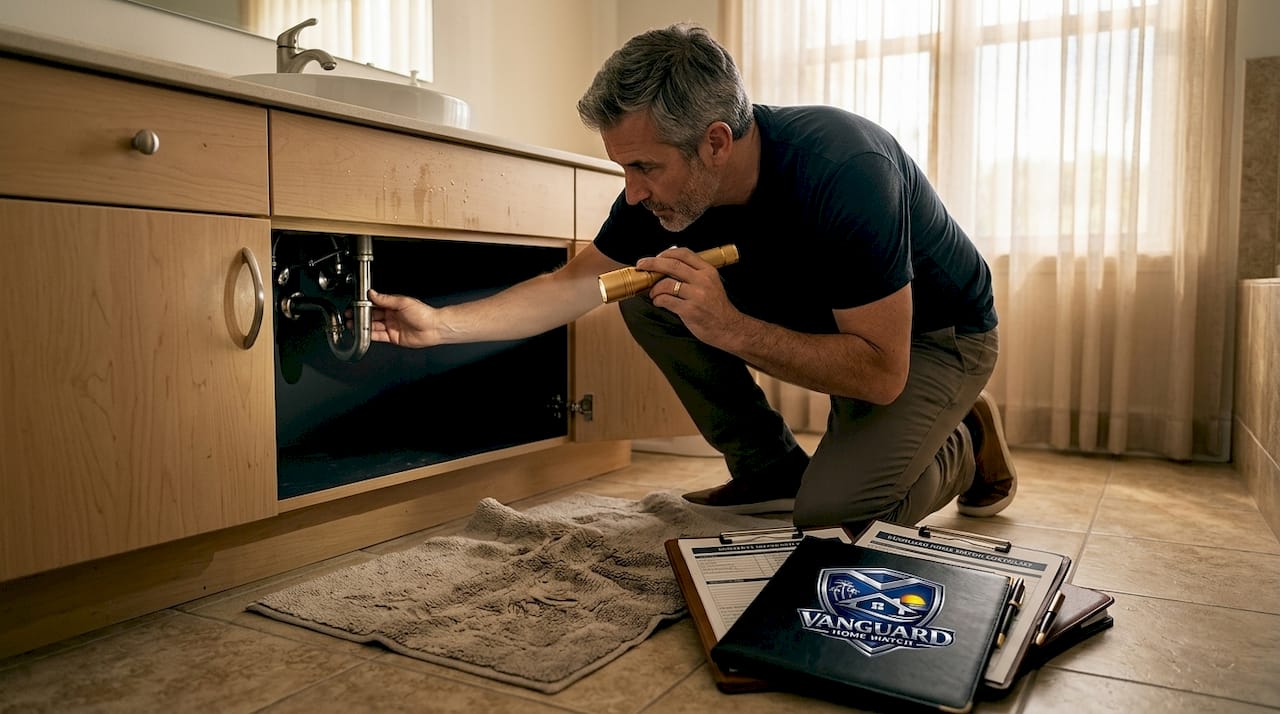
For buyers, particularly those purchasing vacation homes or seasonal properties in markets like Naples, home watch reports provide independent verification of condition. Documented inspection reports and proof-of-care create transparency that reduces buyer-seller conflicts after closing. In an era where all-cash offers and waived inspections are increasingly common, home watch fills a critical due diligence gap that lender-required inspections once covered.
Here’s how to integrate home watch at each stage of a transaction:
- During the listing period: Schedule weekly inspections to maintain property condition and catch issues before they appear during buyer showings.
- After an accepted offer: Continue monitoring through the closing period, especially if the seller has already relocated and the home is vacant.
- Pre-closing walkthrough support: Use inspection records to document the home’s condition timeline, reducing disputes about when issues originated.
- Post-closing for buyers: If a buyer takes possession of a vacant property and cannot move in immediately, home watch protects the investment from day one of ownership.
Pro Tip: Ask your real estate agent to include a home watch provision in the listing agreement for vacant properties. A few hundred dollars in monitoring fees can prevent a five-figure repair bill or a collapsed deal.
Home watch vs. home inspections vs. property management
These three services sound similar. They are not. Confusing them leads to gaps in protection during a transaction.
| Service | Purpose | Timing | Scope | Typical Use |
|---|---|---|---|---|
| Home watch | Routine visual monitoring of vacant homes | Ongoing, weekly | Exterior and interior visual check, documented report | Listings, closings, seasonal properties |
| Home inspection | Detailed condition analysis for buyers/sellers | One-time, at transaction | Structural, mechanical, electrical systems | Purchase due diligence |
| Property management | Full ongoing management of occupied or rental properties | Continuous | Tenant relations, maintenance, rent collection | Investment or rental properties |
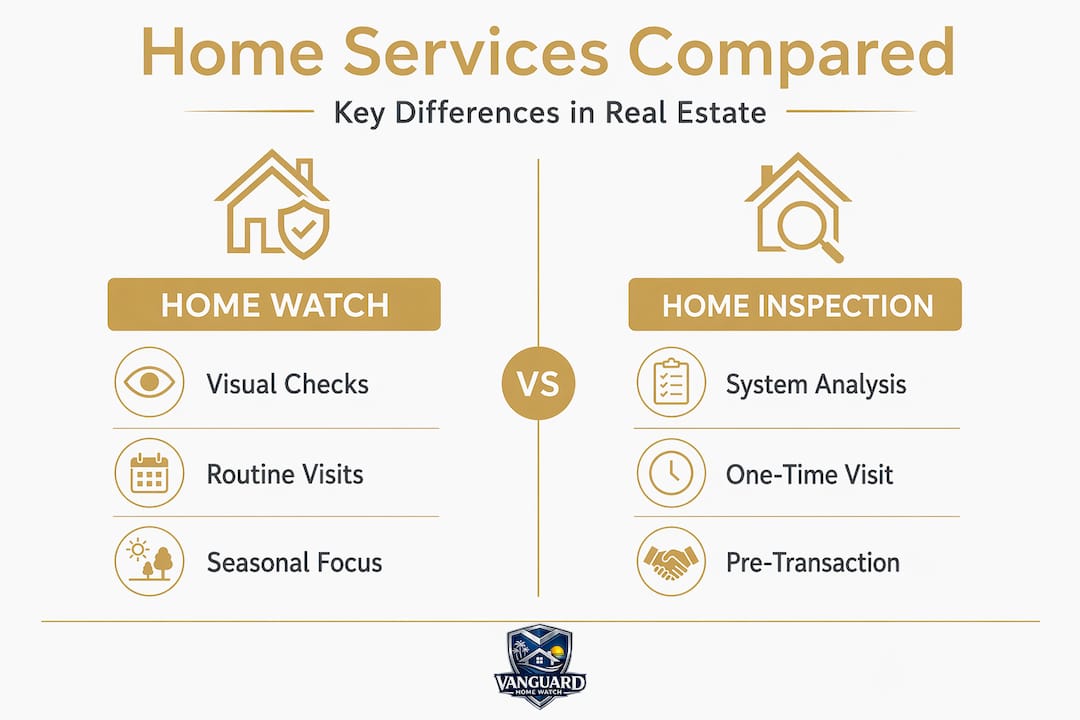
Home watch services complement rather than replace home inspections or property management in transaction scenarios. A home inspector tells you the condition of the home at a single point in time. A home watch provider tells you what has changed since then, week by week. Property management handles the ongoing operational demands of a rental or investment property, which is a different service entirely.
When you’re buying or selling, you likely need a home inspection for due diligence and home watch for the weeks or months the property sits vacant. These services work together. They don’t overlap. Understanding the distinction helps you build a complete protection plan rather than assuming one service covers everything.
Tips for hiring the right provider
Choosing the right home watch company before or during a transaction requires more than a quick online search. Here’s what to prioritize:
- Verify credentials first: Confirm NHWA membership, active insurance certificates, and bonding documentation before any conversation about price.
- Ask about reporting technology: Timestamped reports and centralized communication improve trust and reduce disputes. Ask to see a sample report.
- Confirm owner involvement: Owner-operated companies tend to deliver more consistent service because accountability is personal, not delegated.
- Check references: Ask for references from clients who used the service during a real estate transaction specifically, not just general clients.
- Clarify communication protocols: How quickly will the provider contact you if an issue is found? Who do they notify in an emergency?
- Understand the frequency: Weekly inspections are the standard. Less frequent visits reduce protection significantly.
Pro Tip: When coordinating a real estate transaction involving a vacant home, share your home watch provider’s contact information with your real estate agent, closing attorney, and insurance carrier. Coordinated communication between professionals prevents gaps and speeds up response when issues arise.
For buyers and sellers in the Naples area, selecting a home watch company with verified credentials and local market knowledge is worth the time investment.
My perspective on what home watch really costs you when you skip it
I’ve seen what happens when sellers skip proper oversight on a vacant home during a transaction. Not hypothetically. I mean specific cases where a slow water leak went unnoticed for three weeks because no one was checking, and the resulting mold remediation cost more than the seller’s net commission. I’ve also seen buyers waive inspections in competitive markets, then discover on move-in day that an AC unit had been cycling improperly for months in an unmonitored home.
The assumption I hear most often is that nothing will go wrong during the few weeks between listing and closing. Florida does not operate on that schedule. Humidity, heat, afternoon storms, and aging infrastructure move fast. What starts as a small issue on Monday can be a serious repair by Friday.
The other pattern I’ve noticed is that sellers sometimes hire the cheapest option available, often an informal arrangement with someone they know, to avoid the cost of a professional service. That feels reasonable until you consider that an uncredentialed, uninsured provider offers zero recourse if something is missed or, worse, if something goes missing. The cost of professional home watch is modest compared to a single insurance claim or a delayed closing.
My honest take: the value of home watch is not in the guarantee that nothing will go wrong. Nothing can guarantee that. The value is in documented consistency and professional accountability. That’s what protects you in a transaction, and that’s what distinguishes a professional service from a neighbor with a spare key.
— Joseph
Protect your property with Vanguard Home Watch LLC
At Vanguard Home Watch LLC, we provide weekly, professionally documented visual inspections for vacant and seasonal homes throughout Naples, North Naples, and Ave Maria, Florida. Every visit produces a detailed digital report with photos, delivered directly to you. We are fully insured, bonded, background checked, and accredited by the National Home Watch Association. Founded by retired law enforcement lieutenant Joseph Vangelakos and real estate professional Elizabeth Vangelakos, we understand what’s at stake in a transaction because we’ve been on both sides of it. If you’re listing, selling, or purchasing a property that will sit vacant for any period of time, we’re here to protect your investment. Learn more about our home watch services or explore why Florida homes need weekly checks to stay protected.
FAQ
What is the role of home watch in a real estate transaction?
Home watch provides scheduled, documented visual inspections of vacant properties during the listing, sale, and closing periods. It protects both buyers and sellers by maintaining property condition records and catching issues before they affect the transaction.
Is home watch the same as a home inspection?
No. A home inspection is a one-time, detailed analysis of a property’s systems conducted during the purchase process. Home watch is an ongoing, weekly monitoring service that tracks condition changes over time in a vacant or unoccupied home.
How does home watch protect sellers from liability?
Consistent, documented home watch reports create a verifiable condition timeline for the property. This reduces the risk of post-closing disputes by demonstrating that the home was properly maintained and monitored throughout the transaction period.
What credentials should I look for in a home watch provider?
Look for NHWA accreditation, a minimum of $1 million in general liability insurance, a dishonesty bond, background-checked personnel, and professional digital reporting tools. Verifying these credentials before hiring protects you from uninsured or uncredentialed providers.
When should I start home watch services for a property I’m selling?
Start home watch as soon as the property becomes vacant, ideally at the beginning of the listing period. Continuous weekly monitoring through the closing date gives you the most complete protection and the strongest documentation record.
