Off-season home watch is a proactive inspection service that protects Florida homes during extended vacancies by monitoring for environmental and maintenance risks unique to the region. Florida homeowners who leave for months at a time face a specific set of threats that no alarm system or neighbor check can fully address. High humidity, hurricane season, aggressive pest activity, and salt air exposure combine to create conditions where damage accelerates fast in an unoccupied home. Vanguard Home Watch LLC, an accredited member of the National Home Watch Association (NHWA), exists precisely because these risks are real, recurring, and preventable with the right oversight.
Why Florida homeowners need off-season watch: the core risks
Florida’s climate does not pause when you leave. Mold can develop within days in a vacant home without air circulation and dehumidification. That timeline is far shorter than most homeowners expect, and it means a single week without a check can result in a remediation bill rather than a minor fix.
The risks stack quickly in an unoccupied Florida property:
- Humidity and mold: Indoor relative humidity above 60% creates ideal mold conditions. Without someone running the AC and monitoring the air, moisture builds inside walls, under flooring, and in closets.
- Water intrusion: Roof leaks and water intrusion are common unnoticed problems during vacancy in coastal Florida. A small roof gap becomes a soaked ceiling over a single storm season.
- HVAC failure: A failed air handler in july or august turns a Florida home into a greenhouse. Humidity spikes, surfaces sweat, and mold follows within days.
- Pest activity: Termites, rodents, and cockroaches move into quiet, undisturbed spaces. Vacant homes are prime targets, especially in communities near preserves or water.
- Electrical and plumbing leaks: A slow drip under a sink or a tripped breaker goes unnoticed for months without regular visits.
- Security vulnerability: A home that looks unoccupied for weeks signals opportunity. Visible vacancy increases theft and vandalism risk, and a single break-in can cause damage far beyond what was stolen.
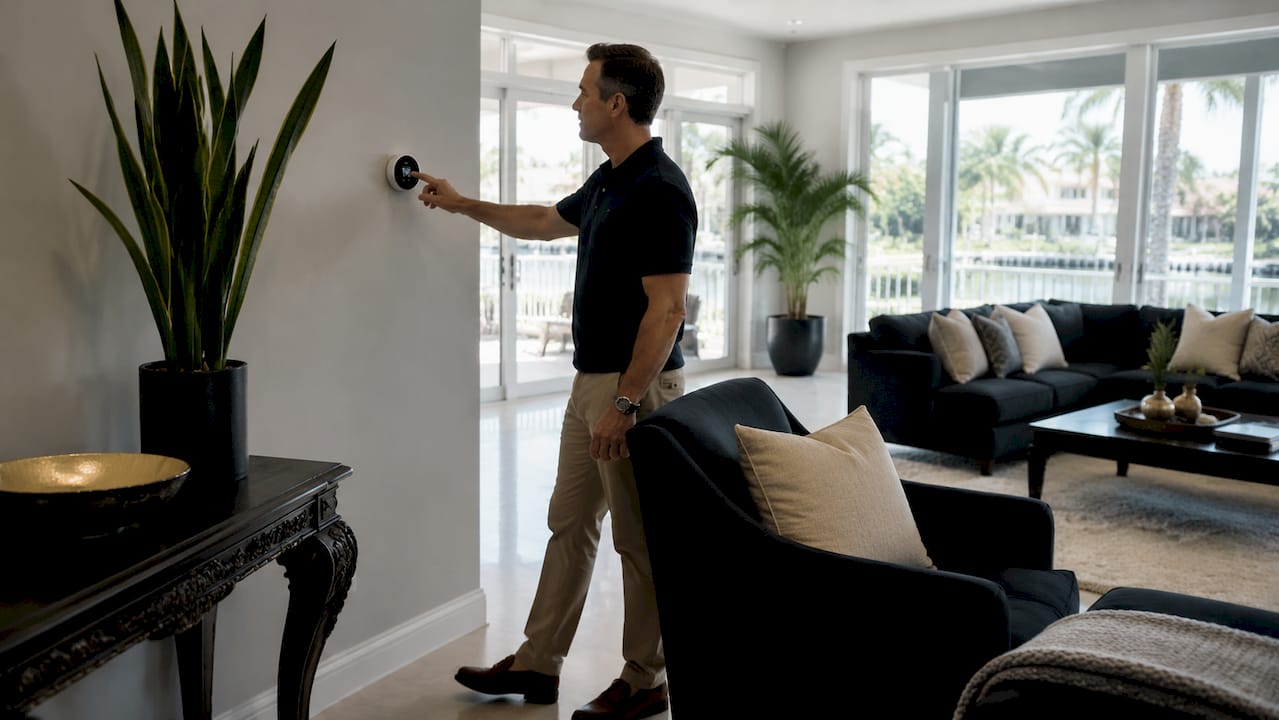
Pro Tip: Set your thermostat no higher than 78°F when you leave. Anything above that, combined with Florida’s humidity, creates conditions where mold can take hold within a week.
How does off-season home watch differ from property management?
The distinction matters, and most homeowners do not know it until they need it. Home watch specializes in vacancy oversight and preventive condition reporting. Property management focuses on tenants, leasing, and rent collection. These are fundamentally different services with different goals.
A property manager has no reason to check whether your AC coil is icing over or your lanai screen has a tear. A home watch professional does. The entire job is to walk through your vacant home, document its condition, and flag anything that needs attention before it becomes a crisis.
For snowbirds and absentee owners, this distinction is critical. Here is what a qualified home watch service provides that property management does not:
- Scheduled visual inspections of the full interior and exterior, typically weekly or biweekly, based on property risk and absence length.
- Detailed condition reports with photos after every visit, giving you a timestamped record of your home’s state.
- Early detection of HVAC issues, water leaks, pest activity, and storm damage before they escalate.
- Coordination with vendors when repairs are needed, so you do not have to manage contractors from another state.
- Security presence that signals the home is actively monitored, reducing the appeal to opportunistic theft.
Off-season inspections at weekly or biweekly intervals give Florida homeowners the earliest possible warning on every category of risk their property faces.
What Florida home maintenance tips belong in every off-season plan?
Seasonal home care in Florida requires a different checklist than anywhere else in the country. The combination of heat, humidity, salt air, and hurricane season creates a maintenance calendar that runs year-round, not just before you leave or after you return.
The following practices protect Florida homes during extended absences:
- HVAC maintenance: Properly maintained AC systems reduce energy use by 10–15% and save $30–$50 monthly. More importantly for vacant homes, a serviced system controls indoor humidity and reduces the risk of failure during peak summer heat.
- Humidity monitoring: Keep indoor relative humidity below 60%. A whole-home dehumidifier or a properly set thermostat accomplishes this. A home watch professional checks these readings on every visit.
- Hurricane preparation: Secure or store outdoor furniture, test hurricane shutters, and clear gutters before june 1. A vacant home inspection checklist should include shutter function and roof condition every season.
- Pest sealing: Seal gaps around doors, windows, and utility penetrations before you leave. Pest pressure in Southwest Florida is year-round, and a vacant home offers no deterrent.
- Gutter and drainage checks: Clogged gutters during Florida’s rainy season push water toward the foundation and under the roof edge. Monthly clearing prevents this.
- Maintenance budgeting: A budget of $3,000–$6,000 per year is advised for Florida home upkeep to avoid large emergency costs. Spreading that across regular service visits and inspections is far less painful than a single emergency repair.
Pro Tip: Schedule your HVAC service in april, before you leave for the summer. A technician who services the unit while you are still in residence can catch problems you would never notice from a distance.
Combining these maintenance practices with seasonal home care and regular professional inspections gives your property the best protection Florida’s climate demands.
What are the real benefits of off-season home watch for Florida homeowners?
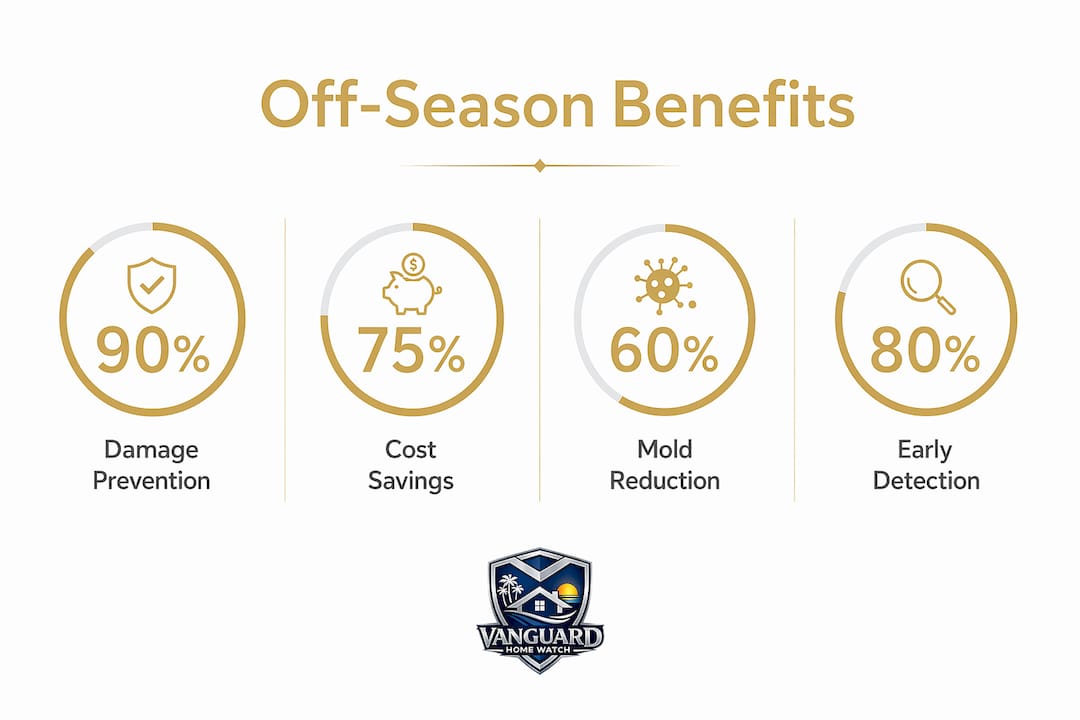
The benefits of off-season watch go well beyond catching a leak early. They affect your insurance coverage, your home’s resale value, and your ability to sleep soundly while you are away.
“Florida homes with documented annual maintenance have 25% fewer water damage insurance claims. That record of upkeep is not just good practice. It is evidence that protects you when you file a claim.”
The tangible advantages break down clearly:
- Lower repair costs: Early detection of a roof leak, a failing AC, or a pest infestation costs a fraction of what the same problem costs after months of unchecked damage.
- Insurance protection: Home watch documentation supports insurance claims and preserves warranty status. Insurers can and do deny claims when they determine a home was not properly maintained during vacancy.
- Security deterrence: Regular property checks signal active oversight. A home that receives weekly visits does not look abandoned.
- Resale value: A home with a documented inspection and maintenance history commands more confidence from buyers. It also reduces the chance of surprises during a buyer’s inspection.
- Peace of mind: This is the benefit homeowners mention most. Knowing a trusted professional walked through your home last Tuesday, checked the AC, tested the water pressure, and sent you a photo report changes how you feel about being away.
Absentee owners who rely on professional home watch services consistently report that the cost of the service is minor compared to the cost of a single undetected problem.
How should Florida homeowners choose an off-season home watch service?
Selecting the right provider is as important as deciding to use one. Not every home watch company operates at the same standard, and the differences matter when something goes wrong.
- Verify accreditation: Look for membership in the National Home Watch Association (NHWA). NHWA accreditation requires background checks, insurance, and adherence to professional standards.
- Confirm insurance and bonding: Your home watch provider must carry general liability insurance and be bonded. Ask for certificates before signing any agreement.
- Assess local knowledge: A provider who knows Naples, North Naples, or Ave Maria understands the specific pest pressures, storm patterns, and contractor networks in your area. Generic national services lack this.
- Review inspection reports: Ask to see a sample report. It should include photos, timestamps, and specific condition notes. A vague “everything looks fine” report is not useful documentation.
- Clarify visit frequency: Weekly or biweekly inspections are standard for Florida properties during peak absence periods. Understand what you are getting before you commit.
- Establish communication protocols: Know how your provider contacts you when they find an issue, who they call for emergency repairs, and how quickly they respond after a storm.
A detailed guide on hiring a home watch company in Naples walks through each of these criteria with specific questions to ask prospective providers.
Key Takeaways
Florida off-season home watch is the single most effective tool for protecting a vacant property from the compounding risks of humidity, storm damage, pest activity, and security threats.
| Point | Details |
|---|---|
| Mold risk is immediate | Vacant Florida homes can develop mold within days without air circulation and dehumidification. |
| Home watch is not property management | Home watch focuses on vacancy inspection and condition reporting, not tenant or lease management. |
| Documentation protects your insurance | Maintained homes with inspection records have 25% fewer water damage insurance claims. |
| Maintenance budgeting prevents emergencies | Allocating $3,000–$6,000 annually for Florida upkeep avoids far larger emergency repair costs. |
| NHWA accreditation sets the standard | Choose providers accredited by the National Home Watch Association for verified professionalism and accountability. |
What I have learned from watching Florida homes up close
After years of walking through vacant Florida properties, the pattern I see most often is not dramatic. It is a slow drip under a bathroom vanity that has been running for six weeks. It is an AC unit that tripped offline during a power surge in july and never came back on. It is a lanai screen with a gap that let in enough moisture to warp the wood framing behind it.
Homeowners almost always say the same thing when we show them the photos: “I had no idea.” That is the point. You cannot know what is happening inside a home you are not in. And Florida’s climate does not wait for you to come back and check.
The misconception I hear most is that a neighbor or a property manager will catch these things. A neighbor is not going to open your AC closet, check your water heater for corrosion, or walk your roof line after a storm. A property manager is managing tenants, not inspecting your vacant home. These are not criticisms. They are simply not the right tools for the job.
What I recommend to every homeowner considering off-season absence is this: treat your home like the investment it is. A weekly inspection by a trained, accredited professional costs far less than one emergency remediation call. Combine that with a solid seasonal maintenance plan and you have a real system, not just a hope that things will be fine when you return.
— Joseph
Trusted off-season home watch for Naples and surrounding areas
Vanguard Home Watch LLC serves Naples, North Naples, and Ave Maria with weekly visual inspections, detailed photo reports, and direct owner communication after every visit. Joe and Elizabeth Vangelakos founded the company on the principle that your home deserves the same attention whether you are in it or not.
Every inspection covers HVAC function, humidity levels, water intrusion, pest activity, storm damage, and security concerns. Clients receive a full digital report with photos within 24 hours of each visit. Vanguard Home Watch LLC is fully insured, bonded, background checked, and NHWA accredited. To understand how visit frequency affects your level of protection, the inspection frequency guide breaks down weekly versus biweekly options by property type and risk level. For a full overview of what each inspection covers, visit the Naples home watch services page.
FAQ
What is off-season home watch in Florida?
Off-season home watch is a professional inspection service for vacant Florida homes during extended owner absences. A trained inspector visits the property on a scheduled basis to check for HVAC issues, water leaks, mold, pests, storm damage, and security concerns.
How often should a vacant Florida home be inspected?
Weekly or biweekly inspections are the standard for Florida properties during peak absence periods. The right frequency depends on the property’s risk level, location, and how long the owner will be away.
Does home watch help with insurance claims?
Yes. Documented inspection records and condition reports support insurance claims and reduce the risk of denial. Florida homes with documented annual maintenance have 25% fewer water damage insurance claims.
What is the difference between home watch and property management?
Property management focuses on tenants, leasing, and rent collection. Home watch specializes in vacancy oversight, condition reporting, and preventive maintenance for unoccupied homes.
How do I choose a qualified home watch provider in Florida?
Look for NHWA accreditation, verified insurance and bonding, local market knowledge, and detailed photo inspection reports. Ask to see a sample report before committing to any provider.

