Florida homeowners often assume a seasonal walkthrough or annual inspection is enough to stay ahead of problems. It is not. Understanding why Florida homes need weekly checks starts with accepting one fact: this state’s climate does not take a break. High humidity, salt air, tropical storms, relentless UV exposure, and year-round pest pressure create conditions that can turn a minor issue into a major repair in a matter of days. Whether your home is your primary residence or a seasonal property you visit a few months each year, weekly monitoring is not excessive. It is the minimum that Florida’s environment demands.
Table of Contents
- Key takeaways
- Why Florida homes need weekly checks: the environmental case
- Critical home systems that demand regular attention
- How insurance requirements make weekly checks non-negotiable
- A practical weekly home check routine for Florida homeowners
- My perspective: what I have seen after years of home watch work
- Protect your Naples home with trusted weekly inspections
- FAQ
Key takeaways
| Point | Details |
|---|---|
| Florida’s climate is relentless | Humidity averaging 70 to 80% creates hidden moisture damage behind walls and under floors year-round. |
| Weekly checks catch problems early | Small leaks, HVAC failures, and pest activity found early cost a fraction of what deferred damage costs. |
| Insurance depends on documentation | Many Florida insurers require proof of regular maintenance to approve claims and renew policies. |
| Critical systems need frequent eyes | Roofs, plumbing, HVAC, and electrical systems all face accelerated wear under Florida conditions. |
| Professional home watch fills the gap | For seasonal or vacant homes, a trusted home watch service provides the consistency that protects your investment. |
Why Florida homes need weekly checks: the environmental case
Florida is not a forgiving environment for homes. The combination of factors working against your property is unlike anywhere else in the country, and understanding each one makes the case for frequent inspections clear.
Humidity in Florida averages 70 to 80%, and that moisture does not stay outside. It seeps into wall cavities, crawl spaces, and attic insulation, creating the perfect conditions for mold growth and wood rot. By the time you see a stain on the ceiling or smell something off in a closet, the damage behind the surface is often extensive. Weekly visual checks catch the early signs: condensation on windows, soft spots in flooring, or musty odors that signal moisture intrusion before it becomes a remediation project.
Salt air is a separate problem entirely, particularly for homes within a few miles of the coast. Sodium chloride accelerates corrosion on metal components including HVAC units, electrical panels, roof fasteners, and window frames. A screen that looks fine one month can be crumbling the next. This is not hyperbole. It is the chemistry of coastal living, and it demands eyes on your property far more often than a biannual check.
Storm exposure adds another layer of urgency. Florida’s rainy season runs from June through September, and tropical systems can develop quickly. A roof that looked intact before a storm may have lifted shingles, cracked flashing, or compromised soffit that allows water inside within hours of the next rain. Scheduling roof inspections after severe weather is standard practice for good reason, but weekly checks between storms let you spot deterioration before the next weather event turns it into a crisis.
Here are the environment-related risks that weekly checks should specifically target:
- Standing water or drainage problems around the foundation
- Visible mold, mildew, or discoloration on walls and ceilings
- Corrosion on metal fixtures, railings, or HVAC components
- Signs of termite or pest activity including mud tubes, frass, or soft wood
- Roof shingles that are curling, missing, or showing granule loss
- Window and door seals that are cracking or pulling away from frames
Pro Tip: After any storm with sustained winds above 40 mph, add an exterior roof and fascia check to your weekly routine before the next rain cycle hits.
Critical home systems that demand regular attention
Florida’s environment does not just threaten your home’s exterior. It puts serious stress on every major system inside, and those systems have a shorter effective lifespan here than in cooler, drier climates.
Roof and structural components
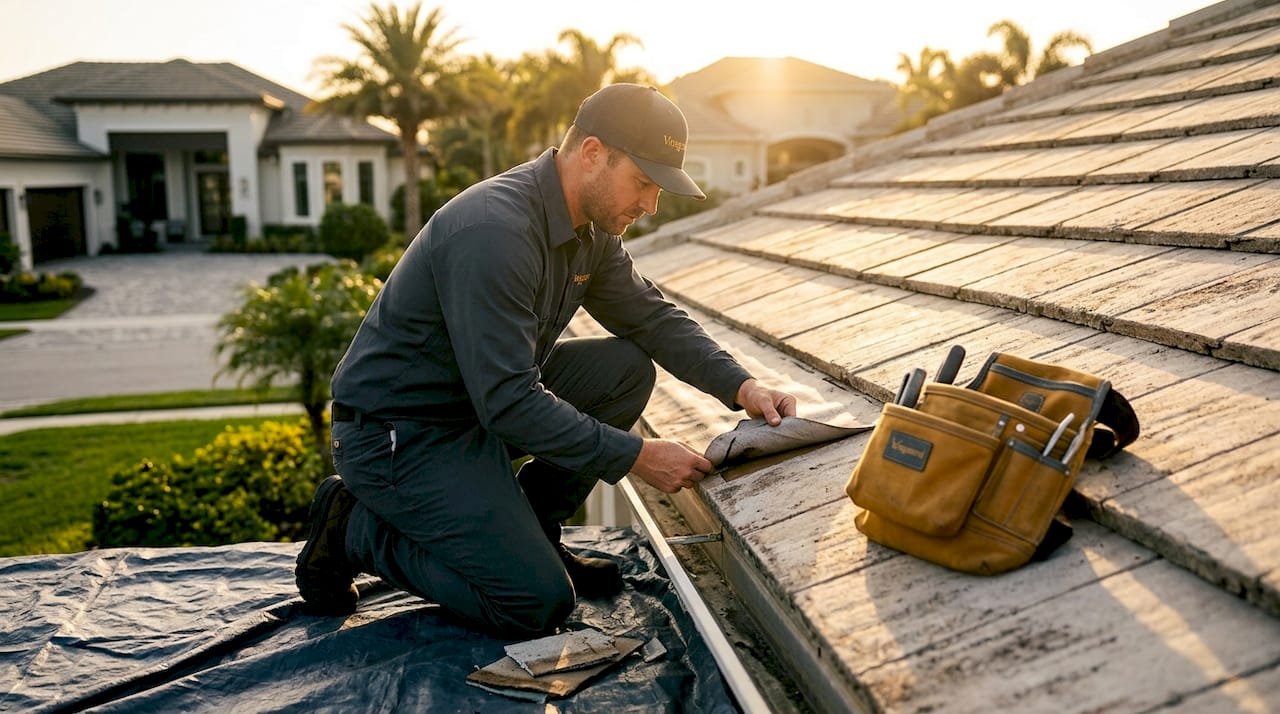
Florida’s heat and UV exposure degrade roofing materials faster than most homeowners expect. Asphalt shingles that might last 25 years in the Midwest and up North may need replacement in 15 years here. Weekly visual checks from the ground, combined with professional inspections twice a year, give you the clearest picture of where your roof stands. Look for granule buildup in gutters, lifted edges, and any signs of sagging.
Plumbing
Cast iron drain pipes in Florida slab homes deteriorate rapidly due to the combination of soil chemistry and wastewater exposure. Corrosion and blockages can develop into complete failures, and the timing is often worst heading into rainy season when ground saturation puts additional pressure on drain lines. Weekly checks should include running water in every sink, tub, and toilet to confirm proper drainage and listen for gurgling that signals a developing blockage.
HVAC systems
HVAC systems in Florida run almost year-round, which shortens their lifespan considerably compared to systems in northern states. Continuous operation means filters clog faster, coils accumulate more biological growth, and compressors work harder. A weekly check of your thermostat readings, airflow from vents, and any unusual sounds or odors from the air handler takes less than five minutes and can prevent a full system failure during a summer heat wave.
Electrical and foundation
Aging electrical panels, particularly those with known problematic brands, are a specific concern in Florida’s older housing stock. Moisture intrusion into panel boxes is a real risk in humid conditions. Stucco exteriors, common throughout Southwest Florida, can develop hairline cracks that allow water to reach the concrete block beneath. Left unchecked, that moisture causes spalling and structural compromise over time.
| System | Primary Florida risk | Recommended check frequency |
|---|---|---|
| Roof | UV degradation, storm damage, lifted shingles | Weekly visual plus twice-yearly professional |
| Plumbing | Cast iron corrosion, drain blockages | Weekly functional test |
| HVAC | Year-round wear, coil growth, filter clogging | Weekly observation plus monthly filter change |
| Electrical | Moisture intrusion, aging panels | Monthly visual plus professional at policy renewal |
| Foundation/stucco | Moisture infiltration, cracking | Weekly exterior walk |
Pro Tip: Set a recurring calendar reminder for the same day each week. Consistency matters more than perfection. A five-minute walk-through every seven days beats a thorough check every two months.
How insurance requirements make weekly checks non-negotiable
Florida’s home insurance market is one of the most complex in the country, and the rules have tightened significantly in recent years. What many homeowners do not realize is that their coverage can be denied or voided based on the condition of their home and their ability to prove ongoing maintenance.
Florida insurance providers require 4-point inspections covering the roof, electrical, plumbing, and HVAC systems for homes over 20 years old. This is not optional. Without a passing 4-point inspection, many insurers will not issue or renew a policy. And many companies require updated 4-point inspections every few years at policy renewal, meaning your home’s condition needs to hold up over time, not just at the point of purchase.
Beyond the formal inspection requirements, documented evidence of regular maintenance directly influences whether claims get approved and whether your premiums stay manageable. If you file a claim for water damage and cannot demonstrate that you were monitoring your home consistently, the insurer has grounds to argue negligence. Weekly check records, especially those with photos and dates, serve as your paper trail.
Florida insurance companies are also increasingly adopting risk-based evaluations that go beyond the standard 4-point inspection. They want to see that homeowners are proactive, not reactive. Here is what the documentation landscape looks like for a well-protected Florida home:
- 4-point inspection: required for homes 20 or more years old, often renewed every 3 to 5 years
- Wind mitigation report: documents construction features that reduce storm damage risk and can lower premiums
- WDO or termite inspection: required by many lenders and recommended annually given Florida’s year-round termite activity
- Ongoing maintenance records: weekly or monthly logs that demonstrate active property monitoring
Understanding your insurance risks with unattended homes is particularly critical for seasonal residents who leave their properties vacant for months at a time. Many policies contain vacancy clauses that limit or eliminate coverage after a property has been unoccupied for 30 to 60 days without documented oversight.
A practical weekly home check routine for Florida homeowners
Knowing you should do weekly checks and actually building a reliable routine are two different things. Here is a structured approach that takes the guesswork out of it.
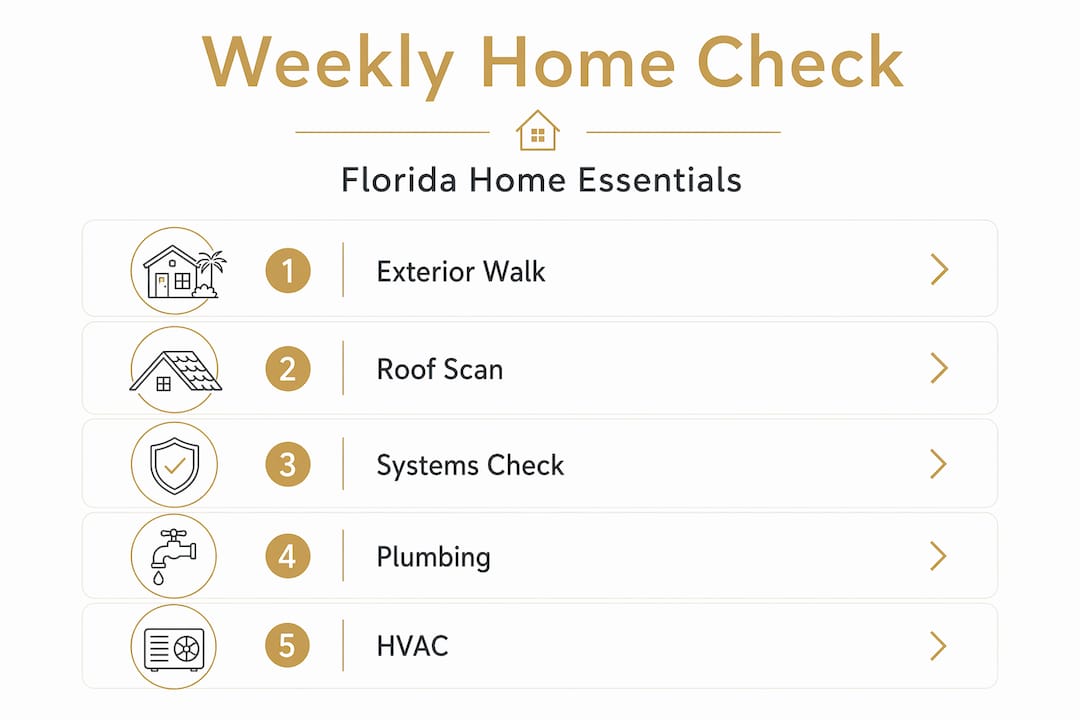
- Start outside. Walk the full perimeter of your home. Look at the roofline from the ground, check gutters for debris or granule buildup, and scan the foundation and stucco for new cracks or discoloration.
- Check all water sources. Run every faucet, flush every toilet, and run the shower in guest bathrooms. Listen for slow drainage or gurgling. Check under sinks for any moisture or cabinet discoloration.
- Inspect the HVAC system. Confirm the thermostat is set correctly, check that airflow feels normal from all vents, and look at the air handler for any water pooling around the condensate drain.
- Scan for pest activity. Look along baseboards, in garage corners, around door frames, and in any dark or damp areas for mud tubes, droppings, or soft wood that indicates termite or rodent activity.
- Check windows and doors. Look for broken seals, condensation between panes, or any daylight visible around door frames that indicates seal failure.
- Review security and safety systems. Confirm smoke detectors are functioning, check that exterior doors and windows are secure, and verify that any security cameras or alarms are operating normally.
- Document everything. Take a few photos of anything that looks different from the previous week. Date your notes. This record becomes your maintenance history.
Pro Tip: For seasonal residents, consider using a professional home watch service that provides detailed digital reports with photos after every visit. That documentation is exactly what insurers want to see.
Regular professional home watch provides peace of mind and helps avoid costly damage, especially for seasonal or vacant homes where weeks can pass without anyone setting foot inside.
My perspective: what I have seen after years of home watch work
I have walked through hundreds of homes after extended vacancy periods, and the pattern is consistent. The homeowners who skipped regular checks did not do so because they did not care. They did it because they assumed nothing would go wrong. They thought a month away was manageable. They thought their neighbor would notice something obvious.
What I have found inside those homes tells a different story. HVAC units that failed silently and allowed humidity to spike, turning a guest bedroom into a mold project. Slow plumbing leaks under kitchen sinks that soaked through cabinets and subfloor over six weeks. Pest infestations that were well established before anyone noticed. vandalism and burglary was also an issue when the home appeared unoccupied. In every case, a weekly check would have caught the problem when it was still a minor repair.
What I have learned is that proactive homeowners treat their homes like a business asset, not just a place to live. They document. They schedule. They do not wait for something to break before they pay attention. And when they do hire professionals, they choose people who will give them a real report with photos, not a verbal “everything looks fine.”
The uncomfortable truth is that Florida’s environment is actively working against your home every single day. Weekly checks are not about paranoia. They are about staying ahead of a climate that does not wait for you to get back from vacation.
— Joseph
Protect your Naples home with trusted weekly inspections
At Napleshomewatchservices, we built our service specifically for Florida homeowners who understand what is at stake. Our weekly visual inspections cover every risk area discussed in this article: water intrusion, HVAC performance, humidity levels, mold indicators, pest activity, storm damage, and security. After every visit, you receive a detailed timestamped digital report with photos so you have the documentation your insurer expects and the peace of mind you deserve. We are fully insured, bonded, and accredited members of the National Home Watch Association. Explore our Naples home watch services or learn more about what our inspections cover to get started.
FAQ
Why do Florida homes need weekly checks specifically?
Florida’s combination of high humidity, salt air, storm exposure, and year-round pest activity creates conditions where problems escalate faster than in other climates. Weekly checks allow homeowners to catch issues like moisture intrusion, HVAC failure, and pest activity before they become costly repairs.
How often should I schedule a professional home inspection in Florida?
Most Florida insurers require a 4-point inspection for homes over 20 years old, and many require renewal every few years. Beyond formal inspections, weekly visual checks by the homeowner or a home watch professional are the standard for staying ahead of Florida-specific risks.
What does a 4-point inspection cover in Florida?
A 4-point inspection covers four major systems: the roof, electrical, plumbing, and HVAC. Florida insurance providers require this inspection for older homes to assess risk before issuing or renewing a homeowner’s policy.
Can skipping regular home checks affect my insurance coverage?
Yes. Documented maintenance directly influences claim approvals in Florida’s insurance market. If you cannot show evidence of regular monitoring, insurers may deny claims on the grounds of negligence or failure to maintain the property.
What is a home watch service and who needs one?
A home watch service provides scheduled visual inspections of vacant or seasonal homes, typically weekly, to identify issues before they cause serious damage. It is particularly valuable for seasonal Florida residents who leave their properties unoccupied for extended periods and need consistent, documented oversight in their absence.

