Most snowbirds assume Naples winters are too mild to cause problems. After all, there’s no frozen pipe risk, no ice storms, no snow load on the roof. That assumption is exactly why so many seasonal homeowners return in spring to find a mold problem, a failed HVAC system, or pest activity that’s been quietly spreading for months. Understanding why Naples second homes need winter monitoring changes how you think about property protection. This article covers the specific risks that show up when your home sits vacant during the season, what professional oversight actually involves, and what steps give you the most protection per dollar spent.
Table of Contents
- Key Takeaways
- Why Naples second homes need winter monitoring
- How professional home watch services protect your property
- Winter maintenance tasks that matter most
- Informal checks vs. professional monitoring
- My honest take after years of doing this
- Protect your Naples home this winter with Vanguard Home Watch
- FAQ
Key Takeaways
| Point | Details |
|---|---|
| Naples winters carry real risks | Humidity, pests, and HVAC failures create costly damage even in mild weather during extended absences. |
| Professional monitoring beats informal checks | GPS-tracked, photo-documented inspections catch early warning signs that neighbor visits consistently miss. |
| Dry season is ideal for maintenance | January through March offers lower humidity, making it the best window for exterior repairs and inspections. |
| Early detection saves significant money | Minor issues left undetected escalate fast in coastal environments, turning small repairs into major remediation projects. |
| Documented care protects your insurance standing | Consistent professional oversight demonstrates proactive property management, which insurance carriers recognize favorably. |
Why Naples second homes need winter monitoring
Naples is a coastal environment, and that changes everything about how a vacant home behaves. Coastal humidity doesn’t disappear in winter. It stays elevated, and without regular air conditioning cycling, moisture builds up inside walls, under sinks, and around window seals at a rate most homeowners don’t expect. Unmonitored issues such as water leaks, HVAC failures, humidity imbalance, and pest activity can cause significant property damage in Naples second homes, and minor problems escalate rapidly in humid coastal environments.
Florida’s dry season runs from January through March, and while that sounds reassuring, it creates its own challenges. Lower rainfall means irrigation systems run on schedules no one is checking. A broken sprinkler head or a valve stuck open can saturate a foundation or flood a planting bed against a wall for weeks before anyone notices. The dry air also draws pests indoors searching for moisture, which is why winter is actually prime season for rodent and ant intrusion in Naples homes.
Here are the primary risk categories that show up in unmonitored Naples second homes during winter months:
- HVAC failure and humidity buildup: When air conditioning stops running, interior humidity climbs. Untended HVAC problems and humidity imbalance during the off-season can lead to mold growth and structural damage. Mold can establish itself within 48 to 72 hours under the right conditions.
- Water intrusion: Roof tiles shift, sealants around windows age and crack, and plumbing connections develop slow leaks. None of these trigger an alarm. They just drip silently for months.
- Pest activity: Rodents, ants, and cockroaches actively move into climate-controlled spaces during cooler months. Without regular visual checks, a minor infestation becomes an established colony.
- Storm impact from early-season weather: Naples does receive occasional cold fronts and wind events in winter. Loose gutters, damaged soffits, and unsecured outdoor furniture can all cause secondary damage with no one present to respond.
- Security concerns: A home that clearly hasn’t been visited recently is a visible target. Seasonal maintenance for Naples homes includes checking for signs of tampering, mail buildup, and exterior lighting failures.
Pro Tip: Set your HVAC thermostat to no lower than 78°F and no higher than 80°F when the home is vacant. This keeps air circulating without running your system at full cost, and it dramatically reduces the humidity conditions that lead to mold.
How professional home watch services protect your property
Professional home watch is not the same as a security system. A sensor tells you a door opened. A trained home watch professional tells you there’s water staining on the ceiling of the second bedroom, the AC drain line appears clogged, and there are signs of ant activity near the kitchen baseboards. Those are three separate actionable findings from a single visit.
Professional home watch services in Naples use structured visual checks supported by photo-documented reporting and GPS-verified logs. Every visit creates a record. That record becomes your evidence trail if you ever need to file an insurance claim or dispute a contractor’s assessment of how long a problem existed.
Here’s what a structured weekly inspection typically covers:
- Interior walkthrough: Check all rooms for water stains, odors, signs of pest activity, and any visible structural concerns. Run faucets and flush toilets to prevent drain seal evaporation.
- HVAC and mechanical systems: Verify the system is operating, check the air filter condition, inspect the drain pan and condensate line for blockage or overflow.
- Plumbing check: Look under all sinks, inspect the water heater, check visible supply lines and shut-off valves for signs of seeping or corrosion.
- Exterior perimeter: Inspect the roof line, gutters, soffits, doors, windows, and foundation for signs of damage, water intrusion, or pest entry points.
- Photo documentation and digital report: Every visit produces a detailed report with photographs sent directly to the homeowner. You see exactly what was found, what looks normal, and what needs attention.
“The difference between a professional home watch visit and a neighbor stopping by isn’t just thoroughness. It’s accountability. A professional has a structured checklist, a liability framework, and a documented record of every single visit. That’s what actually protects you.”
Communities like Mediterra, Grey Oaks, and Pelican Bay are seeing growing demand for luxury home watch services tailored to seasonal absentee homeowners, precisely because the value of documented, professional oversight is becoming harder to ignore.
Winter maintenance tasks that matter most
Naples winter home maintenance follows the natural advantage of the dry season. Florida’s dry season features lower humidity levels of 60 to 65% and rainfall during January and February that is less than half of summer months. That creates ideal conditions for exterior work that summer heat and afternoon thunderstorms make difficult.
Here are the priority maintenance tasks for seasonal homeowners to address or arrange before or during winter:
- Gutter and downspout cleaning: Debris accumulates through fall. Clogged gutters push water against fascia boards and into the roof line, which is how water intrusion begins.
- Window and door seal inspection: Caulk and weatherstripping degrade in Florida’s UV exposure. Check every exterior opening for gaps, cracking, or separation.
- Roof and soffit check: Look for lifted or cracked tiles, damaged ridge caps, and any areas where soffit panels have separated. These are entry points for both water and pests.
- Pest-proofing and treatment: Schedule a preventive pest control treatment at the start of the season. Address any visible gaps around pipe penetrations, utility entry points, and garage door seals.
- Irrigation system audit: Confirm the system is running on the correct schedule and inspect heads for proper operation. An unchecked irrigation system is one of the most common causes of silent water damage against a home’s foundation.
| Maintenance Task | Best Timing | Risk if Skipped |
|---|---|---|
| Gutter cleaning | November to December | Roof and fascia water damage |
| Exterior caulk and seal inspection | January to February | Water intrusion and pest entry |
| HVAC service and filter change | Before departure | Mold, system failure, humidity damage |
| Pest control treatment | October to November | Rodent and insect infestation |
| Irrigation system audit | January | Foundation moisture damage |
Inspecting gutters, windows, doors, soffits, and ventilation during winter prevents moisture intrusion and pest entry, and winter’s milder weather allows for multi-day maintenance projects without interference from afternoon rain.
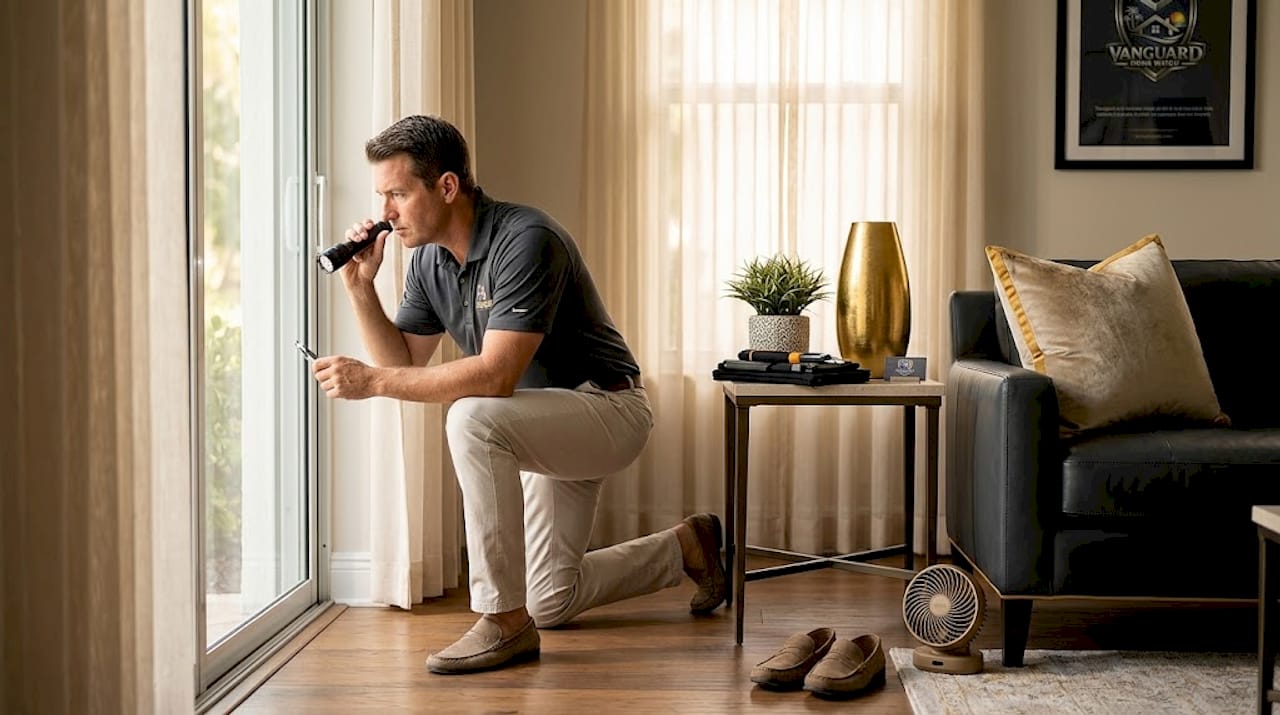
Proper winter maintenance can also positively impact insurance rates. Insurance carriers recognize documented maintenance and oversight as evidence of lower risk for water and storm damage claims. That documentation only exists if someone is keeping records.
Pro Tip: Before you leave Naples for the season, walk every room and photograph the condition of appliances, flooring, and ceilings. This baseline documentation protects you if a contractor ever claims damage was pre-existing.
Informal checks vs. professional monitoring
A lot of seasonal homeowners rely on a neighbor or a friend to swing by every few weeks. It feels like coverage. In practice, it leaves significant gaps, and those gaps are where damage quietly grows.
| Factor | Informal Neighbor Checks | Professional Home Watch |
|---|---|---|
| Inspection consistency | Irregular, based on availability | Scheduled weekly visits |
| Documentation | None or verbal | Detailed photo reports with GPS verification |
| Liability and accountability | None | Fully insured and bonded |
| Issue detection capability | Limited to obvious, visible problems | Structured checklist covering interior and exterior systems |
| Owner communication | Casual, inconsistent | Digital reports delivered after every visit |
| Response coordination | Dependent on neighbor’s judgment | Professional triage and contractor coordination |
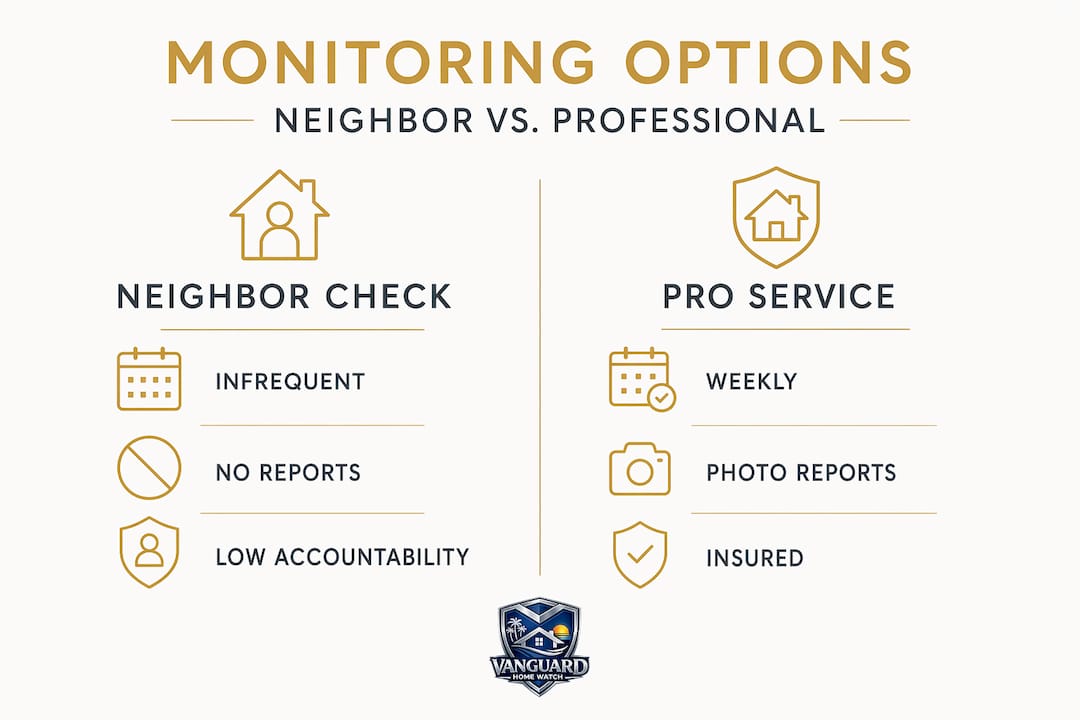
Informal checking strategies such as neighbor visits often lack thoroughness, documentation, or timely communication. A neighbor may notice a broken window. They are unlikely to notice that the AC drain pan is overflowing into the ceiling cavity above the master bedroom. That distinction can represent a $500 repair versus a $25,000 remediation.
Professional monitoring is also more cost-effective than most homeowners expect when measured against what it prevents. A single undetected water leak over a 90-day absence can cause damage that runs well into five figures. Learn more about how seasonal owners protect their properties with structured monitoring programs designed specifically for Naples communities.
My honest take after years of doing this
I’ve been inside hundreds of Naples second homes during winter months, and the pattern is consistent. The homeowners who trusted informal arrangements almost always had a story to tell. A ceiling that caved in. A kitchen that smelled wrong. Ants behind the refrigerator. Not because Naples is unusually dangerous, but because no one was looking closely enough, and no one was accountable when something went wrong.
What I’ve learned is that the problem isn’t negligence. Most homeowners genuinely believe a warm climate means lower risk. It doesn’t. It means different risk. Humidity, pests, and HVAC stress don’t take a winter break. They actually intensify in certain ways when a home sits vacant with no activity to interrupt them.
The investment in professional monitoring pays for itself the first time something is caught early. I’ve seen a slow-dripping supply line under a bathroom sink get flagged on a weekly visit before it had any chance to soak the subfloor. That same leak, left until spring, would have required flooring replacement and likely a mold assessment. The difference was one visit and one photograph in a report.
My advice to every seasonal homeowner is this: don’t let the mild winter weather make you complacent. The Naples home security risks in winter are real, they are specific, and they respond well to consistent, professional attention. Prioritize it every season, not just the ones where something went wrong.
— Joseph
Protect your Naples home this winter with Vanguard Home Watch
If this article has made you reconsider what “keeping an eye on things” actually requires, we’re glad it did. At Vanguard Home Watch LLC, we provide weekly, owner-operated home watch inspections for seasonal and absentee homeowners throughout Naples, North Naples, and Ave Maria. Every visit is documented with photographs and delivered as a detailed digital report directly to you.
We are fully insured, bonded, background checked, and accredited by the National Home Watch Association. You get consistent oversight, transparent reporting, and a direct line to the people personally walking through your home. If you’re ready to protect your Naples property with the attention it deserves, visit Vanguard Home Watch LLC to learn more or schedule your first visit today.
FAQ
Why do Naples second homes need winter monitoring?
Naples second homes face specific risks during winter including HVAC failures, humidity-driven mold, pest intrusion, and water leaks that can develop undetected over a 90-day absence. Warm weather does not eliminate these risks; it simply changes their nature.
What does a professional home watch inspection include?
A professional home watch inspection covers interior and exterior visual checks, HVAC and plumbing systems, pest activity signs, roof and soffit condition, and security. Findings are documented with photographs and delivered as a digital report after every visit.
How often should a vacant Naples home be inspected?
Weekly inspections are the recognized standard for vacant Naples second homes. A weekly schedule catches problems early, before a minor issue has time to cause significant structural or water damage.
Is professional monitoring worth the cost compared to a neighbor checking in?
Yes. Professional monitoring provides structured inspections, documented reports, accountability, and insurance backing that informal neighbor checks simply cannot offer. One prevented water damage event typically covers months of monitoring costs.
When is the best time to schedule winter maintenance for a Naples home?
Florida’s dry season from January through March offers lower humidity and reduced rainfall, making it the optimal window for exterior maintenance including gutter cleaning, caulk inspection, and pest-proofing treatments.

