You left your Naples home in good hands. Or so you thought. The reality facing many absentee owners and investors is that the common issues discovered in vacant Naples homes tend to quietly compound over weeks and months, turning minor problems into major repair bills. Naples’ subtropical climate, with its relentless humidity and hurricane-season storms, creates conditions that punish any property left unmonitored. This article walks through the most critical issues, explains exactly why they happen, and shows you what proactive care actually looks like.
Table of Contents
- Key takeaways
- 1. Water intrusion and mold growth: the top threat in vacant Naples homes
- 2. HVAC failures and humidity control problems
- 3. Plumbing issues that go unnoticed during vacancy
- 4. Pest infestations and security vulnerabilities
- 5. Exterior maintenance challenges in long-vacant Naples homes
- My honest take on what absentee owners get wrong
- How Vanguard Home Watch protects your Naples property year-round
- FAQ
Key takeaways
| Point | Details |
|---|---|
| Mold moves fast | Mold can begin growing within 24 to 48 hours of trapped moisture, making rapid response critical. |
| HVAC must stay on | Turning off your HVAC entirely causes indoor humidity to spike and accelerates mold and material damage. |
| Plumbing neglect voids coverage | Insurance claims for burst pipes in vacant homes are often denied when no documented care exists. |
| Pests and security are linked | Empty homes attract rodents, insects, and opportunistic burglars, all causing costly structural damage. |
| Weekly inspections catch problems early | Professional home watch inspections detect issues before they escalate into expensive repairs. |
1. Water intrusion and mold growth: the top threat in vacant Naples homes
This is the single most common issue discovered in vacant Naples homes, and it almost always catches owners off guard. Water gets in through roof damage, failed window seals, or storm-related breaches. When no one is there to notice, it sits. And in Naples’ climate, sitting moisture does not stay harmless for long.
Mold begins growing within 24 to 48 hours of moisture being trapped inside walls, floors, and ceilings. Air drying alone rarely works in Florida’s high-humidity environment, which means that even after the visible water is gone, the conditions for mold growth can persist behind finished surfaces. By the time an owner returns to the property, the mold may already be well-established inside the walls.
The most important insight here: mold prevention is really a race against the drying timeline, not a cosmetic fix. Painting over a stain or airing out a room does nothing if the underlying moisture was never removed. That distinction matters enormously in terms of both health risk and remediation cost.
Common sources of water intrusion in vacant Naples homes include:
- Storm-driven rain entering through damaged roof tiles or flashing
- Plumbing leaks from supply lines, toilets, or appliances left connected
- Failed caulking or weather-stripping around windows and sliding glass doors
- HVAC condensate overflow from uncleared drain lines
- Hidden leaks in inaccessible areas like attics, crawlspaces, and mechanical rooms
“Fresh paint, mismatched flooring, or overpowering air fresheners in a vacant home are often signs that a water or mold problem was patched over rather than properly remediated.”
Pro Tip: If you return to your Naples home and notice a musty odor but no visible water, do not dismiss it. Engage a licensed mold inspector before repainting or refreshing any surfaces. Cosmetic fixes over active mold growth will almost always require costly tear-out later.
2. HVAC failures and humidity control problems
Many absentee owners shut their HVAC systems off entirely when they leave, believing it saves money. It does not save money. What it does is create an indoor environment where high indoor humidity accelerates mold growth and causes real damage to wood flooring, cabinetry, drywall, and furniture.
The recommended approach for vacant Naples homes is straightforward:
- Set the thermostat to 78 to 80 degrees Fahrenheit, not off.
- Program the humidity control to maintain 50 to 55 percent relative humidity.
- Schedule HVAC filter changes and coil inspections every three months, even during vacancy.
- Have the condensate drain line cleared regularly, as clogs here are one of the most frequent causes of hidden water damage behind walls and under flooring.
HVAC condensate drain backups deserve specific attention. When the drain line clogs, water overflows into the air handler cabinet and eventually seeps into the surrounding structure. In a monitored home, this gets caught quickly. In a vacant home without anyone checking in, it can run unnoticed for weeks. Combining gutter cleaning with HVAC condensate line maintenance as a unified moisture control routine is one of the most effective Naples home maintenance tips for vacancy periods.
Pro Tip: Install a wireless humidity monitor connected to your smartphone. These devices cost under $50 and alert you if indoor humidity climbs above your set threshold, giving you early warning before mold takes hold.
3. Plumbing issues that go unnoticed during vacancy
Slow plumbing leaks are among the most financially damaging problems with vacant homes because they have the most time to cause harm. A pinhole leak under a sink or a weeping supply line connection behind a wall can go undetected for months in an empty property.
Key plumbing concerns for vacant Naples homes include:
- Supply line failures: Braided stainless steel lines on toilets and under sinks have a finite lifespan and can burst without warning.
- Toilet phantom leaks: Flapper valves degrade over time. A slowly running toilet wastes water and can indicate a supply line under constant pressure.
- Water heater corrosion: Water heaters left in standby mode in vacant homes are prone to sediment buildup and eventual tank failure.
- Insurance implications: Insurance claims for burst pipes in vacant homes are frequently denied when there is no documented evidence of regular maintenance and oversight.
That last point is critical for investors and absentee owners. Most homeowners insurance policies require that occupied or monitored care be maintained. A well-documented home watch inspection record showing regular visits can make the difference between a covered claim and a denied one. Shutting off the main water supply during extended vacancies is also a practical step for many owners, though it requires coordination for any irrigation systems or appliances that may need periodic operation.
4. Pest infestations and security vulnerabilities
Vacant homes send quiet signals to two very different kinds of unwanted visitors: pests and people with bad intentions. Both create problems that range from expensive to dangerous.
Vacant homes attract rodents, insects, and are more frequent targets for burglary and vandalism. Rodents chew through wiring, insulation, and even plumbing lines. In Naples, this category also includes palmetto bugs, ants, subterranean termites, and occasionally wildlife like raccoons or birds entering through damaged fascia or vents.
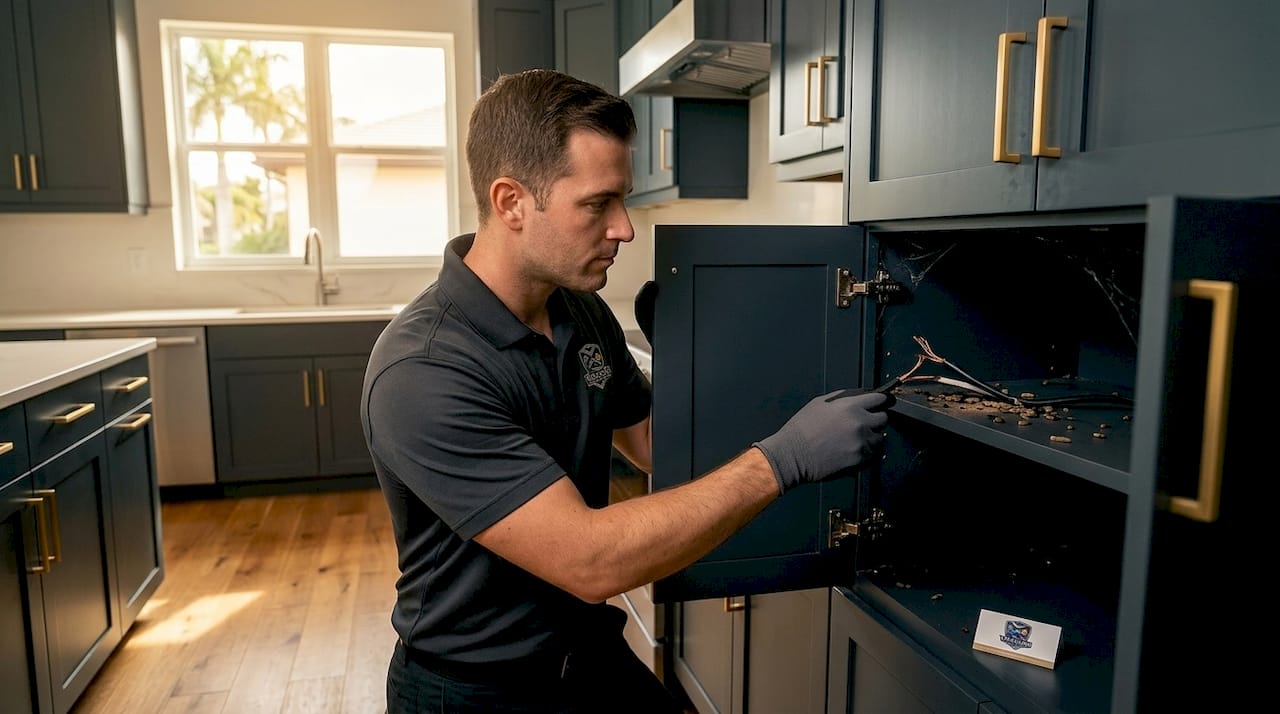
Structural damage from pests compounds quickly in unmonitored properties. Termites working through structural wood or subflooring can cause tens of thousands of dollars in damage before anyone notices. That damage often is not covered by standard homeowners policies, which exclude pest-related losses by definition.
On the security side, the risks are equally real. Signs that a home is empty include piling mail, overgrown landscaping, and consistent darkness at night. These are visible cues that attract opportunistic theft and vandalism. For vacant properties in Naples, practical security measures include:
- Smart lighting on timers or motion sensors
- Video doorbell cameras with cloud storage and mobile alerts
- Deadbolts and reinforced sliding door locks
- Periodic presence from a trusted home watch professional who walks the property and confirms all points of entry
Regular inspections break the pattern of obvious vacancy. A property that shows signs of regular attention is a far less appealing target.
5. Exterior maintenance challenges in long-vacant Naples homes
The exterior of a vacant home takes a beating from Naples’ climate, and the consequences work their way inward over time. What starts as a clogged gutter or a cracked roof tile becomes a water intrusion problem within one heavy rain event.
Gutter clogs and poor drainage lead to water intrusion that causes foundation and structural damage in unmaintained vacant properties. Naples receives an average of over 55 inches of rain annually, concentrated in the summer storm season. Gutters that are blocked by debris funnel water directly against the fascia, soffit, and foundation. The damage is not always visible from the ground until it is already severe.
Pro Tip: Schedule gutter cleaning before and after hurricane season, not just once a year. A single major storm can deposit enough debris to fully block a gutter system and undo months of prior maintenance.
Here is a quick comparison of exterior maintenance tasks by risk level for vacant Naples homes:
| Maintenance task | Risk if neglected | Recommended frequency |
|---|---|---|
| Gutter cleaning | Water intrusion, fascia rot, foundation damage | Twice yearly, plus after major storms |
| Roof inspection | Storm damage escalation, interior leaks | Annually and after any named storm |
| Landscaping and tree trimming | Moisture buildup, roof and window damage | Monthly during growing season |
| Window and door seal inspection | Weather exposure, water intrusion | Semi-annually |
Vegetation is a frequently underestimated contributor to problems with vacant homes. Overhanging branches can puncture or abrade roofing material during wind events. Ground-level plants growing against the foundation trap moisture against the structure and create easy pathways for pests.
My honest take on what absentee owners get wrong
I have walked hundreds of vacant homes over the course of my career, and I keep seeing the same pattern. Owners who are careful, attentive people in every other area of their lives make one consistent mistake with their vacant properties: they assume that if nothing is visibly broken when they leave, nothing will break while they are gone.
What I have learned is that the problems in empty Naples houses are almost never sudden. They are gradual. A slow drip. A clogged condensate line. A loose roof tile. Any one of these is a manageable repair if it is caught within a week or two. Left alone for three or four months, that same issue becomes a remediation project or an insurance dispute.
The renovation challenges in Naples are real, and the local contractor market gets stretched thin after storm seasons. The time to prevent damage is before it happens, not when you are competing for a remediation crew in October. I have also seen owners discover that their insurance coverage was compromised specifically because no documented care existed during the vacancy period. That is a painful and entirely avoidable outcome.
Regular home watch inspections give absentee owners something genuinely valuable: an evidence trail that shows a property was actively maintained. For insurance purposes, for resale value, and for your own peace of mind, that documentation matters more than most owners realize until they actually need it.
— Joseph
How Vanguard Home Watch protects your Naples property year-round
At Vanguard Home Watch LLC, we built our service specifically around the issues in empty Naples houses that this article describes. Every week, we conduct detailed visual inspections of your property, checking for water intrusion, HVAC performance, humidity levels, pest activity, plumbing concerns, and exterior damage. After every visit, you receive a digital report with photos documenting exactly what we observed.
Our home watch inspection services are designed for absentee homeowners and investors who want professional eyes on their property without having to manage it remotely. We are fully insured, bonded, background checked, and accredited by the National Home Watch Association (NHWA). For owners who need more than inspections, our concierge services for vacant homes coordinate vendor access, maintenance scheduling, and emergency response on your behalf.
If your Naples home is sitting vacant right now, contact us at Vanguard Home Watch to learn how we can protect your investment and give you genuine peace of mind.
FAQ
What are the most common issues in vacant Naples homes?
Water intrusion and mold growth are the most frequent problems, followed by HVAC failures, plumbing leaks, pest infestations, and exterior damage from storms. Naples’ humidity accelerates all of these issues when a home sits unmonitored.
How often should a vacant Naples home be inspected?
Weekly inspections are the standard recommended by the National Home Watch Association and are particularly important in Naples given the climate and storm risk. Monthly visits leave too large a window for problems to escalate undetected.
Will my homeowners insurance cover damage to my vacant Naples home?
Coverage depends on your policy terms and whether documented care was maintained. Insurance claims for water damage in vacant homes are often denied when there is no evidence of regular monitoring or maintenance.
What thermostat setting should I use in my vacant Naples home?
Set your thermostat to 78 to 80 degrees Fahrenheit and maintain humidity between 50 and 55 percent to minimize mold risk and protect interior materials while the home is unoccupied.
Can pests cause serious structural damage to a vacant Naples home?
Yes. Termites, rodents, and wood-boring insects can cause significant structural damage within a single vacancy season. Unlike water damage, most pest-related losses are excluded from standard homeowners policies, making prevention the only reliable protection.

