Hurricane season in Naples is not a distant threat you can address when the skies darken. Southwest Florida sits in one of the most storm-vulnerable corridors in the United States, and every June through November, the margin between a manageable storm and catastrophic loss comes down to how well you prepared in the months before. This hurricane preparedness checklist for Naples homeowners covers everything that matters: structural upgrades, emergency supplies, evacuation timelines, and the professional oversight that keeps your property protected even when you are not there.
Table of Contents
- Key takeaways
- 1. What makes hurricane preparedness different for Naples homeowners
- 2. Your hurricane supplies checklist for Naples
- 3. Structural preparations that actually reduce damage
- 4. Preparation timeline for Naples homeowners
- 5. Comparing your options: a decision guide for Naples homes
- My honest take on hurricane preparedness in Naples
- How Vanguard Home Watch LLC supports your storm readiness
- FAQ
Key takeaways
| Point | Details |
|---|---|
| Start preparations early | Schedule licensed contractors between March and April to avoid delays before the June 1 season start. |
| Prioritize flood risk | Water and flooding cause the vast majority of hurricane-related deaths, making flood zone awareness non-negotiable. |
| Stock a 7-day supply kit | Plan for seven days of food, one gallon of water per person per day, and 14 days of medications. |
| Upgrade structural weak points | Garage doors and windows are your home’s most vulnerable elements; reinforce or replace them before season starts. |
| Consider professional oversight | A home watch service provides documented inspections before and after storms for vacant and seasonal properties. |
1. What makes hurricane preparedness different for Naples homeowners
Naples sits along the Gulf Coast in Collier County, a region with a well-documented history of direct hurricane strikes and near-misses. Preparation here requires more than the generic Florida storm advice you will find on a national weather website.
Several factors make Naples unique:
- Flood zone exposure. Much of Naples and North Naples sits in FEMA-designated flood zones. Water and flooding cause approximately 88% of hurricane-related deaths, which means your flood risk deserves more attention than your wind risk in most planning conversations.
- Seasonal vacancy. A large percentage of Naples homes are occupied part-time by snowbirds. A vacant home during a storm has no one to respond to a water leak, a failed HVAC, or a breached entry point.
- Contractor demand spikes. When the season approaches, every homeowner in Collier County is calling the same roofers, shutter installers, and impact window contractors. The queue fills fast.
- Local building codes. Collier County has strict wind-load requirements for shutters, impact glass, and roof attachments. Any work you do needs to meet code or it will not count toward insurance discounts.
Pro Tip: Check your current flood zone designation at the FEMA Flood Map Service Center before you finalize any preparation budget. A zone change can dramatically affect both your risk level and your insurance costs.
2. Your hurricane supplies checklist for Naples
This is not a list you throw together the morning a storm is named. The 2026 Atlantic hurricane season is forecast to produce 8 to 14 named storms, with 3 to 6 reaching hurricane strength. Supplies need to be stocked before the season begins, and restocked after any storm you shelter through.
Food, water, and medications
- One gallon of water per person per day, for a minimum of seven days. Include water for pets.
- Seven days of non-perishable food: canned proteins, peanut butter, dried fruit, granola bars, and manual can openers.
- A 14-day supply of all prescription medications, including insulin stored with appropriate cooling supplies.
- Infant formula, baby food, and diapers if applicable.
Documents and cash
- Copies of your homeowner’s insurance policy, flood insurance policy, vehicle insurance, and passports stored in a waterproof bag.
- At least $500 in small bills. ATMs go offline after major storms, sometimes for days.
- A USB drive with digital backups of all critical documents.
Tools and safety gear
- Battery-powered or hand-crank NOAA weather radio.
- Multiple flashlights with extra batteries, plus at least one headlamp per person.
- A portable phone charger and a solar charging panel.
- First aid kit stocked with bandages, antiseptic, and any wound care supplies.
- Rain gear, waterproof boots, and a change of clothes per person in a sealed bag.
Pro Tip: Rotate your food and water supply annually every May. Expiration dates on canned goods and sealed water containers matter more than most homeowners realize during an actual emergency.
3. Structural preparations that actually reduce damage
This is where many Naples homeowners underinvest, often because the upfront costs feel significant. The math usually favors investment. Impact windows and structural upgrades can lower insurance premiums by 15 to 45%, which translates to real annual savings that offset the cost over time.
Impact windows and hurricane shutters
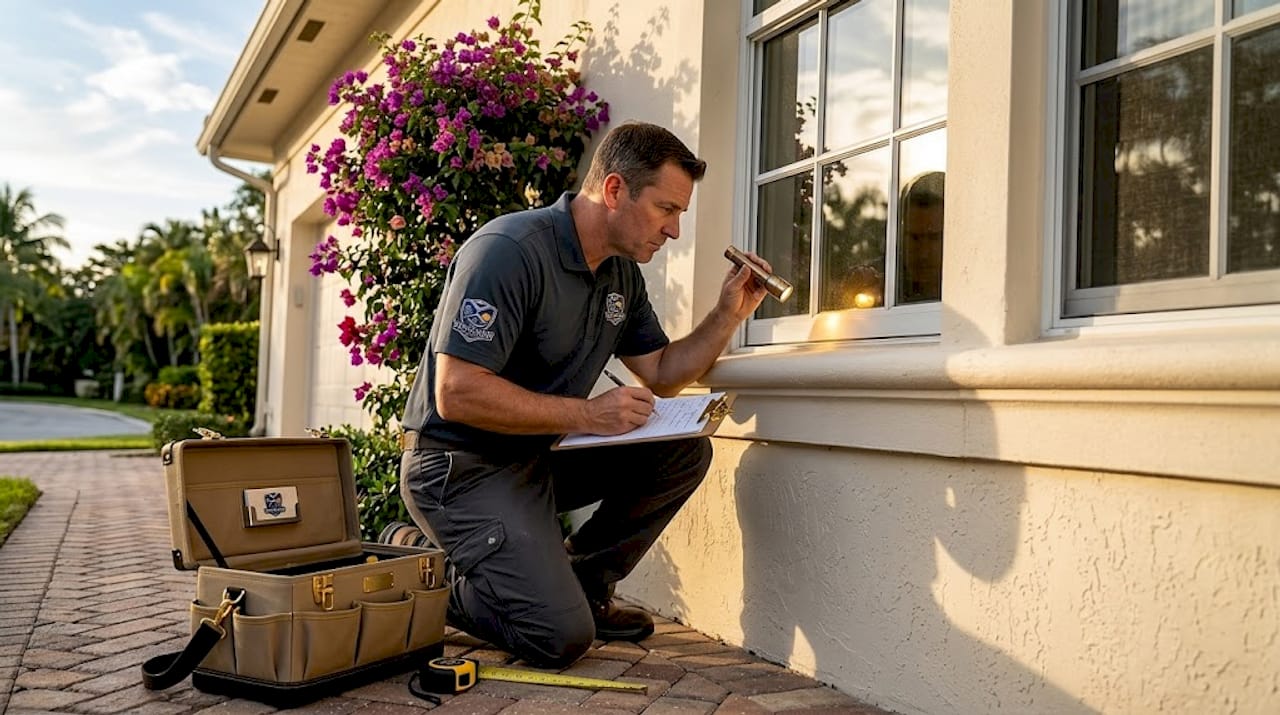
Impact glass eliminates the seasonal installation and storage burden of shutters. It also provides year-round security and noise reduction. The trade-off is cost: impact windows run significantly more upfront than accordion or panel shutters. Shutters are code-compliant and effective, but they require someone to be present to deploy them. For a home that sits vacant for months at a time, impact glass is the more reliable choice.
Garage doors
Garage door failure is the leading cause of residential hurricane damage, with professional reinforcement running between $200 and $600. That cost is minor compared to the structural consequences of a garage door blowing in. A breached garage door allows wind pressure to enter the home, which can lift the roof from the inside. Get a bracing kit installed by a licensed contractor, not a hardware store kit you install yourself.
Roof and soffit inspections
Have a licensed roofer inspect your roof before June 1 every year. Look specifically for loose or missing shingles, deteriorated flashing around vents and skylights, and soffit panels that are not properly fastened. Loose soffit is one of the first things to fail in high winds, and once it goes, water intrusion follows immediately.
| Upgrade | Approximate cost | Insurance benefit | Best for |
|---|---|---|---|
| Impact windows | $8,000 to $20,000+ | Up to 45% premium reduction | Year-round or vacant homes |
| Hurricane shutters | $2,000 to $8,000 | 15 to 30% reduction | Occupied seasonal homes |
| Garage door reinforcement | $200 to $600 | Moderate savings | All home types |
| Wind mitigation inspection | $75 to $150 | Documents qualifying upgrades | Any home with prior improvements |
| Roof strap upgrades | $1,500 to $4,000 | Significant reduction | Older pre-code homes |
Pro Tip: A wind mitigation inspection documents all compliant features on your home and can reduce your insurance premium by up to 45%, saving $500 to $2,000 or more annually. Schedule one after completing any structural upgrades.
Flood panels: proceed with caution
Flood panels are increasingly popular in Naples, but they come with real risks if installed incorrectly. Improperly used flood panels can create hydrostatic pressure problems and block emergency exits. Permits are mandatory, and a licensed contractor must handle installation. Do not treat flood panels as a DIY project regardless of what a product’s marketing materials suggest.
4. Preparation timeline for Naples homeowners
Timing matters as much as what you do. The best window for scheduling contractors in Southwest Florida is March through April. By mid-May, licensed contractors are booked solid, and material lead times stretch to two to four weeks.
Here is a practical month-by-month guide:
- January to February: Review your insurance policies. Confirm you have both homeowner’s and flood insurance. Check coverage limits against current replacement costs, which have risen significantly in recent years.
- March: Schedule your roofing inspection, wind mitigation inspection, and any planned impact window or shutter installation. Book contractors now.
- April: Complete garage door reinforcement. Test your generator. Replace any expired emergency supplies. Confirm your hurricane shutters open and close properly.
- May: Conduct a full dry-run deployment of shutters. Trim trees and palms. Clear gutters. Verify your NOAA radio works. Finalize your Naples emergency plan and share it with family members.
- June 1 and beyond: Monitor the National Hurricane Center daily during active weather. At a tropical storm watch, begin deploying shutters and moving outdoor furniture inside.
- At hurricane warning: Shutter all openings. Move vehicles to a garage if possible. Shut off propane tanks. Execute your hurricane evacuation plan for Naples if you are in Zones A or B.
Pro Tip: Know your Collier County evacuation zone before the season starts. Zone A carries the highest storm surge risk. You can check your zone and verify your closest shelter location through the Collier County Emergency Management website.
5. Comparing your options: a decision guide for Naples homes
Not every Naples homeowner has the same budget, risk profile, or occupancy schedule. Here is a comparison to help you prioritize:
| Situation | Top priority | Secondary priority | Skip or defer |
|---|---|---|---|
| Full-time resident, older home | Roof and garage door | Impact windows | Flood panels (unless in Zone A) |
| Seasonal owner, absent June to November | Impact glass + home watch service | Supplies stored on-site | Shutters requiring manual deployment |
| New construction, built post-2002 | Verify code compliance | Supplies and documents | Major structural upgrades (likely already compliant) |
| Rental property | Shutters + inspection program | Tenant emergency plan | Complex flood panel installs |
| Budget-constrained homeowner | Garage door reinforcement | Supplies kit | Impact windows (defer to next season) |
Additional considerations worth factoring in:
- Homes built before 2002 predate Florida’s strengthened building codes and require closer structural scrutiny.
- Residential fence upgrades to impact-rated materials can reduce projectile risks during high-wind events, a detail many homeowners overlook.
- A professional home watch service provides documented post-storm inspections, which support faster and more accurate insurance claims.
- Taping your windows accomplishes nothing. Window taping is an outdated and ineffective method that only complicates cleanup. Spend that time and energy on verified protection solutions.
My honest take on hurricane preparedness in Naples
I have spent years in Naples and worked with hundreds of homeowners navigating storm season. The advice I find myself repeating most often is this: the biggest mistakes happen in the spring, not during the storm.
Homeowners who wait until June to start calling contractors, or who assume a light forecast season means they can skip their roof inspection, are the ones who call me after a storm with serious water damage and complicated claims. The 2026 forecast of 8 to 14 named storms is below recent averages, and I have already heard people use that as a reason to delay preparation. That reasoning does not hold up. It only takes one storm making landfall near Naples to change everything.
I am also direct with seasonal homeowners about this: a home sitting empty from June through November without professional oversight is a liability. HVAC failures, slow water leaks, humidity-driven mold growth. These are not storm problems. They are vacancy problems that storms accelerate. I have seen homes that sustained minimal storm damage suffer significant losses from undetected post-storm leaks that went unnoticed for weeks.
The homeowners who come through hurricane season best are the ones who prepared early, made structural investments, and had a trusted person checking on their property. That combination is not complicated. It just requires acting before you feel the urgency.
— Joseph
How Vanguard Home Watch LLC supports your storm readiness
At Vanguard Home Watch LLC, we work directly with Naples, North Naples, and Ave Maria homeowners to provide the professional property oversight that seasonal and absentee owners rely on. Our weekly home watch inspections cover water intrusion, HVAC performance, humidity levels, mold indicators, pest activity, and storm damage. After every visit, you receive a detailed digital report with photos.
Before hurricane season, we help you identify vulnerabilities during inspections and coordinate vendor access for repairs. After a storm, we conduct prompt post-storm assessments so you know exactly what your property looks like before you travel back. This documentation supports insurance claims and gives you clarity when it matters most. If you want a trusted, accredited, and fully insured home watch partner watching over your Naples home this season, we are ready to help. Request a free consultation today.
FAQ
How early should Naples homeowners begin hurricane preparation?
Scheduling licensed contractors between March and April is critical, since contractor availability in Southwest Florida tightens significantly by mid-May. Completing structural work before June 1 gives you full coverage from the start of the season.
What should a Naples hurricane supply kit include?
A properly stocked kit should include seven days of food, one gallon of water per person per day, and a 14-day supply of all prescription medications. Add copies of insurance documents, at least $500 in cash, and a battery-powered NOAA weather radio.
Is flood insurance separate from homeowner’s insurance in Naples?
Yes. Standard homeowner’s insurance policies do not cover flood damage. Naples homeowners in FEMA flood zones must carry a separate flood insurance policy, typically through the National Flood Insurance Program or a private carrier.
What is the single most important structural upgrade for a Naples home?
Garage door reinforcement is widely regarded as the highest-priority structural fix, since garage door failure is the leading cause of residential hurricane damage. Professional reinforcement costs between $200 and $600 and can prevent catastrophic interior damage.
What do home watch services do after a hurricane?
A professional home watch company like Vanguard Home Watch LLC conducts post-storm inspections to document water intrusion, structural damage, HVAC failure, and security concerns. These post-storm assessments are particularly valuable for seasonal owners who cannot return immediately after a storm.

