A home watch visit report is a formal, digital record of a property’s condition captured during a scheduled inspection of a vacant or seasonal home. Professional home watch reports cover 100+ inspection points across categories including plumbing, HVAC, electrical, and security. These documents serve three distinct purposes: early problem detection, insurance compliance, and vendor coordination. Understanding the types of home watch reports available helps you choose the right monitoring plan for your property’s specific risks and vacancy schedule.
1. Types of home watch reports: routine weekly and bi-weekly inspections
Routine inspection reports are the foundation of any professional property watch service. They document a property’s condition on a fixed schedule, typically weekly or bi-weekly, and give absentee homeowners a reliable record of what was found and when.
A professional routine report covers 14 categories with more than 110 specific inspection items. Those categories include plumbing, HVAC performance, electrical systems, windows and doors, pest activity, mold and humidity, and exterior security. Each item is checked, noted, and photographed where relevant.
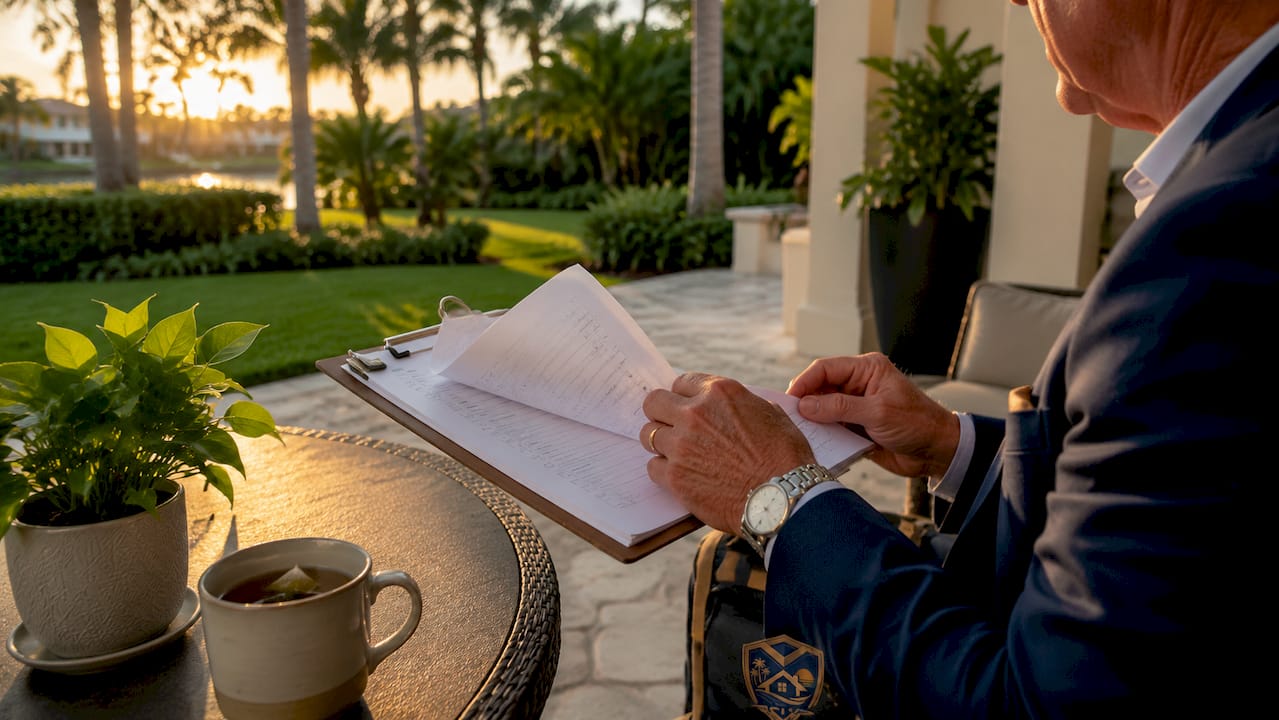
Weekly visits suit high-risk properties, such as waterfront homes in Naples or North Naples, where humidity, HVAC failure, and water intrusion can cause serious damage within days. Bi-weekly visits work well for lower-risk inland properties with newer systems and fewer exposure points. The frequency you choose directly affects how quickly a problem gets caught and reported.
Key elements found in every routine report:
- Timestamped entry and exit records
- Photographic documentation of any anomaly
- Notation of normal conditions across all inspection categories
- HVAC temperature and humidity readings
- Exterior condition notes including landscaping and drainage
Pro Tip: Request that your home watch provider use exception reporting. This format confirms normal conditions briefly and focuses detailed documentation on anomalies. Insurers find exception reports far more credible than generic “all good” checklists.
Insurance companies require consistent, dated inspection records to honor claims on vacant properties. A routine report with a clear timestamp is your first line of defense if a slow-discovery loss like a water leak becomes a claim dispute.
2. Storm check and event-triggered inspection reports
Storm check reports are a distinct category of home watch documentation. They are triggered by specific weather events rather than a fixed calendar schedule, and their scope is narrower and more urgent than a routine visit.
After a named storm, tropical system, or severe weather event, a storm check report focuses on wind damage, water intrusion, debris impact, roof condition, and any breach of windows or doors. The goal is rapid damage assessment, not a full 110-point review. Speed matters because undocumented storm damage can worsen within 24–48 hours.
These reports carry significant weight with insurance carriers. A timestamped storm check completed within hours of a weather event establishes the exact condition of the property at that moment. That record is critical when filing a claim, especially in Florida where vacancy clauses in homeowner policies can complicate coverage.
Storm check reports typically document:
- Roof and soffit condition post-storm
- Window and door integrity
- Standing water or flooding inside or outside
- Downed trees or debris in contact with the structure
- Pool cage, screen enclosure, and lanai damage
Pro Tip: Schedule your storm check within the first few hours after a weather event clears. Damage that goes unaddressed for even one day can escalate from a minor repair into a major remediation project.
Follow-up tracking is part of this report type. If damage is found, the report initiates a vendor coordination chain, connecting the homeowner with licensed contractors and documenting every step of the repair process.
3. Vendor access and maintenance liaison reports
Vendor liaison reports document what happens when a third party enters your property. These reports record contractor arrivals, work performed, materials used, and departure times. They exist because absentee homeowners cannot personally verify that scheduled work was completed correctly.
Home watch professionals notify homeowners, manage vendor access, and confirm issue resolutions captured in reports. That creates a neutral, third-party record that protects you in any dispute about work quality or completion dates. Without this record, you have only a contractor’s word that the job was done.
Reports documenting vendor arrivals and departures help settle disputes about work completion dates and quality. This chain of custody is especially valuable when managing multiple service providers across a single property, such as an HVAC technician, plumber, and pest control company all visiting within the same week.
| Feature | Routine inspection report | Vendor liaison report |
|---|---|---|
| Trigger | Fixed schedule | Vendor visit or repair event |
| Scope | Full property, 100+ points | Specific work area and task |
| Documentation focus | Overall condition | Work performed, time on site |
| Primary use | Ongoing monitoring | Dispute resolution, repair tracking |
| Photo emphasis | Anomalies and normal conditions | Before and after work completion |
Vanguard Home Watch LLC uses vendor liaison reports to give Naples homeowners a single point of contact for all property maintenance. You receive one clear record instead of chasing multiple contractors for updates.
4. How home watch reports differ from formal home inspections
Home watch reports and formal home inspections are not the same thing. Confusing the two leads to gaps in property protection and unrealistic expectations about what each service delivers.
Home watch involves scheduled visits and documentation, distinct from licensed inspections linked to real estate transactions. A licensed home inspection is a one-time, comprehensive structural assessment performed by a state-licensed inspector, typically during a property sale. A home watch report is a recurring visual check focused on vacancy monitoring and early issue detection.
Home watch also differs from property management. Property managers handle tenant relations, lease enforcement, and rent collection. Home watch professionals focus exclusively on the physical condition of vacant properties and the documentation of that condition over time. The role of home watch in real estate is complementary to both services, not a replacement for either.
Key distinctions at a glance:
- Home watch report: Recurring, visual, vacancy-focused, photo-documented
- Formal home inspection: One-time, structural, licensed, transaction-linked
- Property management report: Tenant-focused, lease-driven, occupancy-oriented
- HOA compliance check: Rule-based, exterior-focused, association-driven
Home watch reports fill the gap that formal inspections and property managers leave open. They answer one specific question on a regular basis: is this vacant property in good condition right now?
5. Choosing the right report type for your property
The right combination of report types depends on your property’s location, construction, vacancy length, and local risk profile. A Naples waterfront home sitting empty from may through october faces very different threats than a newer inland property vacant for three weeks.
Different visit schedules and report types suit different property risk profiles, from inland homes to waterfront properties prone to storms. Weekly routine reports with storm check add-ons are the standard recommendation for Florida properties during hurricane season. Properties with older HVAC systems or known plumbing vulnerabilities also benefit from weekly frequency rather than bi-weekly.
Combining report types gives you layered protection. A routine weekly report catches gradual issues like rising humidity or a slow drain. A storm check report captures acute damage immediately after a weather event. A vendor liaison report closes the loop when repairs are needed. Together, they create a complete monitoring record that satisfies insurance requirements and keeps you informed from a distance.
Professional home watch companies like Vanguard Home Watch LLC offer customizable reporting plans. You can select the frequency, report format, and add-on inspection types that match your property’s specific needs and your insurer’s documentation requirements.
Key takeaways
Routine, storm check, and vendor liaison reports each serve a distinct purpose, and combining all three gives absentee homeowners the most complete protection for a vacant property.
| Point | Details |
|---|---|
| Routine reports are the foundation | Weekly or bi-weekly inspections cover 100+ points and satisfy insurance documentation requirements. |
| Storm checks require speed | Event-triggered reports filed within hours of a weather event carry the most weight with insurers. |
| Vendor liaison reports prevent disputes | Neutral third-party records of contractor visits protect homeowners from unverified work claims. |
| Home watch is not a home inspection | Recurring visual reports differ from one-time licensed inspections tied to real estate transactions. |
| Report type should match property risk | Waterfront and hurricane-zone properties need weekly reports plus storm check coverage. |
What I’ve learned after years of watching vacant homes
After years of conducting property inspections in Naples and the surrounding communities, I can tell you that the report itself is often more valuable than the visit. Homeowners sometimes focus on whether someone walked through their home. What actually protects them is the timestamped, photo-documented record of what was found.
I have seen insurance claims denied because a homeowner could not prove when a water leak was first discovered. A properly timestamped report filed the day of the visit removes that ambiguity entirely. Timestamp authenticity carries legal and insurance weight that a verbal account simply cannot match.
The detail level also matters more than most homeowners realize. A vague “no issues found” note does nothing for you when an adjuster asks for proof of systematic monitoring. An exception report that documents 110 normal conditions and flags one anomaly with three photos tells a completely different story. That is the standard we hold ourselves to at Vanguard Home Watch LLC.
My advice: treat your home watch reports as a living record of your property’s health. Review them. Ask questions when something looks different. Use them to communicate with your vendors and your insurer. The report is your voice at the property when you cannot be there yourself.
— Joseph
Vanguard Home Watch LLC: professional reporting for Naples homeowners
Vanguard Home Watch LLC serves Naples, North Naples, and Ave Maria with owner-operated inspections and detailed digital reports after every visit. Every report is timestamped, photo-documented, and formatted to meet insurance and HOA requirements.
Whether you need weekly routine reports, storm check coverage during hurricane season, or vendor liaison documentation for ongoing maintenance, we build a plan around your property’s specific needs. Joseph and Elizabeth Vangelakos personally oversee every inspection and report. Explore our home watch inspection services or compare visit frequency options to find the right plan for your home. Contact us directly to schedule a consultation.
FAQ
What is a home watch visit report?
A home watch visit report is a digital, timestamped document that records a property’s condition during a scheduled inspection of a vacant home. Professional reports cover 100+ inspection points with photographic evidence across categories like plumbing, HVAC, and security.
How often should I receive a home watch report?
Most professional services provide reports weekly or bi-weekly, with additional reports triggered by storm events or vendor visits. High-risk properties in hurricane-prone areas like Naples typically benefit from weekly reporting.
Do home watch reports satisfy insurance requirements?
Yes. Insurance companies require consistent, dated inspection records to honor claims on vacant properties, particularly for slow-discovery losses like water leaks. A timestamped report filed promptly after each visit is the standard form of proof.
What is the difference between a home watch report and a home inspection report?
A home watch report is a recurring visual record focused on vacancy monitoring. A formal home inspection report is a one-time, licensed structural assessment typically completed during a real estate transaction. The two serve different purposes and are not interchangeable.
Can home watch reports help with contractor disputes?
Yes. Vendor liaison reports document contractor arrival times, work performed, and departure, creating a neutral third-party record. That documentation resolves disputes about whether work was completed and when.

