A home watch inspector is a trained professional who conducts scheduled, visual inspections of unoccupied or seasonal homes to detect early signs of damage, security breaches, or maintenance problems while the homeowner is away. The National Home Watch Association defines this service as a visual inspection focused on spotting obvious issues, primarily as risk mitigation for vacant properties. This is not a comprehensive diagnostic evaluation. It is a consistent, documented monitoring service designed to give absentee homeowners and seasonal residents confidence that someone reliable is watching over their investment. Understanding what a home watch inspector does is the first step toward protecting your property from the problems that silence and absence tend to invite.
What does a home watch inspector do on every visit?
A home watch inspector performs a structured walkthrough of your property, both inside and out, checking for conditions that could escalate into costly problems if left undetected. According to provider inspection protocols, a standard visit covers interior and exterior checks, operational system verification, and security confirmation. The goal is not to diagnose or repair. The goal is to spot the early warning signs that require follow-up from a licensed contractor.
Interior checks typically include:
- Water leaks under sinks, around toilets, and near appliances
- HVAC operation and thermostat settings to prevent humidity buildup
- Signs of pest activity such as droppings, nesting material, or entry points
- Moisture and mold indicators on walls, ceilings, and floors
- Door and window security, including locks and latches
- Smoke and carbon monoxide detector status
Exterior checks typically include:
- Ground-level roof and gutter observation for visible damage or blockage
- Storm or wind damage to siding, fencing, and landscaping
- Drainage conditions around the foundation
- Exterior lighting and motion sensor functionality
- Mail, packages, and any signs of unauthorized entry
After every visit, a professional home watch inspector delivers a detailed digital report with time-stamped photos and written observations. If something urgent is found, you receive immediate notification so you can authorize a repair before a small problem becomes a large one.
Pro Tip: Ask your home watch provider to include GPS-logged visit records in their reports. This creates an evidence trail that supports insurance claims if damage is ever disputed.
How does home watch differ from a traditional home inspection?
These two services share a name but serve entirely different purposes. A traditional home inspection is a detailed, invasive evaluation of a property’s structural integrity, mechanical systems, and safety features. It is most commonly performed during a real estate transaction and produces a comprehensive written report used for negotiation or disclosure. A home watch inspection is a routine, visual check performed on a recurring schedule while the home sits vacant.
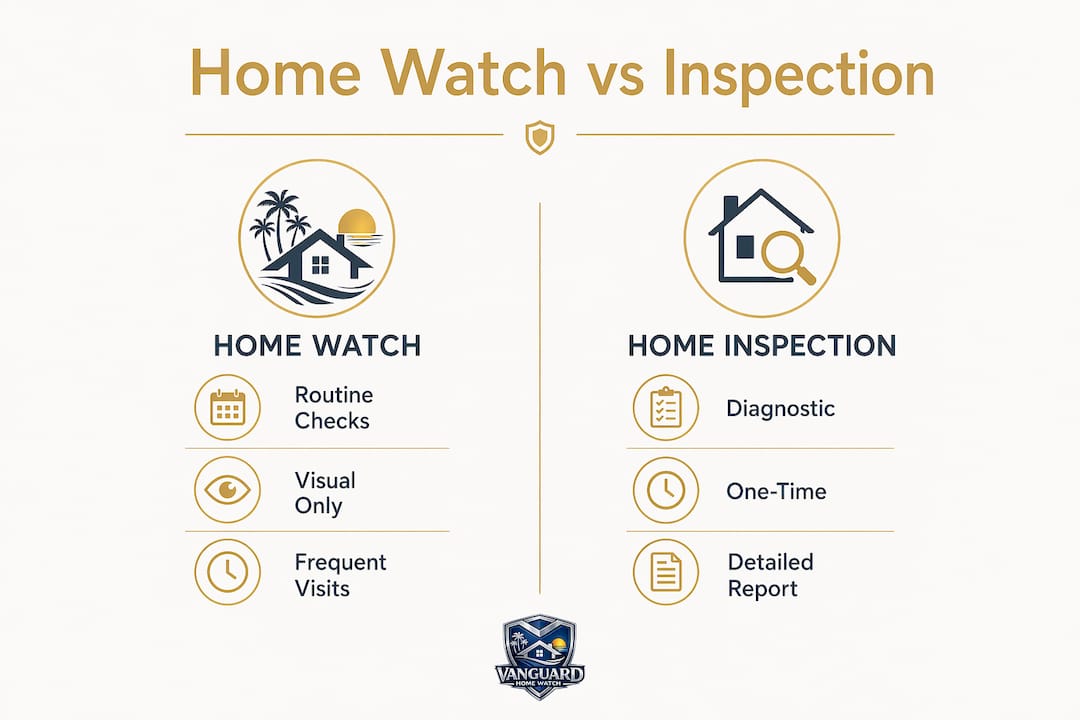
| Feature | Home watch inspection | Traditional home inspection |
|---|---|---|
| Frequency | Weekly or bi-weekly, ongoing | One-time or transaction-based |
| Scope | Visual, surface-level observation | Detailed, system-by-system evaluation |
| Purpose | Risk mitigation during absence | Structural and safety assessment |
| Reporting | Photo reports after each visit | Single comprehensive written report |
| Regulation | Professional standards via NHWA | Licensed and regulated by state law |
| Who orders it | Absentee or seasonal homeowner | Buyer, seller, or lender |
The distinction matters because homeowners sometimes expect a home watch visit to catch hidden defects the way a licensed home inspector would. That expectation leads to disappointment. Home watch detects early indicators of failure, such as moisture stains or an HVAC that is not cycling, and then coordinates with specialized contractors to investigate further. It is a monitoring service, not a diagnostic one.
Pro Tip: If you are preparing to sell a vacant property, consider pairing home watch services with a formal pre-listing inspection from a licensed home inspector. The two services complement each other and can strengthen your listing position.
You can also read more about home watch in real estate transactions to understand how ongoing monitoring supports property value during extended vacancy.
What are the real benefits of hiring a home watch inspector?
The practical case for home watch services comes down to one principle: problems caught early cost far less to fix than problems discovered weeks later. Early detection of HVAC failures, leaks, pest intrusion, and security breaches prevents the kind of compounding damage that turns a $300 repair into a $15,000 remediation project. For seasonal homeowners in Florida, where humidity and storm activity are constant threats, this is not a hypothetical risk. It is a predictable one.
The benefits of home watch extend beyond repair cost avoidance:
- Documented accountability. Every visit produces a written record with photos, giving you proof of property condition at any point in time. This matters significantly when filing insurance claims after storm damage. Learn more about how storm damage affects property value and why early documentation is critical.
- Security monitoring. A home watch inspector checks for signs of unauthorized entry, verifies that exterior lighting is functional, and handles mail and package accumulation that signals vacancy to opportunistic intruders.
- Vendor coordination. When an issue is found, a professional home watch provider contacts your pre-approved vendors and oversees the repair on your behalf. You do not need to fly home or make calls from another time zone.
- Insurance compliance. Some homeowner insurance policies include vacancy clauses that limit coverage if a home is unoccupied beyond a set period without documented monitoring. Regular home watch visits with written reports can satisfy those requirements.
- Property value retention. Consistent maintenance and early intervention preserve the condition of your home, which directly supports its market value. Seasonal homeowners who return to a well-maintained property spend less on deferred repairs before re-listing or re-occupying.
For a deeper look at why these advantages matter specifically to seasonal owners, the benefits for seasonal homeowners page covers the full picture.
How to choose and work effectively with a home watch provider
Selecting the right home watch provider requires more than a Google search and a price comparison. The person you hire will have unsupervised access to your home, your security systems, and your personal property. That level of trust demands verification.
- Confirm accreditation and insurance. Look for membership in the National Home Watch Association, which requires providers to carry liability insurance, pass background checks, and follow professional standards. Accredited providers maintain documented protocols and comply with local regulations. This is the single most important filter you can apply.
- Review the inspection protocol and reporting format. Ask to see a sample report before you sign a contract. A professional report includes time-stamped photos, written observations organized by area, and a clear notation of any issues found. If the sample is a text message or a one-line email, keep looking.
- Clarify communication expectations. You need to know how quickly you will be contacted if something urgent is found, and through what channel. A provider who calls you within the hour of discovering a burst pipe is worth more than one who sends a weekly summary.
- Set inspection frequency based on your property’s risk profile. Weekly visits are the standard for Florida seasonal homes, particularly during hurricane season. Properties with older plumbing, known pest pressure, or recent storm exposure may warrant more frequent checks.
- Establish access and vendor authorization in writing. Provide a key or access code, a list of pre-approved contractors, and written authorization for the inspector to act on minor issues up to a defined dollar threshold. This removes delays when time-sensitive repairs are needed.
Pro Tip: Ask specific questions for home watch professionals before hiring: How do you handle a situation where you find a door unlocked? What is your protocol if you cannot reach me in an emergency? The answers reveal whether their process is built for real-world situations or just routine visits.
A practical guide on how to hire a home watch company in Naples walks through each of these steps in detail.
Key takeaways
A home watch inspector provides scheduled, visual property monitoring that catches early warning signs of damage, security issues, and maintenance failures before they become expensive emergencies.
| Point | Details |
|---|---|
| Defined service scope | Home watch is visual and routine, not diagnostic. It detects obvious issues, not hidden defects. |
| Inspection checklist | Every visit covers interior systems, exterior conditions, security, and documented photo reporting. |
| Different from home inspection | Traditional home inspections are transaction-based and invasive. Home watch is ongoing and observational. |
| Key benefits | Early problem detection, insurance compliance, vendor coordination, and documented accountability. |
| Choosing a provider | Prioritize NHWA accreditation, insurance, background checks, and a clear written reporting process. |
What 20 years in law enforcement taught me about home watch
After two decades as a law enforcement lieutenant, I learned one thing that applies directly to home watch: most serious problems leave early signs that get ignored. A water stain on a ceiling does not appear overnight. A pest infestation does not start with a swarm. The damage that costs homeowners tens of thousands of dollars almost always had a visible precursor that nobody caught because nobody was looking.
That is the real value of consistent, documented home watch inspections. Not the report itself. Not the photos. The fact that trained eyes are walking through your property on a schedule, looking for exactly those early signals.
Where I see homeowners make mistakes is in expecting too much from a visual inspection. Home watch is not a guarantee. The NHWA is clear that this service detects early indicators but cannot eliminate all risk or uncover hidden problems inside walls or under slabs. Homeowners who understand that boundary get the most out of the service. They use it as one layer of protection, alongside good insurance, pre-approved contractors, and a solid emergency contact plan.
The other mistake I see is hiring based on price alone. A neighbor checking in once a month is not home watch. An uninsured, unaccredited individual with no reporting process is a liability, not a safeguard. Professionalism in home watch means documented visits, accountability, and privacy protection. That costs more than an informal arrangement. It is worth every dollar.
— Joseph
Protect your Naples home with Vanguard Home Watch LLC

Vanguard Home Watch LLC serves Naples, North Naples, and Ave Maria with weekly visual inspections built around the standards set by the National Home Watch Association. Founded by retired law enforcement lieutenant Joseph Vangelakos and real estate professional Elizabeth Vangelakos, we are fully insured, bonded, and background checked. Every visit produces a detailed digital report with photos delivered directly to you. When something needs attention, you hear from us the same day. If you are a seasonal resident or absentee homeowner who wants consistent, trusted monitoring for your property, visit Vanguard Home Watch to learn about our services or request a free consultation.
FAQ
What does a home watch inspector check during a visit?
A home watch inspector checks for water leaks, HVAC operation, pest signs, moisture and mold indicators, door and window security, exterior storm damage, and mail or package accumulation. Every visit is documented with photos and a written report.

How often should a home watch inspector visit my property?
Weekly visits are the standard for vacant or seasonal homes, particularly in Florida where humidity, storm activity, and pest pressure are ongoing concerns. Higher-risk properties may benefit from more frequent checks.
Is home watch the same as a home inspection?
No. A traditional home inspection is a one-time, detailed evaluation tied to a real estate transaction. Home watch is a recurring, visual monitoring service for unoccupied homes focused on early problem detection, not structural diagnostics.
What credentials should I look for in a home watch provider?
Look for membership in the National Home Watch Association, current liability insurance, a background check on file, and a documented reporting process with photo evidence. These credentials confirm the provider meets professional standards for access and accountability.
Can home watch services help with insurance requirements?
Yes. Some homeowner insurance policies include vacancy clauses that restrict coverage for unmonitored vacant properties. Regular home watch visits with written, time-stamped reports can satisfy monitoring requirements and support claims documentation if damage occurs.

