A home watch service after a storm is defined as a physical, in-person inspection of your property to identify damage, prevent further deterioration, and coordinate emergency repairs. This is the industry standard definition recognized by the National Home Watch Association (NHWA), the accrediting body that sets professional benchmarks for home watch providers across the country. For coastal homeowners in Naples and Southwest Florida, understanding what does home watch include after storm events is not optional. It is the difference between catching a slow ceiling leak in 24 hours and discovering a mold colony three weeks later. Vanguard Home Watch LLC delivers exactly this service, with accredited, documented, and owner-operated inspections after every significant weather event.
What does home watch include after a storm?
A professional post-storm inspection follows a top-down, systematic checklist. It starts at the roof and exterior envelope, then works inward through every room and mechanical system. Untrained homeowners miss 30%–40% of potential storm damage because they lack a structured approach. That gap is where costly surprises originate.
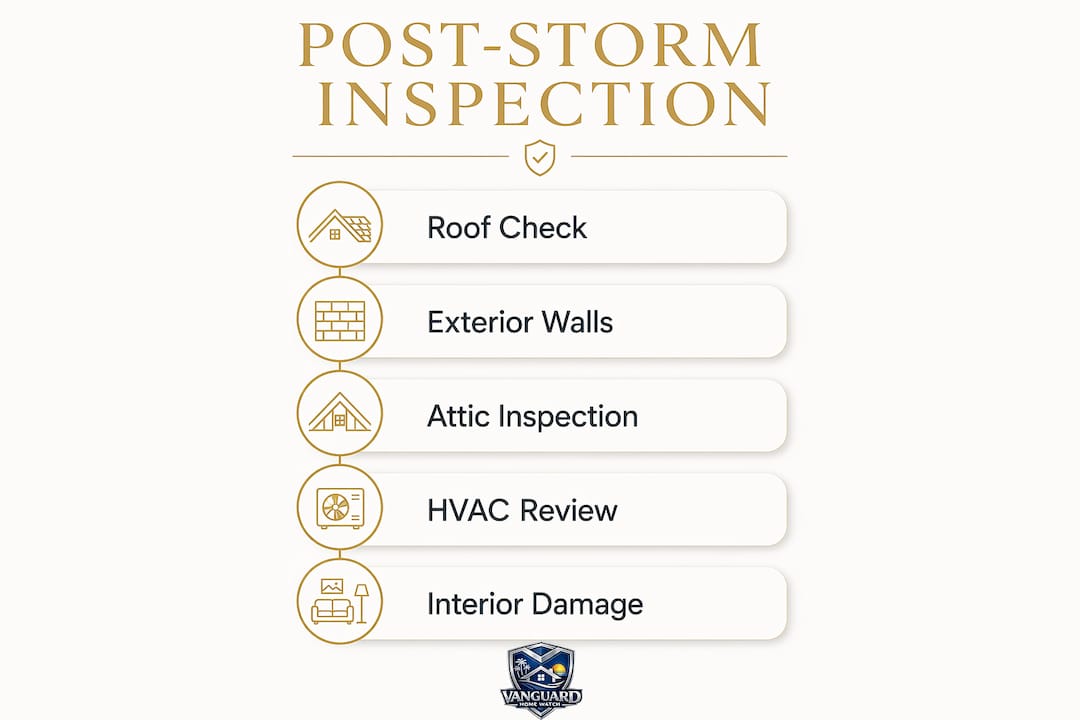
A thorough post-storm home watch inspection covers these areas in sequence:
- Roof and exterior envelope. Check for missing or lifted shingles, damaged fascia, and any breach that allows water entry.
- Gutters and downspouts. Confirm they are clear, attached, and draining away from the foundation.
- Doors and windows. Inspect frames, seals, and glass for cracks, warping, or broken locks.
- Foundation and driveway. Look for new cracks, heaving, or standing water pooling against the structure.
- Interior ceilings and walls. Identify water stains, bubbling paint, or soft drywall indicating active leaks.
- Under sinks and around appliances. Check supply lines and drain connections for moisture or active dripping.
- HVAC system. Confirm the unit is running, filters are intact, and condensate lines are clear.
- Humidity and air quality. Use a hygrometer reading to flag elevated moisture that signals mold risk.
- Pest entry points. Note any new gaps in the exterior that storm damage may have opened.
- Photo documentation. Capture every finding with timestamped images for insurance and repair records.
Scheduled visual inspections detect moisture, pest activity, HVAC problems, and storm damage that homeowners would never notice from a distance. Each finding is logged in a detailed digital report sent directly to you.
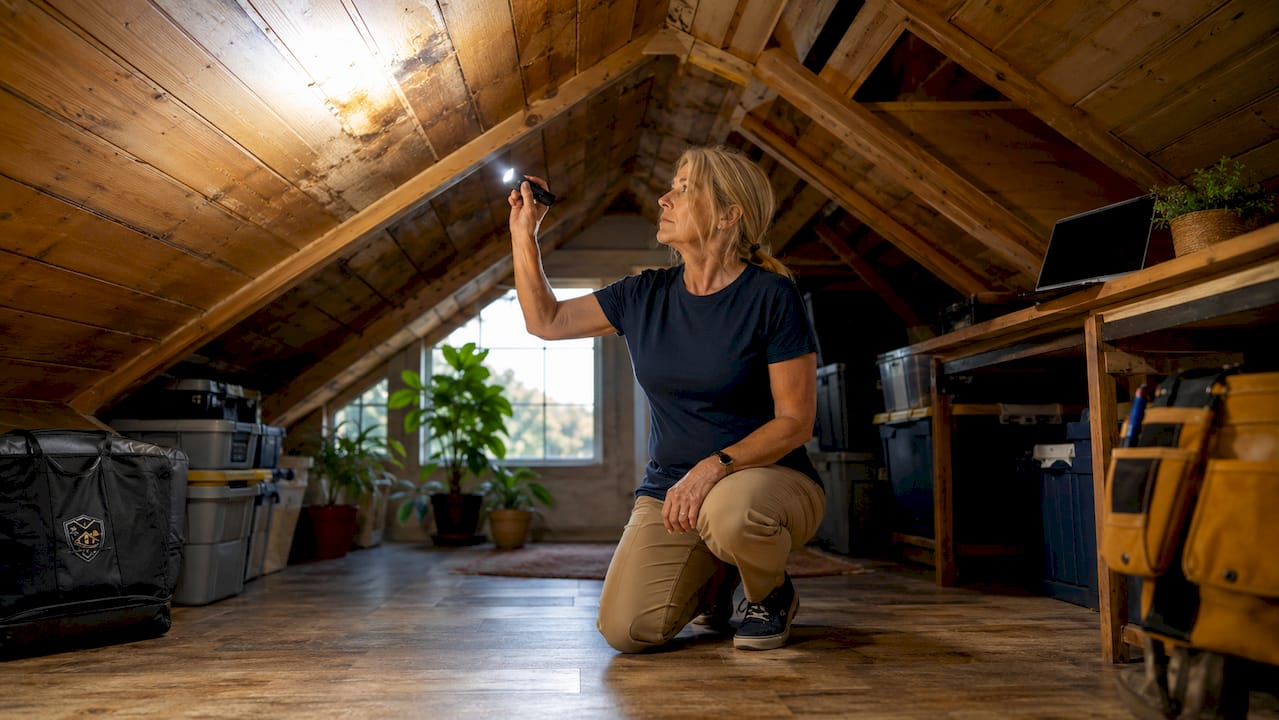
Pro Tip: Ask your home watch provider to confirm they check the attic space after any storm with sustained winds above tropical storm force. Attic moisture is one of the most commonly missed post-storm findings.
How does home watch differ from security monitoring?
Security systems detect intrusions and send alerts. They do not walk through your home, feel a damp ceiling, or notice that your HVAC condensate line is backing up after storm debris blocked the drain. The distinction matters enormously for coastal homeowners who are away during hurricane season.
Home watch services provide physical, in-person inspections that detect issues beyond any security system’s scope, including slow leaks and humidity buildup. A motion sensor cannot smell mildew. A camera cannot confirm that your refrigerator is still running after a power surge.
Informal monitoring by a neighbor or house sitter carries similar limitations. A neighbor may notice a broken window but will not check your HVAC drain pan, document findings with photos, or call a licensed plumber on your behalf. The accountability gap is significant.
“Accredited home watch services provide accountability and immediate vendor coordination, offering peace of mind unmatched by informal arrangements. This professional service is critical during storm aftermaths when rapid response affects damage control.”
Professional home watch companies carry insurance, maintain bonding, and produce verifiable written reports. That paper trail protects you in insurance disputes and contractor negotiations. Informal arrangements produce none of that. For a deeper look at accountability and reporting standards, the documentation alone justifies the professional service.
What critical risks does a post-storm inspection identify?
The most dangerous post-storm risks are the ones you cannot see from the street. Moisture intrusion through a small roof breach can saturate attic insulation, drip through ceiling drywall, and create active mold growth within 48–72 hours. By the time visible staining appears, remediation costs have multiplied.
| Risk Category | Specific Hazard | Consequence if Missed |
|---|---|---|
| Moisture intrusion | Attic and ceiling leaks | Mold growth, structural rot |
| HVAC failure | Unit not running post-storm | Humidity spike, mold risk |
| Appliance spoilage | Refrigerator contents after power outage | Biohazard, odor, costly remediation |
| Electrical hazards | Tripped breakers, water near panels | Fire risk, equipment damage |
| Structural compromise | Foundation cracks, shifted framing | Long-term stability issues |
Refrigerator and freezer spoilage after power outages is frequently overlooked by homeowners but creates a biohazard and persistent odors that require expensive remediation. A home watch professional removes spoiled contents and documents the loss for your insurance claim. That single task often pays for multiple months of service.
Post-disaster inspections follow established safety protocols, evaluating structural, mechanical, and environmental damage with detailed reports aligned to building codes and insurance requirements. Vanguard Home Watch LLC applies this same structured approach on every post-storm visit.
Pro Tip: If your area loses power for more than four hours, request an immediate post-storm check rather than waiting for your next scheduled visit. Appliance spoilage and humidity spikes develop fast in Florida’s heat.
What should homeowners expect for timing and service agreements?
Post-storm visits operate differently from routine weekly or biweekly checks. Knowing what to expect before a storm season starts prevents confusion when you need a rapid response most.
- Routine schedule. Most professional home watch plans run weekly or biweekly during the season. This baseline keeps your property’s condition documented and any developing issues caught early.
- Out-of-sequence visits. After a significant storm, a provider may conduct an unscheduled inspection outside the normal calendar. These visits may be billed separately from your standard plan, so confirm this in writing before hurricane season begins.
- Response window. Ask your provider how quickly they can reach your property after a named storm clears. In Southwest Florida, road conditions and local demand can delay access. A committed response window in your agreement protects you.
- Vendor coordination. A professional home watch company maintains relationships with licensed local contractors. When damage requires immediate repair, they contact vendors on your behalf and confirm work is completed correctly.
- Insurer notification. Prompt inspection reports give your insurer documented evidence of the damage timeline. This supports your claim and reduces disputes over when damage occurred.
For a full breakdown of visit schedules and what each frequency covers, the home watch service frequency guide covers post-storm emergency check options in detail. Confirming your service terms before a storm arrives is the single most practical step you can take right now.
How do home watch services support insurance claims and repairs?
Documentation is the foundation of every successful insurance claim. A home watch report produced within hours of a storm provides timestamped photos, written condition notes, and a verifiable inspection record. That evidence establishes exactly when damage occurred and what its initial scope was.
- Timestamped photo reports. Every finding is photographed and logged with the date and time of the inspection. Insurers require this level of detail to process claims without dispute.
- Written condition summaries. A written narrative accompanies photos, describing each issue in plain language that adjusters and contractors can act on immediately.
- Documented inspection history. Regular pre-storm and post-storm reports create a timeline that shows your property’s condition before and after the event. This history is powerful evidence if an insurer questions the cause of damage.
- Licensed vendor coordination. Your home watch provider contacts licensed, insured contractors for emergency repairs. This protects you from unlicensed storm chasers who appear after major weather events and deliver poor work.
- Reoccupation confirmation. Before you return to your property, a home watch professional confirms it is safe to enter, all systems are functioning, and no active hazards remain.
Proactive home watch catches small issues like minor roof leaks and HVAC malfunctions early, before they become the kind of damage that generates a six-figure insurance claim. The documentation also protects you if your insurer questions whether your home was properly maintained during your absence. Florida homeowners should also confirm their policy terms, since Florida home insurance coverage for unattended properties carries specific conditions that regular inspections help satisfy.
Key Takeaways
A professional home watch service after a storm is the most reliable way to detect hidden damage, protect your insurance claim, and prevent minor issues from becoming major repairs.
| Point | Details |
|---|---|
| Top-down inspection scope | Every post-storm check starts at the roof and works through all interior systems and mechanical components. |
| Physical vs. electronic monitoring | Security systems detect intrusions; home watch detects leaks, mold risk, HVAC failure, and appliance spoilage. |
| Documentation drives claims | Timestamped photo reports and written condition summaries are the foundation of a successful insurance claim. |
| Confirm service terms early | Out-of-sequence post-storm visits may be billed separately, so clarify response windows before hurricane season. |
| Vendor coordination prevents delays | A professional home watch provider contacts licensed contractors immediately, protecting you from unlicensed storm chasers. |
What I’ve learned after years of post-storm inspections in Naples
The homeowners who call me most relieved are never the ones who had no damage. They are the ones who had damage caught on day one instead of day twenty-one. I have walked into properties where a small roof breach, left unchecked for three weeks, turned a $1,200 repair into a $40,000 mold remediation. That outcome is not bad luck. It is the predictable result of no one physically checking the property.
The most common oversight I see is homeowners assuming their security camera system is enough. A camera shows you what a room looks like. It does not tell you that the humidity in that room has been at 80% for five days because the HVAC drain line is blocked. By the time the camera shows visible mold, the remediation bill is already significant.
My advice is direct: treat your home watch agreement as a storm response plan, not just a routine service. Confirm your provider’s post-storm response window in writing. Confirm whether out-of-sequence visits are included or billed separately. And make sure your provider is accredited by the National Home Watch Association, because accreditation means they follow a defined standard of care, not just their own judgment.
Proactive, documented inspections are not a luxury for coastal homeowners. They are the mechanism that keeps a manageable repair from becoming a financial crisis. The hurricane season preparation steps you take before a storm are only as effective as the inspection that follows it.
— Joseph
Vanguard Home Watch LLC: post-storm inspections you can count on
Vanguard Home Watch LLC serves Naples, North Naples, and Ave Maria with accredited, owner-operated inspections after every significant storm. Joseph and Elizabeth Vangelakos personally oversee every visit, applying a systematic checklist that covers your roof, exterior, interior, HVAC, and appliances. Every inspection produces a detailed digital report with photos delivered directly to you.
We are fully insured, bonded, background checked, and accredited by the National Home Watch Association. Our post-storm visits are designed to give you a verified condition report fast, so you can file your insurance claim with confidence and authorize repairs without delay. Learn what a home watch inspector covers on every visit, or contact us directly to discuss a service plan that includes post-storm rapid response for your property.
FAQ
What does a home watch inspection cover after a storm?
A post-storm home watch inspection covers the roof, exterior walls, doors, windows, foundation, interior ceilings, HVAC system, appliances, and humidity levels. Every finding is documented with timestamped photos and a written report.
Are post-storm visits included in a standard home watch plan?
Out-of-sequence post-storm visits are sometimes billed separately from a standard weekly or biweekly plan. Confirm your provider’s policy in writing before hurricane season begins to guarantee a rapid response when you need it.
How does home watch help with insurance claims after a storm?
A home watch provider delivers timestamped photo reports and written condition summaries that establish exactly when damage occurred and what its initial scope was. This documentation is the foundation of a successful insurance claim.
Can a home watch service coordinate repairs after storm damage?
Yes. Accredited home watch companies maintain relationships with licensed local contractors and contact them on your behalf when damage requires immediate repair. This protects you from unlicensed contractors who target storm-affected areas.
How quickly should a post-storm inspection happen?
A post-storm inspection should occur as soon as road conditions safely allow entry, ideally within 24 hours of a storm clearing. Moisture intrusion and appliance spoilage can escalate to serious damage within 48–72 hours in Florida’s climate.

