Home watch is defined as a professional service in which a trained, insured inspector performs scheduled visual inspections of a vacant or seasonally occupied property to identify and report developing issues before they cause serious damage. For absentee owners, this service is not optional. It is the most reliable way to protect a property you cannot personally monitor. The National Home Watch Association (NHWA) sets the industry standards that distinguish accredited providers from informal arrangements. Whether your home sits empty in Naples, Florida for six months or six weeks, the risks of going without professional property monitoring are real, documented, and costly. This article explains exactly why absentee owners need home watch, what the service includes, and how to choose the right provider.
Why absentee owners need home watch: the core case
Vacant homes deteriorate faster than occupied ones. No one is there to notice a dripping pipe, a failing air conditioner, or a window seal that gave way in a storm. Routine visits identify subtle problems early, reducing the risk of major damage that compounds over weeks or months without detection.
The financial stakes are significant. Small maintenance failures can result in losses exceeding $10,000 when left unaddressed. A slow leak under a sink becomes a mold remediation project. An HVAC unit that stops cooling in July turns a Naples home into a humidity chamber within days.
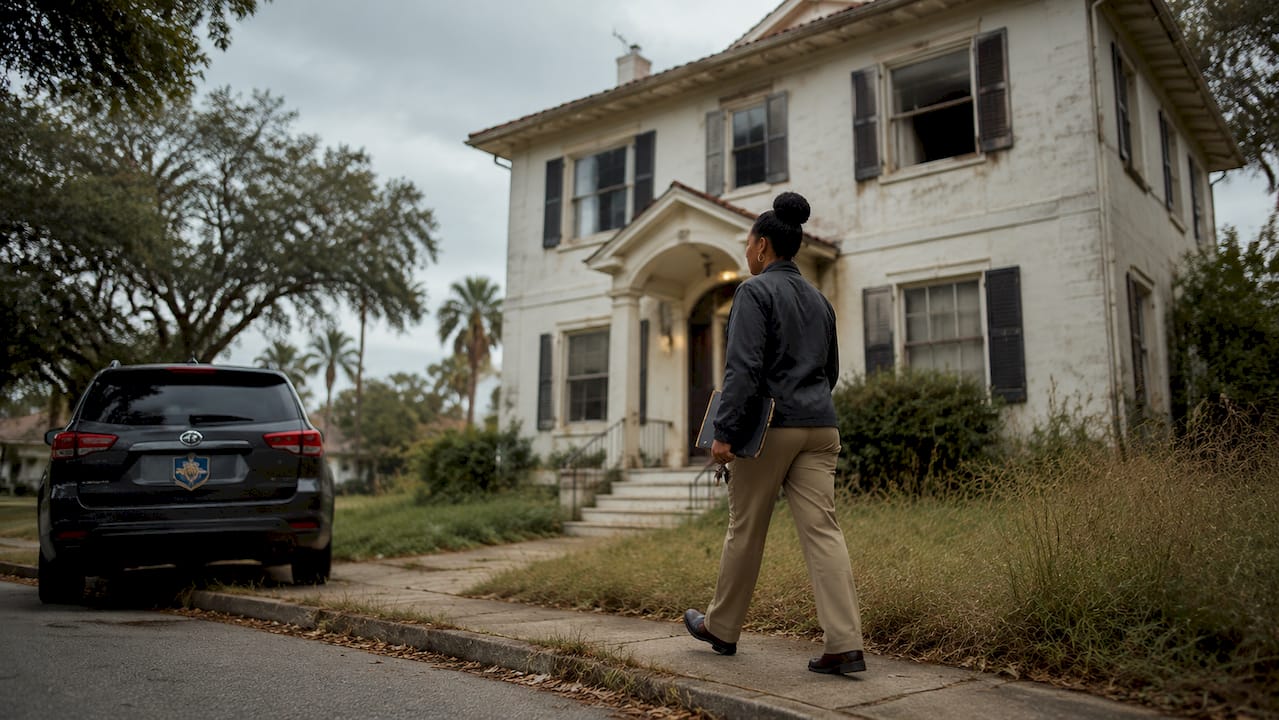
Beyond the money, there is the legal dimension. Many insurance policies require regular home inspections to maintain coverage while a property is vacant. Failing to meet that requirement can result in a denied claim at exactly the moment you need coverage most.
Professional home watch, as defined by the NHWA, fills that gap with scheduled, documented, accountable inspections. It is the standard of care for absentee homeowners who take property protection seriously.
What do professional home watch services actually include?
Professional home watch is not a neighbor stopping by to grab the mail. It is a structured, documented inspection process performed by a trained and insured professional on a fixed schedule.
A quality home watch provider delivers the following on every visit:
- Interior inspection: HVAC operation, thermostat settings, water heater condition, plumbing fixtures, signs of leaks or moisture, pest activity, and general security of doors and windows
- Exterior inspection: Roof condition, gutters, pool or lanai area, landscaping concerns, storm damage, and any signs of unauthorized entry
- Digital report with photos: Every visit produces a timestamped report delivered to the homeowner, creating a verifiable record of the property’s condition
- Emergency coordination: If a problem is found, the provider contacts the homeowner and coordinates with trusted local vendors for repairs
Specialized software like HomeWatchIT and iAuditor enables home watch services to produce verifiable audit trails with timestamped photos. That documentation is not just reassuring. It is legally and financially useful when an insurance claim is filed.
The contrast with informal arrangements is stark. Professional services use structured reporting and photos, unlike informal neighbor favors. A neighbor may notice a broken window. They will not notice a humidity spike of 75% that signals the start of mold growth behind a wall.
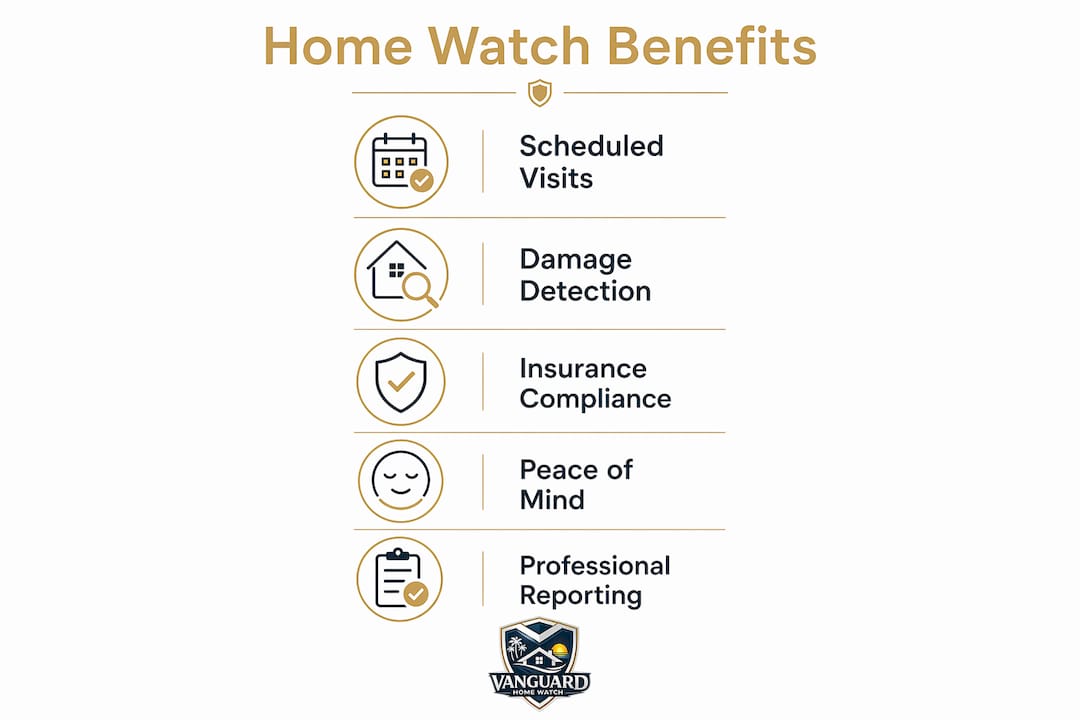
Pro Tip: Ask any home watch provider to show you a sample inspection report before you hire them. If the report lacks photos, timestamps, and a checklist, it will not satisfy your insurance carrier’s documentation requirements.
Home watch vs. house sitting is another comparison worth understanding. House sitting involves occupancy. Home watch involves professional inspection. They serve different purposes, and only one of them creates the audit trail your insurer may require.
What risks do absentee owners face without home watch?
The risks facing a vacant home are not hypothetical. They are predictable, well-documented, and expensive. Here are the most common and costly problems that develop without regular professional oversight:
- Water leaks and mold growth. A pinhole leak in a supply line can release hundreds of gallons before anyone notices. In Florida’s humidity, mold can establish itself within 24–48 hours of a moisture event. Remediation costs routinely reach five figures.
- HVAC failure. When an air conditioner stops working in a Southwest Florida summer, interior temperatures and humidity spike within hours. HVAC preventative maintenance is one of the most cost-effective investments a homeowner can make, but it only works if someone is checking the system regularly.
- Pest infestations. Rodents, ants, and cockroaches move into vacant homes quickly. A trained inspector spots early signs of activity before an infestation takes hold.
- Storm damage and delayed repairs. A missing roof tile or a cracked soffit after a storm is a minor repair if caught within days. Left unaddressed through a rainy season, it becomes a structural problem.
- Security threats. Vacant homes are targets for vandalism, theft, and in some cases, squatters. Seasonal home security risks are well-documented in communities like Naples, where seasonal vacancy patterns are predictable and widely known.
- Exterior structural deterioration. Exterior checkups catch small issues before they cause expensive structural damage, preserving both the integrity and the resale value of the property.
Cameras and neighbors miss silent damage such as mold growth or plumbing leaks that require trained eyes on the property. A camera records what happens in its field of view. It does not detect a humidity reading of 80% in a closed bathroom, a soft spot in a ceiling, or the faint smell of mildew in a closet. Physical presence is irreplaceable.
The hidden costs of going without professional home watch go well beyond repair bills. They include insurance claim denials, loss of property value, and the stress of managing a crisis from hundreds of miles away.
How does home watch help meet insurance requirements?
Insurance compliance is one of the most practical and least-discussed reasons to hire a professional home watch service. Most homeowners do not read their policy carefully until after a claim is denied.
Homeowner insurance often mandates scheduled property checks to prevent claim denial. The typical requirement is an inspection every 7–14 days while the property is vacant. That interval is not arbitrary. It reflects the time frame in which a minor issue can escalate into a major loss.
| Insurance Requirement | What It Means for You |
|---|---|
| Inspection every 7–14 days | A professional must physically visit and document the property on a fixed schedule |
| Timestamped photo documentation | Reports must show dated evidence of property condition at each visit |
| Proof of no known damage | You must demonstrate the property was in good condition before a loss event |
| Accredited provider preferred | Some carriers favor or require NHWA-accredited inspectors |
Documentation with timestamped photos is critical for insurance claims and can determine whether coverage is approved or denied. Without that paper trail, you are relying on your word against your insurer’s assessment of what the property looked like before the loss.
Professional home watch providers use software like HomeWatchIT to generate reports that function as an auditable property history. That history becomes your evidence file if you ever need to file a claim.
Pro Tip: Call your insurance carrier before hiring a home watch provider and ask specifically what inspection frequency and documentation format they require for vacant property coverage. Bring those requirements to your provider before the first visit.
Insurance clauses often specify regular inspections as a coverage condition. A professional home watch service removes the guesswork and keeps you compliant without requiring you to manage the schedule yourself.
How do you choose the right home watch provider?
Choosing a home watch provider is a decision that directly affects your property’s safety and your insurance coverage. Not all providers operate at the same standard.
Look for these qualities in any provider you consider:
- NHWA accreditation: The National Home Watch Association sets professional standards and requires background checks, insurance, and ongoing education for accredited members
- Fully insured and bonded: This protects you if something goes wrong during an inspection visit
- Owner-operated service: When the owner performs the inspections personally, accountability is direct and consistent
- Detailed digital reports: Every visit should produce a written report with photos delivered to you promptly
- Vendor coordination capability: Local professionals provide price negotiation and workmanship oversight during needed repairs, so your provider should have trusted local contractor relationships
- Customized checklists: Your home has specific features. Your inspection checklist should reflect them
Warning signs of a low-quality provider include verbal-only reports, no proof of insurance, no NHWA membership, and vague answers about inspection frequency. A provider who cannot show you a sample report before you hire them is not operating at a professional standard.
The benefits of home watch service for seasonal owners are well-documented, but only when the provider you choose is genuinely qualified to deliver them.
Key takeaways
Absentee owners who skip professional home watch face predictable, preventable, and expensive consequences that no camera system or neighbor arrangement can reliably prevent.
| Point | Details |
|---|---|
| Insurance compliance is non-negotiable | Most policies require inspections every 7–14 days to maintain coverage on vacant properties. |
| Physical inspection catches what cameras miss | Trained inspectors detect humidity, leaks, and mold that electronic systems cannot record. |
| Early detection saves thousands | Unaddressed minor issues like slow leaks or HVAC failures can exceed $10,000 in repair costs. |
| Documentation protects your claim | Timestamped photo reports create the audit trail insurers require to approve coverage. |
| Provider credentials matter | Choose NHWA-accredited, insured, owner-operated services for consistent, accountable oversight. |
What i’ve learned after years of walking vacant homes
I spent over two decades in law enforcement before co-founding Vanguard Home Watch LLC with my wife Elizabeth. I thought I had seen most of what can go wrong when people are absent. Home watch taught me I had only seen the aftermath.
The pattern I see most often is this: a homeowner installs a smart thermostat, sets up a camera, and asks a neighbor to check in occasionally. They feel covered. They are not. The thermostat tells you the temperature. It does not tell you the condensate drain line is clogged and water is pooling in the air handler. The camera shows the living room. It does not show the slow drip under the kitchen sink that has been running for three weeks.
Clients’ biggest regret is delaying professional home watch until after significant damage occurs. I hear this regularly. The cost of a home watch service for a full season is a fraction of a single mold remediation job. That math is not complicated.
What I find most valuable about this work is the coordination piece. When we find a problem, we do not just report it and leave. We contact the homeowner, explain what we found, and connect them with a trusted local vendor who we know will do the job right. Managing a repair from out of state without that local presence is genuinely difficult. With it, the homeowner makes one phone call and the problem is handled.
My honest assessment: professional home watch is not a luxury for high-end properties. It is the responsible standard of care for any home that sits vacant for more than a few weeks. The peace of mind it provides is real, and the financial protection it delivers is measurable.
— Joseph
Protect your naples home while you’re away
Vanguard Home Watch LLC serves absentee and seasonal homeowners across Naples, North Naples, and Ave Maria, Florida. Joseph and Elizabeth Vangelakos personally conduct every inspection, delivering detailed digital reports with photos after each visit. The service is fully insured, bonded, and accredited by the National Home Watch Association.
Whether you need weekly visits to satisfy your insurance carrier or want a trusted local professional coordinating repairs while you are away, Vanguard Home Watch LLC provides the consistent, documented oversight your property deserves. Review our service frequency options to find the right schedule for your home, or learn exactly what a home watch inspector does on every visit. Contact us today to schedule a free consultation and build a personalized home watch plan for your property.
FAQ
What is home watch for absentee owners?
Home watch is a professional service in which a trained, insured inspector performs scheduled visual inspections of a vacant property and delivers a documented report to the owner. It is the recognized industry standard for protecting homes that are unoccupied for extended periods.
How often should a home watch inspection occur?
Professional home watch companies typically perform weekly or bi-weekly inspections to comply with homeowner insurance requirements. The standard interval is every 7–14 days, which satisfies most policy conditions for vacant property coverage.
Can cameras and smart home devices replace home watch?
No. Security alarms and cameras detect events but do not identify gradual damage such as humidity spikes, slow leaks, or storm impact. Physical inspection by a trained professional is the only way to catch those issues reliably.
What credentials should a home watch provider have?
Look for NHWA accreditation, full insurance and bonding, background checks, and an owner-operated structure. These credentials confirm the provider meets professional standards and is directly accountable for every inspection.
Does home watch help with insurance claims?
Yes. Timestamped photo documentation is critical for insurance claims and can determine whether coverage is approved or denied. Professional home watch reports create the auditable property history that insurers require as evidence of pre-loss condition.

