Leaving your Naples home empty for months carries risks most seasonal residents don’t fully account for until something goes wrong. The seasonal home security tips Naples homeowners actually need go well beyond deadbolts and motion lights. This coastal environment introduces salt air corrosion, tropical storm threats, and humidity-driven damage that standard security advice never addresses. Add in the reality that your home may sit vacant for six months or more, and the stakes are real. This guide covers what the Naples environment demands, what to do before you leave, which technology holds up in coastal conditions, and how to stay informed while you’re away.
Table of Contents
- Key Takeaways
- Seasonal home security risks unique to Naples
- Preparing your home before extended absences
- Choosing security technology that holds up in Naples
- Ongoing oversight while you’re away
- Special considerations for hurricane season
- My honest take on seasonal home security in Naples
- Professional home watch for Naples seasonal homeowners
- FAQ
Key Takeaways
| Point | Details |
|---|---|
| Start prep three weeks early | Begin your seasonal departure checklist at least three weeks ahead to avoid rushed or missed maintenance steps. |
| Use coastal-rated equipment | Security cameras and sensors require IP66/67 ratings and marine-grade housings to survive salt air in Naples. |
| Professional monitoring matters | Cellular LTE backup and professional monitoring keep your system functioning even when cable and fiber go down during storms. |
| Home watch fills critical gaps | Photo-documented, GPS-verified professional home watch visits catch water leaks, HVAC failures, and pest activity before they escalate. |
| Hurricane season lasts six months | From June 1 through November 30, your home faces elevated risk; proactive preparation is your best defense. |
Seasonal home security risks unique to Naples
Naples is not a typical American city, and its seasonal home security concerns go well beyond what any generic checklist covers. Three distinct risk categories converge here that you will not find in northern markets.
The first is environmental. Salt air accelerates corrosion on locks, hinges, camera housings, and alarm sensors. Standard dry-climate devices fail prematurely in this environment. This is not a minor inconvenience. A corroded sensor that stops transmitting or a camera that fogs up from humidity gives you a false sense of protection. Humidity also drives mold growth and pest infiltration inside vacant homes with frightening speed.
The second risk is criminal. A vacant home with overgrown landscaping, uncollected packages, and dark windows is a visible signal to opportunistic thieves. Prolonged vacancy amplifies this. Homes that sit empty from May through November are particularly exposed during the late summer months when foot traffic in neighborhoods drops.
The third risk is logistical. Many homeowners don’t realize that Naples false alarm fines escalate quickly after multiple unverified calls, starting at $50 and climbing to $100 per incident. If your system triggers false alarms while you’re away, you accumulate fines and potentially lose priority response status with local law enforcement. That’s a serious consideration when evaluating your monitoring setup.
“Seasonal homes in southwest Florida face a specific combination of climate stress, extended vacancy, and storm exposure that makes a one-size-fits-all security approach genuinely risky. Knowing what you’re actually up against is half the battle.”
North Naples seasonal home risks mirror much of what’s described here, though properties closer to the coast face heavier salt air exposure and should plan accordingly.
Preparing your home before extended absences
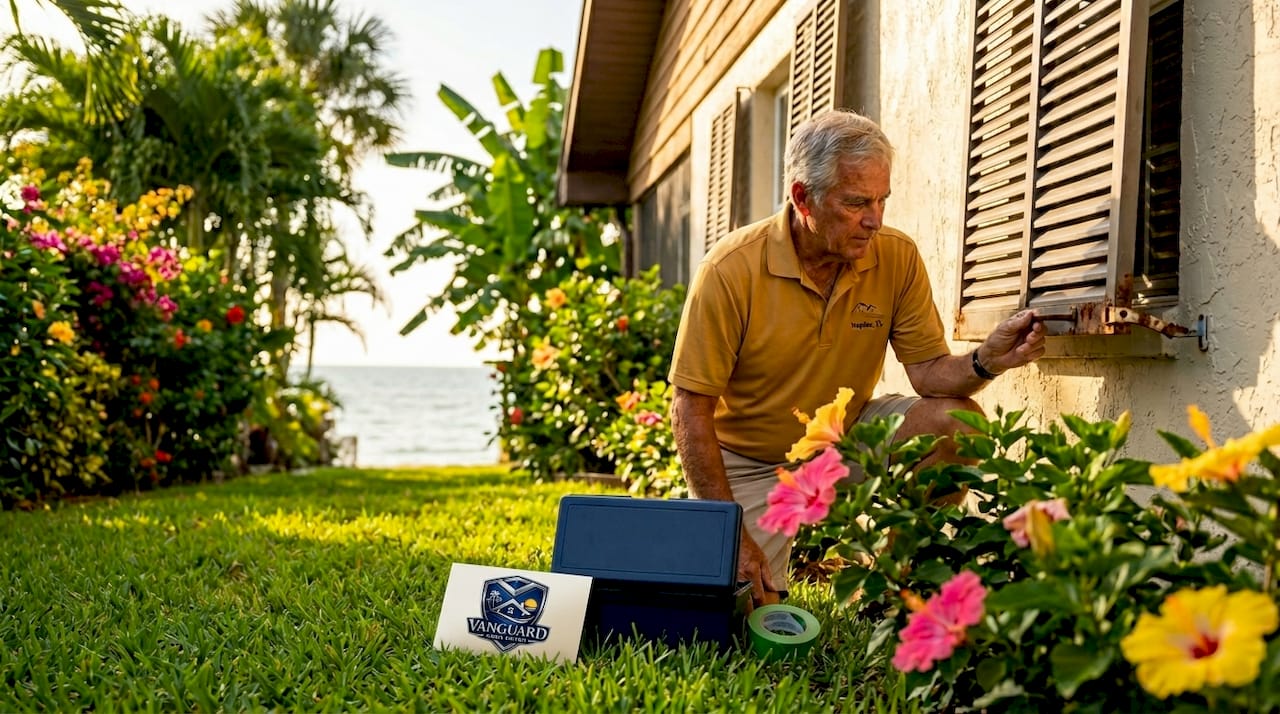
The single most consistent mistake seasonal homeowners make is compressing their departure prep into the final few days before leaving. Planning at least three weeks in advance prevents the kind of overlooked tasks that turn into costly damage claims.
Work through these steps methodically before you leave:
- Secure all entry points. Check every door, window, sliding glass panel, and garage door. Sliding glass doors deserve special attention because standard locks are easy to bypass. Install secondary blocking bars in the track and use pin locks in the top rail.
- Clear the yard and remove storm projectiles. Wind above 75 mph converts patio furniture, planters, and loose debris into dangerous projectiles. Remove or anchor everything, and consider renting a dumpster for final yard clearing before the June 1 season start.
- Test your security system. Walk the entire system: sensors, motion detectors, cameras, and the control panel. Verify that professional monitoring is active and that cellular backup is enabled.
- Address environmental risks. Arrange pool service to maintain chemistry and prevent mosquito breeding. Set your HVAC to a temperature that controls humidity (typically 78 to 80 degrees). Shut off the main water supply if you don’t have someone checking the property weekly. Apply pest prevention treatments before closing up.
- Review your insurance. Confirm your policy requirements for vacant home coverage. Some policies require documented inspection visits to remain valid during extended absences.
Pro Tip: Set a recurring calendar reminder to call your insurance provider every year before departing. Ask specifically whether your policy requires professional monitoring or documented home inspections to maintain coverage during vacant periods. Seasonal home insurance requirements in Florida can differ significantly by carrier and policy type.
Choosing security technology that holds up in Naples
Security equipment selection for a coastal seasonal home is not the same decision it would be for a property in Ohio or Minnesota. The Naples environment is genuinely hard on hardware, and the wrong choice means system failure exactly when you need coverage most.
Here is a direct comparison of key technology decisions for seasonal homeowners:
| Feature | Standard Equipment | Coastal-Rated Equipment |
|---|---|---|
| Housing rating | IP44 or lower | IP66 or IP67 |
| Camera mounts | Standard aluminum brackets | Stainless steel with conduit protection |
| Connectivity backup | Cable/fiber only | Cellular LTE backup |
| Monitoring type | Self-monitoring | Professional with 24/7 response |
| Wiring method | Standard exposed copper | Power over Ethernet with Cat6 cable |
The differences are significant in practice. IP66/67-rated housings resist water intrusion and salt exposure that would destroy standard equipment within a season or two. Stainless steel mounting hardware with UV-resistant conduit protecting your cables makes a measurable difference in system longevity.
For connectivity, cellular LTE backup adds roughly $10 to $15 per month to your monitoring cost and is non-negotiable if you’re serious about storm-season coverage. Cable and fiber lines go down in major weather events. Your system keeps running on cellular when nothing else does.
Professional monitoring also matters more for seasonal than year-round owners. When you’re 1,200 miles away and an alarm triggers at 2 a.m., a professional monitoring center contacts local authorities without waiting for you to wake up and respond to a push notification. For absentee owners, that response time difference is the entire value proposition.
Pro Tip: Mount cameras under eaves rather than on exposed exterior walls. This single placement decision reduces direct salt spray and rain exposure, extending camera life considerably. Pair it with Power over Ethernet cabling to minimize the number of exposed copper connection points on your exterior.
Ongoing oversight while you’re away
Installing a security system is the starting point, not the finish line. Technology catches some problems, but it misses others entirely. A water leak under a sink, a failing HVAC unit, a pest infestation beginning in a wall cavity, or a screen pool enclosure damaged by wind will not trigger your alarm. And those are exactly the kinds of issues that cost seasonal homeowners tens of thousands of dollars when they go undetected for months.
Photo-documented home watch visits with GPS verification address this gap directly. A professional home watch visit covers what cameras cannot: interior walkthroughs, moisture checks, HVAC operation, pest signs, and exterior damage assessment after weather events. You receive a detailed report with photos after every visit, so you have a verifiable record and real-time awareness of your property’s condition.
When setting up your oversight program, consider these practical points:
- Weekly visits are the standard for Florida seasonal homes. In a humid subtropical climate, water intrusion and HVAC failure can cause significant damage within days, not weeks.
- Inspections should cover interior and exterior zones systematically, not just a quick walk around the exterior.
- Your oversight protocol should include a clear escalation plan. Who gets called if a leak is found? Who has authority to coordinate an emergency repair? These answers need to exist before there’s an emergency.
- Casual oversight from a neighbor or friend, while well-intentioned, lacks the structure, documentation, and liability coverage that a professional service provides. An informal arrangement also tends to become inconsistent over time.
You can learn more about professional home watch benefits specifically for seasonal owners and how structured inspections compare to informal arrangements.
Special considerations for hurricane season
Hurricane season runs June 1 through November 30, and Naples has seen approximately 74 tropical systems pass within 75 nautical miles since records began. The probability of impact in any given year is moderate, but the consequences of being unprepared when you’re not home are severe.
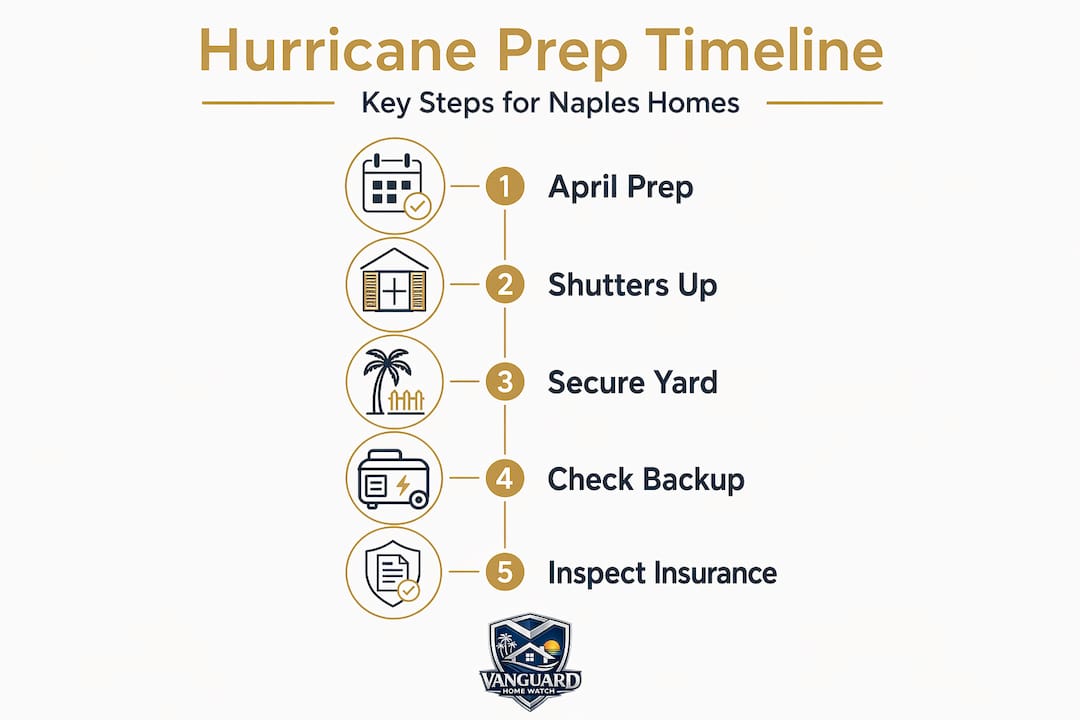
Use this seasonal timeline as your planning anchor:
| Period | Action Required |
|---|---|
| April to May | Complete storm shutter installation, remove loose yard items, service generator |
| June 1 | Hurricane season begins; all prep should be complete |
| June to November | Weekly home watch visits to assess post-storm conditions promptly |
| After any named storm | Professional exterior and interior inspection before re-occupying |
| November to December | Post-season damage review, insurance appraisal update if needed |
Two specific items deserve attention beyond the checklist. First, power outages during storms can disable HVAC systems for days, causing rapid humidity spikes and potential mold growth inside a closed home. A generator with automatic transfer capability addresses this, but it requires testing and fuel management throughout the season.
Second, insurance compliance is becoming more specific. Florida condo insurance appraisals are required every 36 months by statute, though many experts recommend every 24 months given coastal construction costs and inflation. After significant storm damage, FEMA’s 50% rule may require updates. Staying current on your appraisal protects your claim position when you need it most. This connects directly to the broader picture of seasonal home preparation Florida homeowners often underestimate.
A dedicated hurricane season checklist for Naples seasonal residents covers the full timeline in detail.
My honest take on seasonal home security in Naples
I’ve spent my career in law enforcement and the years since running Vanguard Home Watch LLC alongside my wife Elizabeth. I’ve walked through hundreds of seasonal homes across Naples, North Naples, and Ave Maria. What I’ve found consistently is that most homeowners understand the risks intellectually but underestimate the speed at which things go wrong in a vacant coastal property.
The salt air issue is a good example. I’ve seen brand-new camera systems fail within their first off-season because the owner bought equipment rated for a dry climate. The housing corrodes, the seal breaks, and moisture gets in. The homeowner thinks they have working cameras, but what they have is a false sense of coverage. That gap between believing you’re protected and actually being protected is where real losses happen.
The other thing I’ve learned is that reactive thinking costs far more than proactive preparation. When a homeowner calls because they received a water bill for $900 and their neighbor mentioned water flowing from under the front door, we’re already talking about flooring, drywall, and potential mold remediation. The same issue caught during a weekly inspection is a shut-off valve and a plumber. The difference in outcome is stark.
What I tell every client is this: treat your seasonal home like the investment it is. You wouldn’t leave a significant financial asset completely unmonitored for six months. Your home deserves the same structured attention.
— Joseph
Professional home watch for Naples seasonal homeowners
If this guide has made one thing clear, it’s that seasonal home security in Naples requires more than hardware and a neighbor’s phone number. Vanguard Home Watch LLC provides weekly, photo-documented inspections for seasonal and vacant homes across Naples, North Naples, and Ave Maria. Founded by retired law enforcement lieutenant Joseph Vangelakos and real estate professional Elizabeth Vangelakos, our service is owner-operated, fully insured, bonded, and accredited by the National Home Watch Association (NHWA). Every visit produces a detailed digital report with photos so you always know your property’s condition. Explore our Naples home watch services and request a free consultation to discuss a protection plan tailored to your property.
FAQ
What are the biggest seasonal home security risks in Naples?
The primary risks for seasonal homes in Naples are salt air corrosion damaging security equipment, extended vacancy attracting burglary, humidity-driven mold growth, and storm damage during the June through November hurricane season.
How often should a seasonal home in Naples be inspected?
Weekly inspections are the recommended standard for Florida seasonal homes. The humid subtropical climate means water leaks, HVAC failures, and pest activity can cause serious damage within days of going undetected.
Does my homeowner’s insurance require inspections while my home is vacant?
Many Florida insurance policies include vacancy clauses that require documented inspection visits to maintain full coverage during extended absences. Review your policy terms and ask your carrier directly before departing for the season.
What security equipment is best suited for Naples’ coastal environment?
Choose cameras and sensors with IP66 or IP67 ratings, stainless steel mounting hardware, and cellular LTE backup for your monitoring system. These specifications are necessary for reliable performance in Naples’ salt air and storm conditions.
What is professional home watch and how is it different from a security system?
Professional home watch involves scheduled physical inspections of your vacant home by a trained, insured professional, covering interior and exterior conditions that cameras and alarms cannot detect, such as water leaks, HVAC problems, and pest activity.

