Home watch services are professional, recurring inspections of vacant properties designed to detect damage, system failures, and security threats before they escalate into costly disasters. Snowbirds and seasonal homeowners across Florida rely on these services because an unoccupied home is never truly static. Pipes leak, HVAC systems fail, humidity breeds mold, and storms cause damage that compounds silently for weeks. The National Home Watch Association (NHWA), providers like Suncoast Home Watch, and concierge-focused companies like Properti Home Concierge all define home watch the same way: structured, documented vacancy oversight. Understanding why snowbirds hire home watch services starts with understanding what a vacant home actually faces.
Why snowbirds hire home watch services: the risks no one talks about
Vacant homes face a specific category of risk that occupied homes simply do not. When no one is present to notice a dripping pipe, a tripped breaker, or a failing air handler, minor problems compound over days and weeks into expensive repairs.
The most common threats to seasonal properties include:
- Severe weather damage: Storm-driven water intrusion, wind damage to roofing, and debris impact are all risks that worsen when no one is present to respond. A hurricane season checklist can help you prepare before you leave, but only a physical inspection after a storm confirms actual damage.
- HVAC failures: Florida’s humidity and heat create conditions where HVAC issues develop progressively during vacancy. Clogged filters, blocked drain lines, and failed condensate pumps do not trigger standard alarms. They simply worsen until water damage appears.
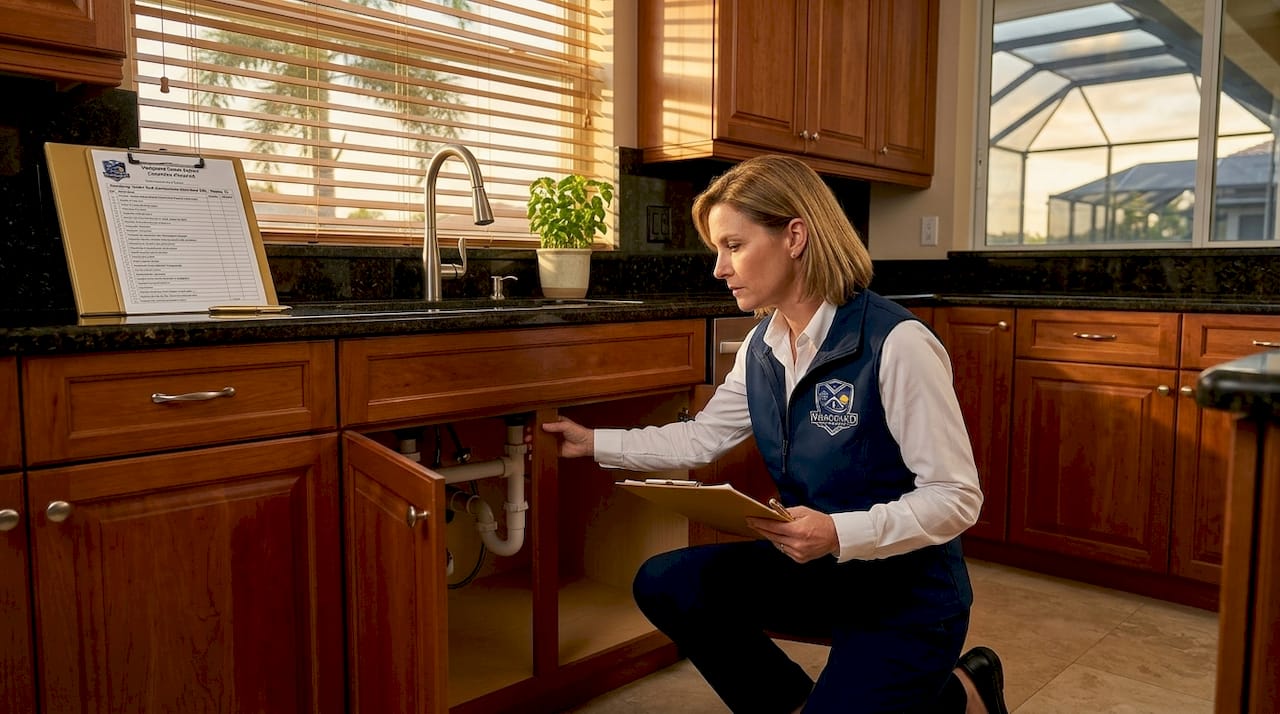
- Plumbing leaks: A slow leak under a sink or behind a wall can saturate flooring and drywall for weeks before anyone notices. In a vacant home, that timeline is entirely determined by when the next inspection occurs.
- Mold and humidity: Florida’s climate accelerates mold growth in unventilated spaces. A single HVAC failure during summer can create visible mold within days.
- Security threats: Vacant homes attract opportunistic intruders, vandalism, and in some cases squatters. A home that appears consistently unoccupied is a visible target.
- Pest infestations: Rodents, insects, and wildlife exploit entry points that go unnoticed without regular interior checks.
The NHWA frames home watch as risk mitigation, not risk elimination. That distinction matters. No service eliminates every risk, but routine professional inspections catch problems at the earliest detectable stage, which is when repair costs are lowest.
Pro Tip: Ask your home watch provider to confirm they check interior spaces including under sinks, inside utility closets, and around the water heater on every visit. These are the locations where slow leaks and pest activity appear first.
How does home watch differ from a neighbor check-in or property management?
This is the question most snowbirds ask when they first consider professional oversight. The answer is clearer than most people expect.
| Service type | Primary focus | Documentation | Credentials required |
|---|---|---|---|
| Home watch | Vacant property condition and early issue detection | Written reports, timestamped photos, GPS-verified logs | NHWA accreditation, insurance, bonding |
| Neighbor check-in | Casual observation, mail pickup, general presence | None | None |
| Property management | Tenant relations, leases, rent collection | Lease records, financial statements | Real estate license (varies by state) |
A neighbor check-in is informal by definition. It is inconsistent, undocumented, and carries no professional accountability. Your neighbor may notice an obvious problem, but they are not trained to inspect HVAC drain lines, check for humidity spikes, or document findings in a format that satisfies an insurance company.
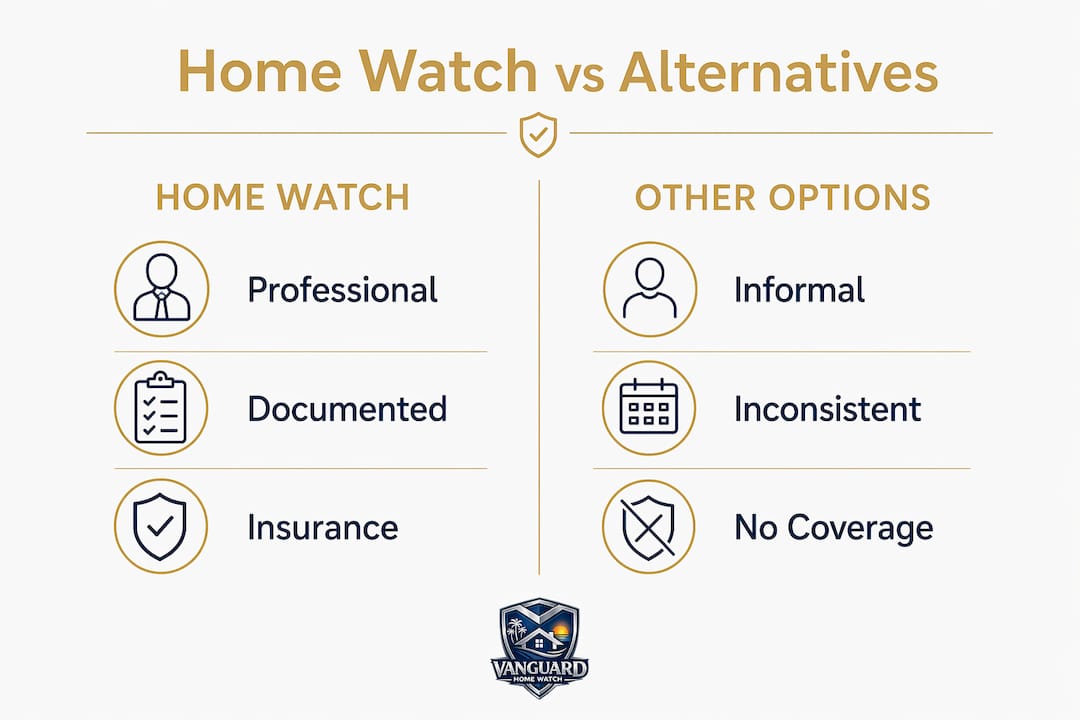
Property management serves a different purpose entirely. As Properti Home Concierge clarifies, home watch is vacancy oversight, not tenancy management. Property managers focus on occupied properties, lease compliance, and rent collection. Home watch focuses on the physical condition of a vacant home and the documentation that protects the owner.
Professional home watch providers use GPS-verified logs and timestamped checklists so you can verify exactly what was inspected and when. NHWA-accredited providers carry insurance and bonding, meaning you have recourse if something goes wrong during a visit. That accountability structure does not exist with informal arrangements.
Pro Tip: When evaluating any home watch provider, ask specifically whether they carry general liability insurance and a surety bond. NHWA accreditation requires both, and it is the fastest way to verify professional standing.
Why insurance compliance drives snowbirds to hire home watch services
This is the practical reason many snowbirds move from considering home watch to actually hiring it. Your homeowners insurance policy likely contains a vacancy clause, and most seasonal homeowners do not read it carefully until after a claim is denied.
Vacancy clauses commonly trigger after 30 to 60 consecutive days of vacancy, at which point your coverage may be limited, modified, or suspended entirely. This means a water loss that occurs on day 45 of your absence could be partially or fully excluded from your claim. Florida homeowners who spend five or six months up north are well inside this risk window.
The documentation that home watch services produce addresses this problem directly:
- Timestamped inspection reports establish a clear record of the property’s condition on specific dates throughout the vacancy period.
- Photographs document the state of systems, surfaces, and spaces at each visit, creating visual evidence that is difficult to dispute.
- GPS-verified visit logs confirm that inspections occurred at the reported times and locations, removing any ambiguity about whether a visit actually happened.
Home watch reports serve as an evidence file before anything goes wrong. When an insurer questions the onset of damage or whether the property was being monitored, timestamped photos and logs answer those questions directly.
Surety Insights notes that vacancy clauses adjust the insurer’s risk profile for your property, which is precisely why documented inspections matter. The paper trail you build through regular home watch visits demonstrates active oversight and gives your insurer less basis to question a claim. For a deeper look at how Florida policies handle unattended properties, the coverage breakdown on Florida home insurance is worth reviewing before your next departure.
What practical benefits do snowbirds gain beyond risk mitigation?
The importance of home watch for snowbirds extends well beyond preventing damage and satisfying insurance requirements. The day-to-day experience of owning a seasonal property changes significantly when you have a trusted professional checking in regularly.
Here are the practical benefits that snowbird clients consistently report:
- Peace of mind through regular updates. After every inspection, you receive a detailed digital report with photos. You know the condition of your home without having to call neighbors, guess, or worry. That confidence is not trivial when you are 1,200 miles away.
- Coordinated emergency response. When a problem is found, a professional home watch provider does not just send you a photo and wish you luck. Providers that coordinate first response actions reduce damage severity by arranging vendor access, documenting the issue, and managing the response until repairs are complete. That speed is the difference between a $400 repair and a $14,000 restoration.
- Vendor coordination and concierge services. Many providers offer add-on services including lawn care oversight, mail handling, package retrieval, and pre-arrival preparation. Returning to a home that is clean, cool, and ready is a meaningful quality-of-life benefit.
- Bridging occupancy gaps in rental properties. For snowbirds who also rent their properties seasonally, home watch fills the gap between tenants. The role of home watch in snowbird rental markets is to maintain property condition and documentation continuity during those unoccupied intervals.
- Cost-effectiveness relative to damage repair. A weekly or biweekly home watch service costs a fraction of a single water damage remediation. The math is straightforward once you consider the alternative.
Pro Tip: Before your departure each season, schedule a pre-departure walkthrough with your home watch provider. Documenting the property’s baseline condition at the start of vacancy gives you a clean reference point for any claims or disputes that arise later.
How to choose the right home watch service for your snowbird lifestyle
Not all home watch providers operate at the same standard. Selecting the right one requires asking specific questions and knowing what answers to expect.
- Verify NHWA accreditation. The National Home Watch Association sets professional standards for the industry. Accredited members carry insurance, bonding, and background checks. This is the baseline, not a bonus.
- Confirm interior and exterior inspections. A drive-by is not a home watch visit. Your provider should be entering the property, checking all rooms, inspecting under sinks, testing HVAC function, and reviewing the exterior for storm or pest damage.
- Ask about GPS-verified documentation. Professional providers use technology to timestamp and geolocate every visit. This protects you and verifies the service you are paying for.
- Match visit frequency to your risk profile. Optimal visit frequency aligns with insurance requirements, typically every 30 days at minimum and weekly for higher-risk properties or during storm season. Florida properties during summer warrant more frequent visits.
- Understand emergency response protocols. Ask who responds when a problem is found, how quickly, and what authority they have to engage vendors. A provider who only reports and waits for your instructions is less valuable than one who can act immediately.
- Review pricing transparency. Reputable providers publish clear pricing without hidden fees. A detailed guide on how to hire a home watch company in Naples covers the specific questions worth asking before signing any agreement.
Beware of providers who subcontract visits to unvetted personnel. Owner-operated services offer direct accountability that larger, subcontracted operations cannot match.
Key takeaways
Home watch services protect vacant seasonal properties by combining professional inspections, documented evidence, and coordinated emergency response into a single recurring service that satisfies both practical and insurance-related needs.
| Point | Details |
|---|---|
| Vacancy risk is real and specific | HVAC failures, plumbing leaks, mold, and security threats all worsen without regular physical inspections. |
| Insurance compliance requires documentation | Vacancy clauses can limit coverage after 30 to 60 days; timestamped reports and photos protect your claim. |
| Home watch differs from informal oversight | Professional providers use GPS-verified logs, credentialed staff, and structured checklists that neighbors cannot replicate. |
| Emergency response reduces damage costs | Providers who coordinate vendors on discovery prevent minor issues from becoming major restorations. |
| Provider selection requires specific criteria | NHWA accreditation, interior inspections, and clear emergency protocols are non-negotiable standards. |
What I’ve learned after years of watching vacant homes
I have walked through hundreds of vacant properties in Naples and the surrounding area, and the pattern is consistent. The homeowners who experience the worst surprises on their return are almost never the ones who had something catastrophic happen. They are the ones who had something small happen in week three of a five-month absence and had no one checking.
A slow drain line backup. A pest entry point behind a cabinet. A humidity sensor that drifted past 70% for six weeks. None of these are dramatic events. All of them become expensive when they go undetected.
The misconception I hear most often is that a smart home device or security camera replaces a physical inspection. It does not. Cameras do not smell mold. Sensors do not see the water stain forming behind a wall. Technology is a useful supplement, but it is not a substitute for someone walking through your home with trained eyes and a structured checklist.
The second misconception is that a trusted neighbor is close enough to professional oversight. I understand the instinct. But a neighbor has no obligation, no training, no documentation process, and no insurance. If they miss something or inadvertently cause a problem during a visit, you have no recourse. That is not a criticism of neighbors. It is simply a description of what informal arrangements cannot provide.
What I have seen work consistently is a professional service that treats every visit as a documented inspection, not a casual walk-through. When something is found early, the outcome is almost always manageable. When something is found late, the outcome is almost always expensive. The benefits of home watch service are not theoretical. They show up in repair invoices and insurance outcomes.
— Joseph
Protect your Naples home while you’re away with Vanguard Home Watch LLC
Vanguard Home Watch LLC serves Naples, North Naples, and Ave Maria with weekly visual inspections that cover every room, every system, and every exterior surface of your property. Founded by retired law enforcement lieutenant Joseph Vangelakos and real estate professional Elizabeth Vangelakos, we are fully insured, bonded, background checked, and accredited by the National Home Watch Association.
Every visit produces a detailed digital report with photos delivered directly to you. We also coordinate emergency vendor response when issues are found, so problems are addressed before they escalate. Our Naples home watch inspections are designed specifically for seasonal homeowners who want professional oversight without the uncertainty of informal arrangements. If you are ready to leave for the season with genuine confidence, visit Vanguard Home Watch LLC to learn about our services and schedule your first inspection.
FAQ
What does a home watch service actually do during a visit?
A professional home watch provider conducts a structured interior and exterior inspection of your vacant property, checking for water leaks, HVAC function, humidity levels, pest activity, storm damage, and security concerns. Every visit produces a written report with timestamped photographs delivered to the homeowner.
How often should a home watch service visit my property?
Visit frequency should align with your insurance requirements and property risk profile. Weekly visits are standard for Florida properties during summer and storm season, while every 30 days is the common minimum for maintaining insurance compliance during lower-risk periods.
Will my homeowners insurance cover damage if my home sits vacant?
Most standard homeowners policies include a vacancy clause that can limit or suspend coverage after 30 to 60 days of consecutive vacancy. Documented home watch inspections provide the evidence insurers need to process claims during vacancy periods.
Is home watch the same as property management?
No. Property management focuses on tenant relations, leases, and rent collection for occupied properties. Home watch is vacancy oversight focused on property condition and early issue detection, with no tenancy component.
What credentials should I look for when hiring a home watch provider?
Look for National Home Watch Association (NHWA) accreditation, which requires general liability insurance, a surety bond, and background checks. Providers should also use GPS-verified visit logs and deliver written inspection reports with photos after every visit.

